
Keeping gas as backup: what are you paying for?
Assess the cost of retaining gas during electrification, including daily charges, maintenance, actual backup capability and the trigger for a final exit.
Assess the cost of retaining gas during electrification, including daily charges, maintenance, actual backup capability and the trigger for a final exit.

Keeping a gas appliance during a staged electrification project can be a practical short-term choice. Keeping the connection indefinitely as “backup” deserves a more specific assessment of cost and usefulness.
Identify what service you are retaining and when you would actually use it. A gas connection carries costs even when consumption is low, and a gas appliance is not automatically independent of electricity.
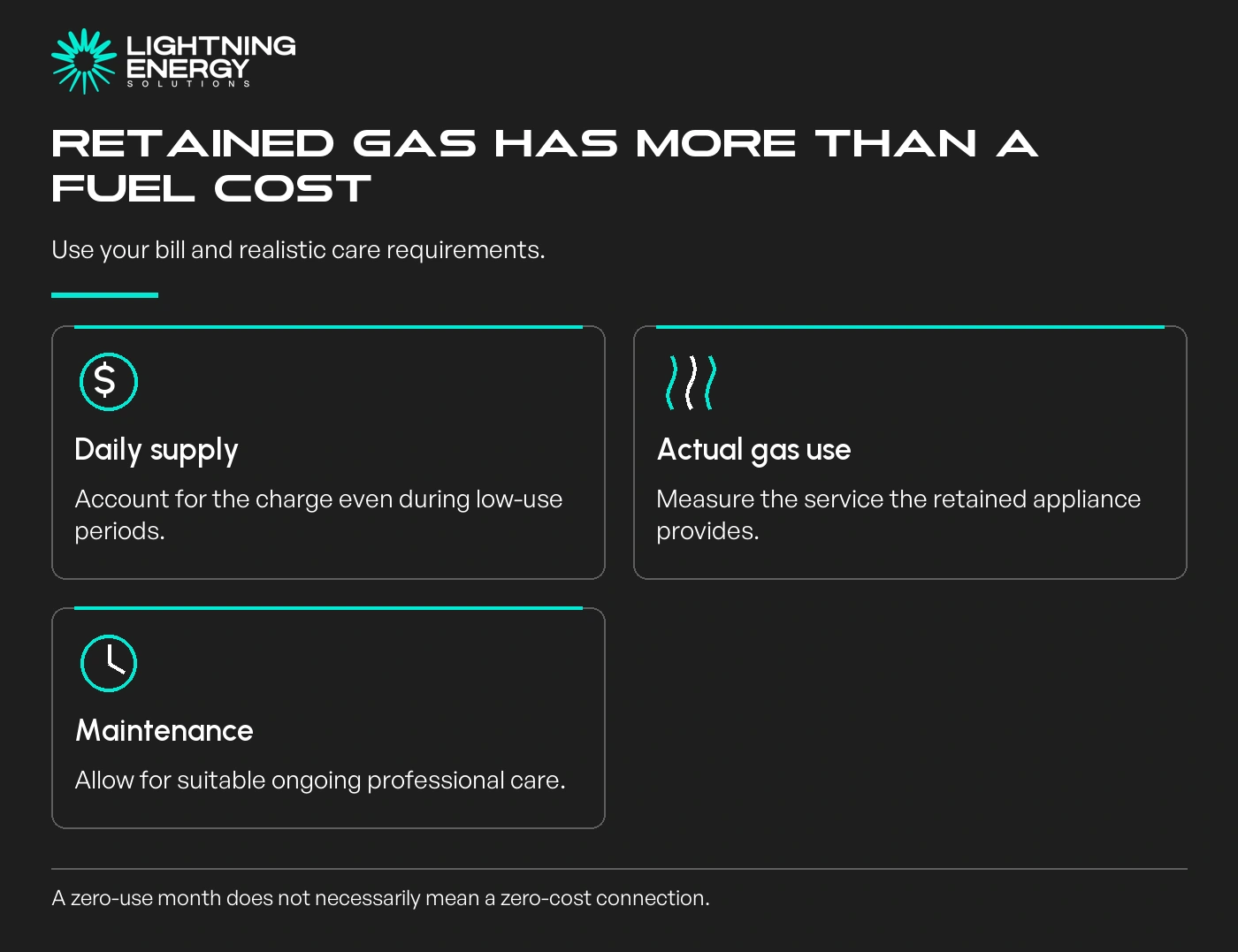
Read the gas bill as two main components: gas consumed and the recurring supply charge, with any other applicable charges shown separately. Low consumption does not remove the cost of keeping the account supplied.
The government’s electrification guide explains that the gas supply fee is charged whether appliances are used or not.
For illustration only, a daily charge of $1 would total $365 across a 365-day year before any gas use. This is arithmetic using an invented rate, not a current retailer offer or a forecast for your home.
Use the actual daily rate, billing period and remaining appliance consumption for your decision. Include a realistic servicing allowance rather than treating backup equipment as maintenance-free.
Review the whole-home plan to distinguish a temporary remaining appliance from an indefinite commitment to two energy connections.
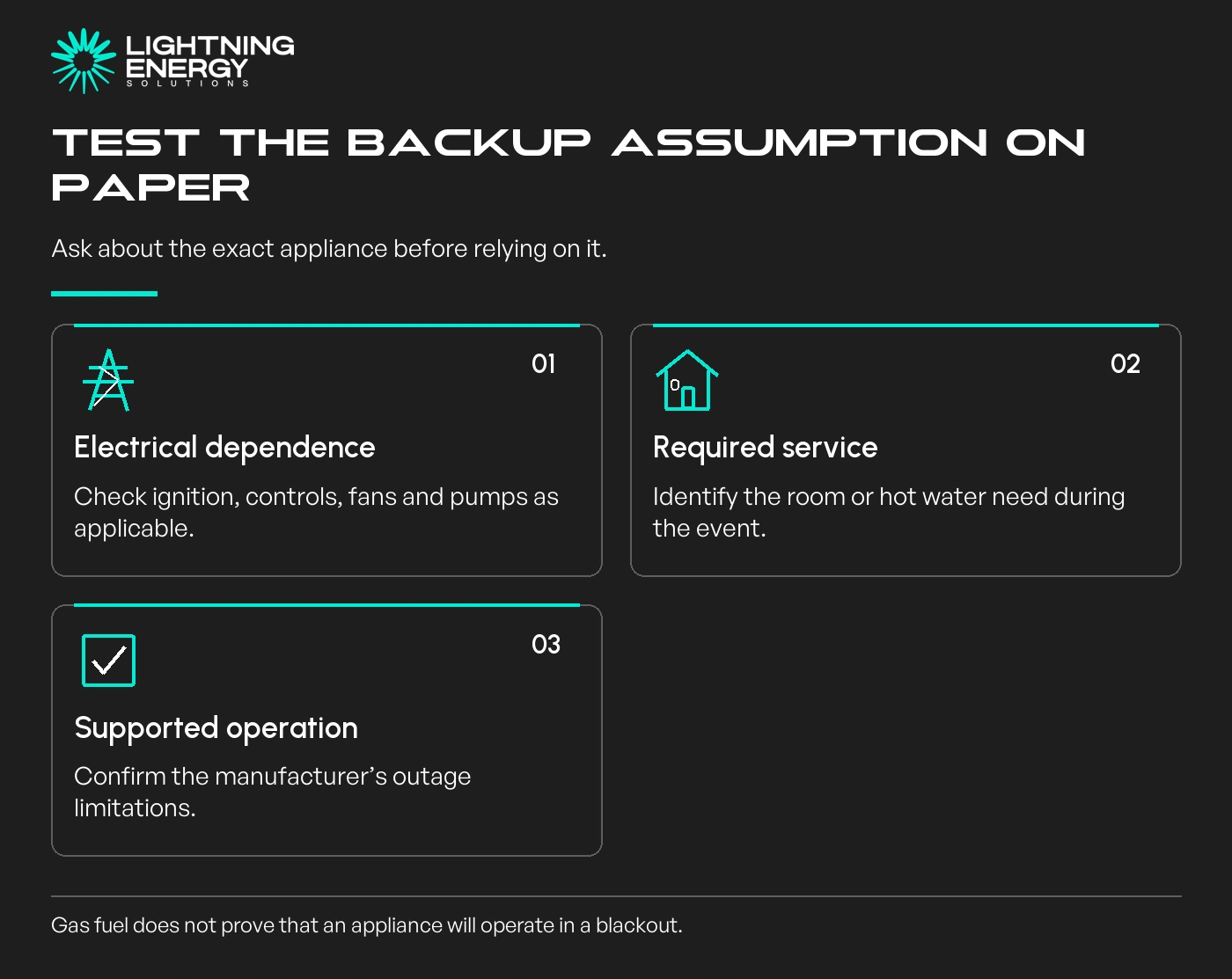
An appliance kept for a power outage must be assessed for that situation. Gas heaters or water heaters can still rely on electrical ignition, controls, fans or pumps, depending on the model.
For example, Rinnai’s RHFE 952/1253 gas-fire manual states that the heater shuts down during a power failure. That is a model-specific example of why gas fuel alone does not establish blackout operation.
Rinnai owner and installation manual.
Ask the manufacturer or qualified service technician about the exact retained appliance. Do not try an improvised power connection or bypass a safety control to make it serve as backup.
Compare the actual resilience need with a deliberately designed battery backup arrangement. A battery also needs the right configuration and cannot be assumed to cover every circuit.
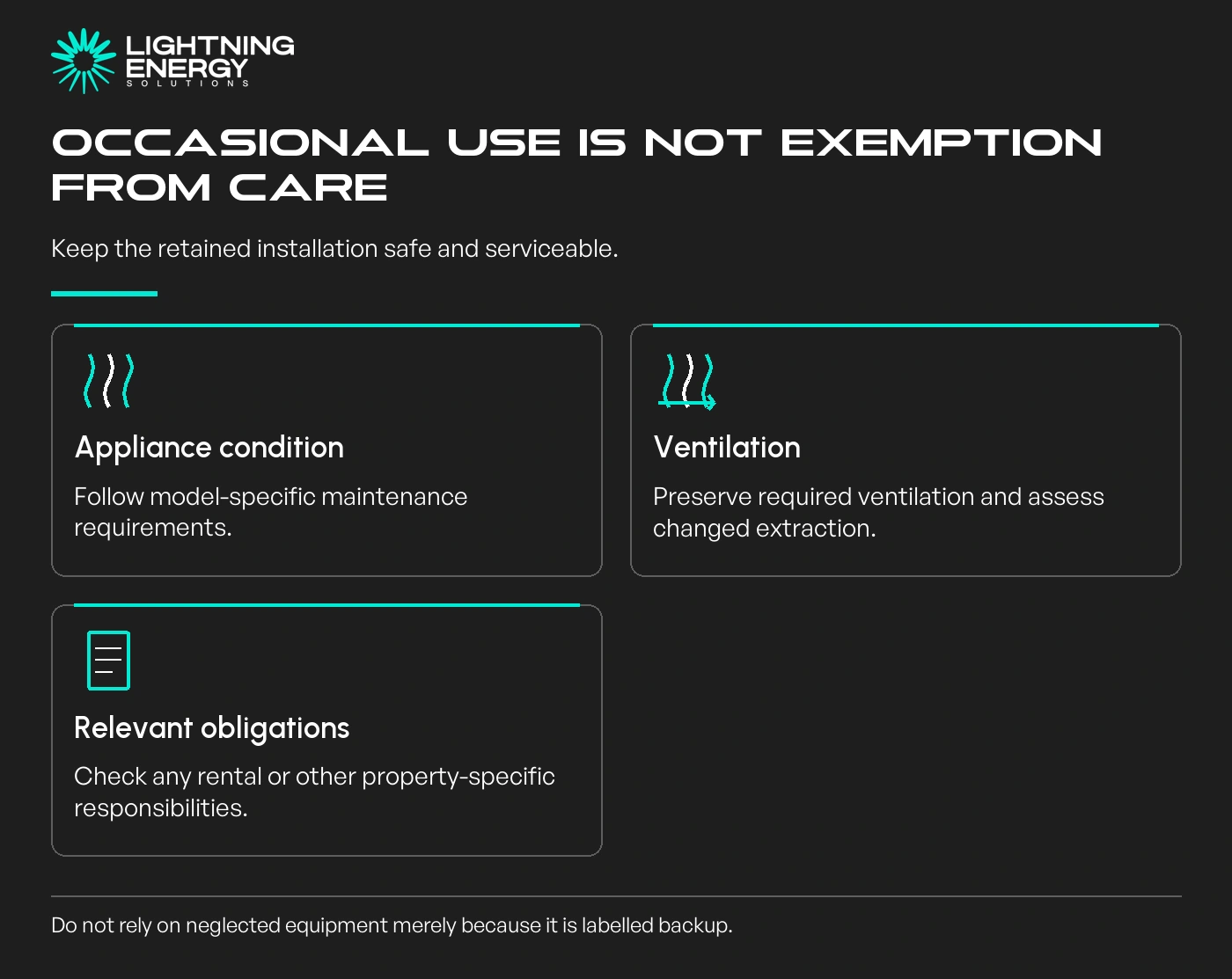
An infrequently used heater still needs appropriate care and a safe installation. Follow the manufacturer’s requirements and arrange relevant professional servicing before relying on neglected equipment.
Energy Safe Victoria recommends gas water, space and central heaters be serviced at least every two years by a suitably qualified gasfitter. Rental-property safety obligations also need separate attention where applicable.
Energy Safe Victoria’s gas-heater guidance.
If building upgrades change ventilation or extraction, discuss the retained gas appliance with the qualified practitioner. Do not seal required ventilation simply because electric heating is now the main system.
For a household installing reverse-cycle heating, decide whether maintaining the old heater has a defined benefit. Keeping it connected solely because removal was not discussed can create an unintended ongoing expense.
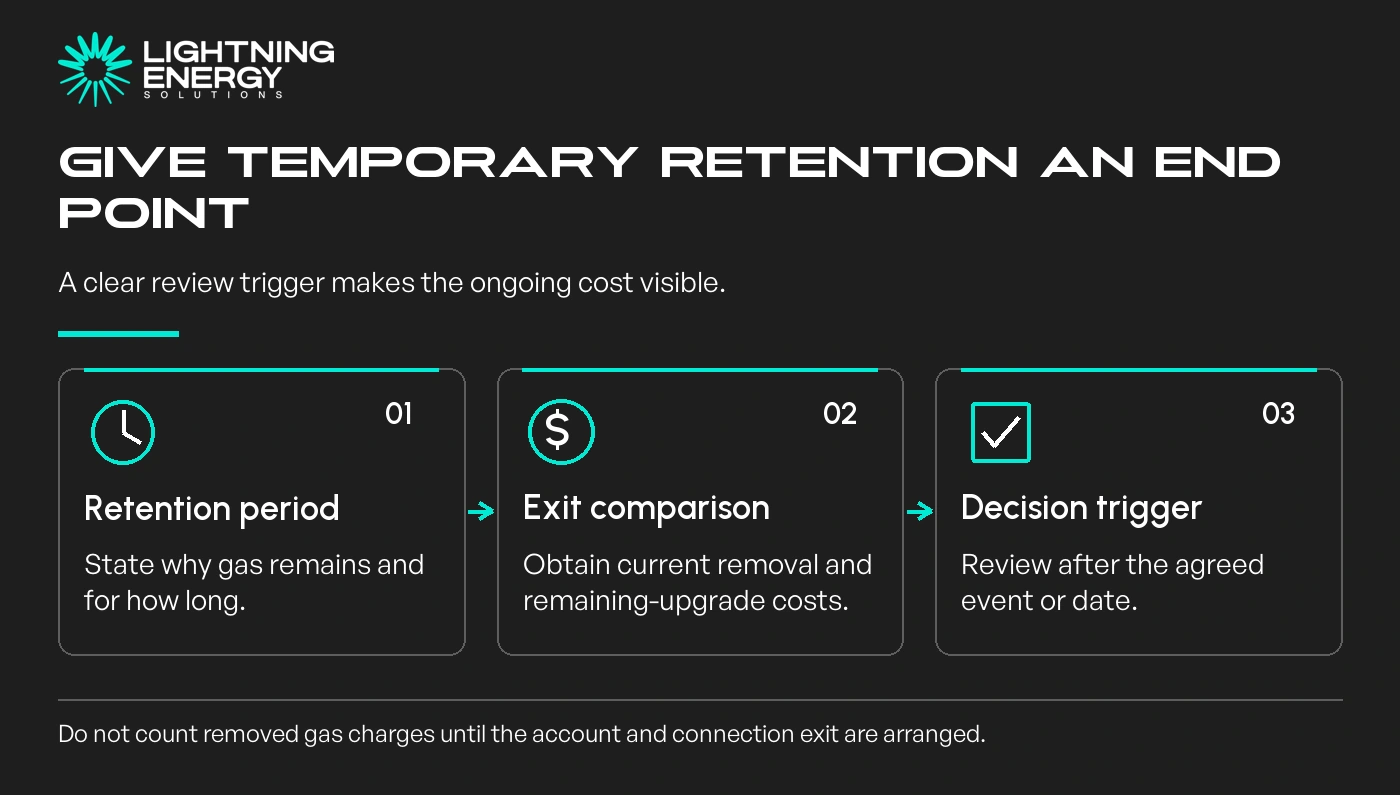
A temporary retention plan should name a trigger, such as a kitchen renovation, a final appliance replacement or a scheduled review after winter. Record the expected cost of the delay.
Ask the retailer about the appropriate connection and account process when the last appliance is gone. Temporary disconnection and permanent abolishment have different physical outcomes and conditions.
Multinet’s current exit guidance.
Compare current retained costs with a written exit quote and the cost of completing the remaining upgrade. Do not assume an old published fee or another household’s price applies at your property.
A working gas appliance may sensibly remain while a planned replacement is funded. The key is to keep its costs and purpose visible rather than count gas-charge savings before the connection has actually ended.
Do not rush a replacement solely to eliminate a supply charge without comparing the complete installation cost and household benefit.
Bring the remaining appliance details and gas bill when you request a staged assessment. The decision should explain what you are keeping, what it costs and when you will review it.
Available times
Book a consultation and we'll map solar, storage, hot water, and the rebates around your bills and your goals.
Question 1 of 6