
Low Feed-In Tariffs and Batteries: Value the Solar You Can Actually Use
Low solar export payments can improve the case for storage, but useful demand, battery losses and installed cost still determine the value at home.
Low solar export payments can improve the case for storage, but useful demand, battery losses and installed cost still determine the value at home.

A low feed-in tariff can make using your solar at home more valuable than exporting it. That does not automatically make a battery worthwhile: the useful saving depends on how much energy you can shift and what storage costs.
Start with two different prices. The feed-in tariff pays for electricity exported. The import rate is what you pay for electricity bought later. They need not be equal or follow the same time windows.
Victoria's feed-in guidance explains that retailers can offer single or time-varying export rates. Use the current offer for your address and check any conditions rather than relying on an old minimum-rate headline.
Victoria: solar feed-in tariffs.
If the plan pays different rates at different times, identify when your solar actually exports. A generous evening rate may apply to little of a solar-only home's normal generation.
Our duck-curve explainer provides context for why daytime solar and evening demand can have different market values.
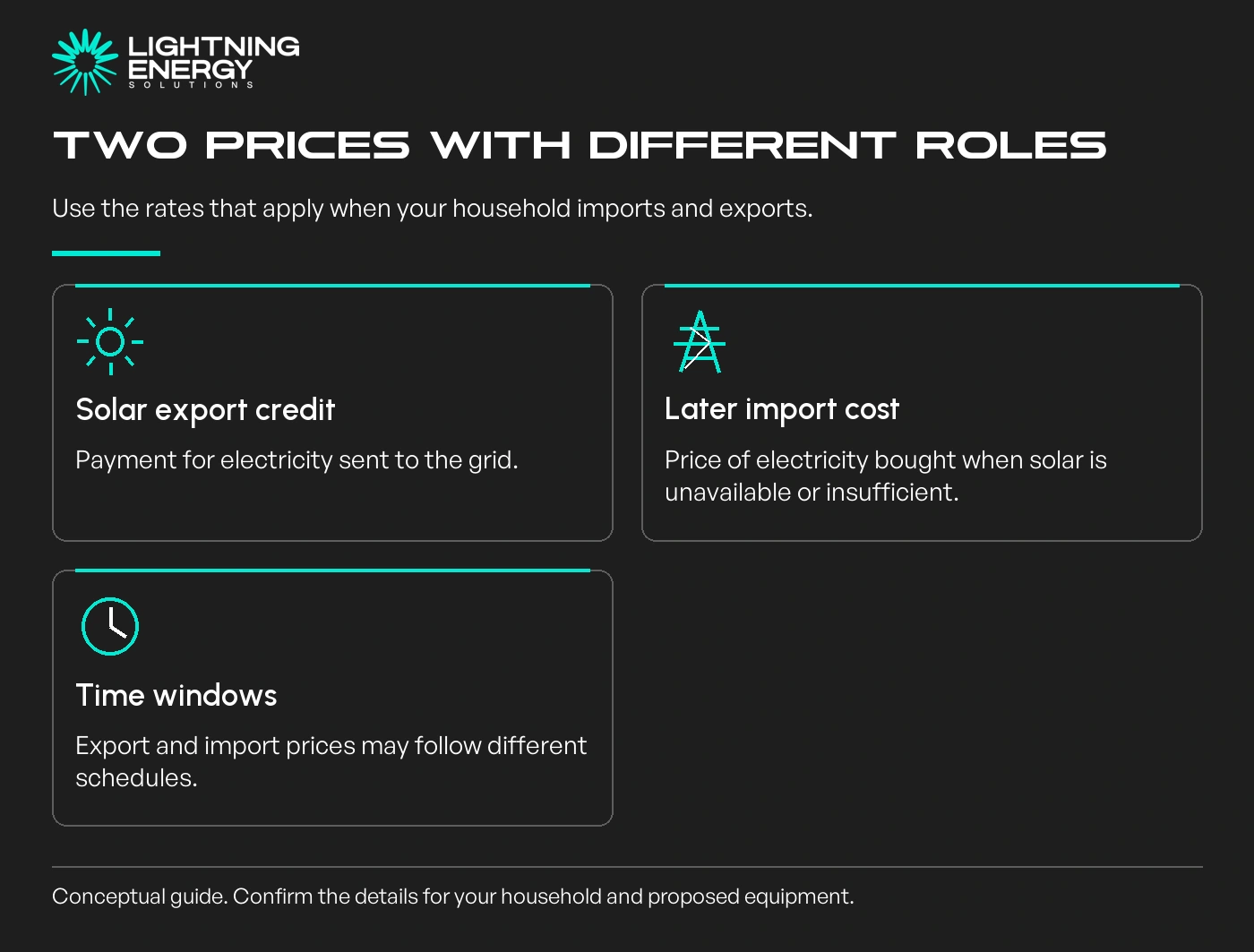
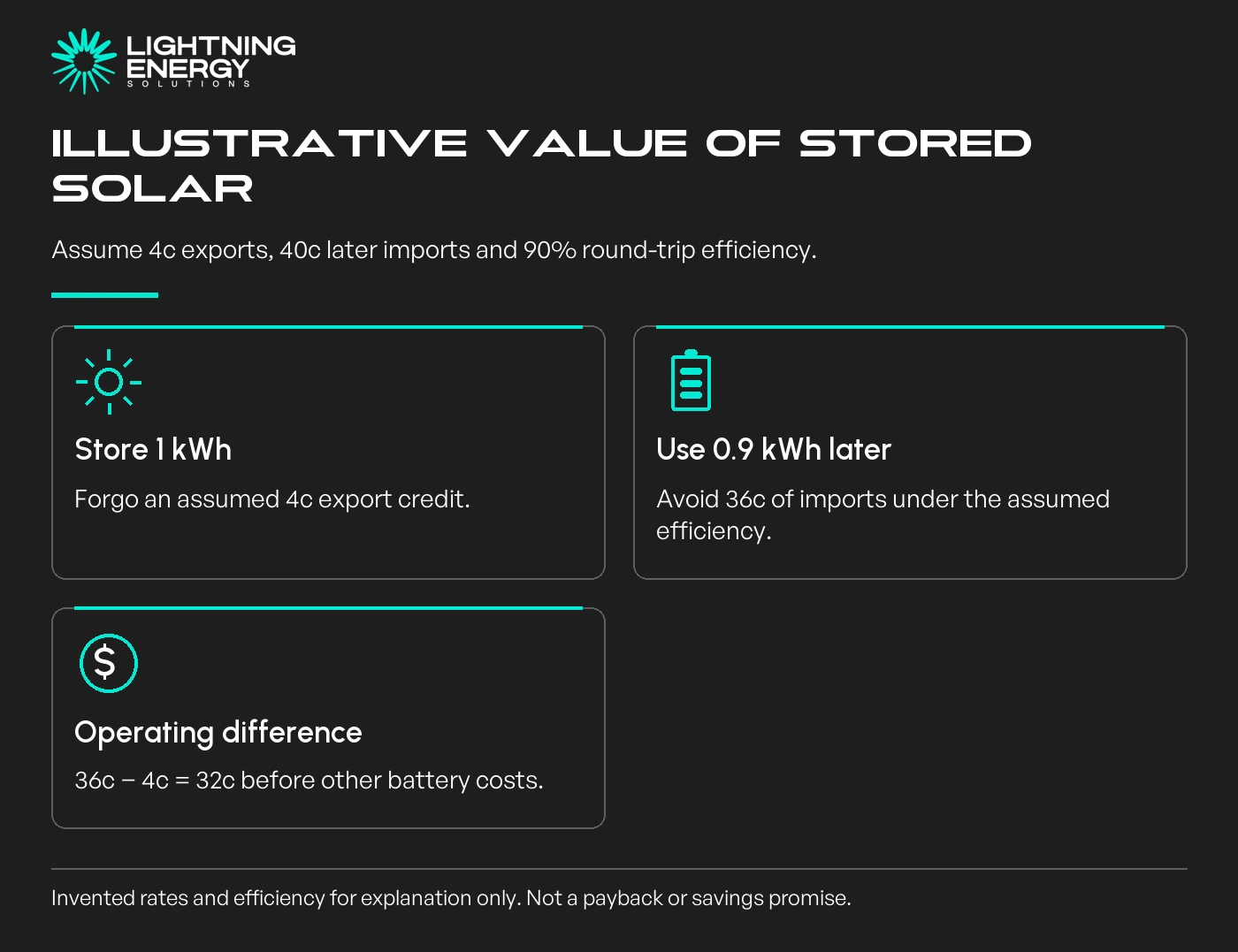
Use a simple, explicitly hypothetical example: daytime exports earn 4 cents per kWh and later imports cost 40 cents per kWh. Assume 90% round-trip battery efficiency only for this illustration.
Storing 1 kWh of surplus solar would deliver 0.9 kWh later under that assumption. Avoided imports would be worth 36 cents, less the 4-cent export credit forgone, giving 32 cents before other battery costs.
That is the operating value of the assumed energy movement, not a guaranteed saving or a payback period. Actual efficiency, consumption and tariffs must replace those invented inputs.
The value exists even with a flat import tariff if later imports cost more than the value of the solar exports forgone, after losses. Time-of-use pricing creates another opportunity but is not essential to that calculation.
Our battery value guide covers the wider investment comparison.
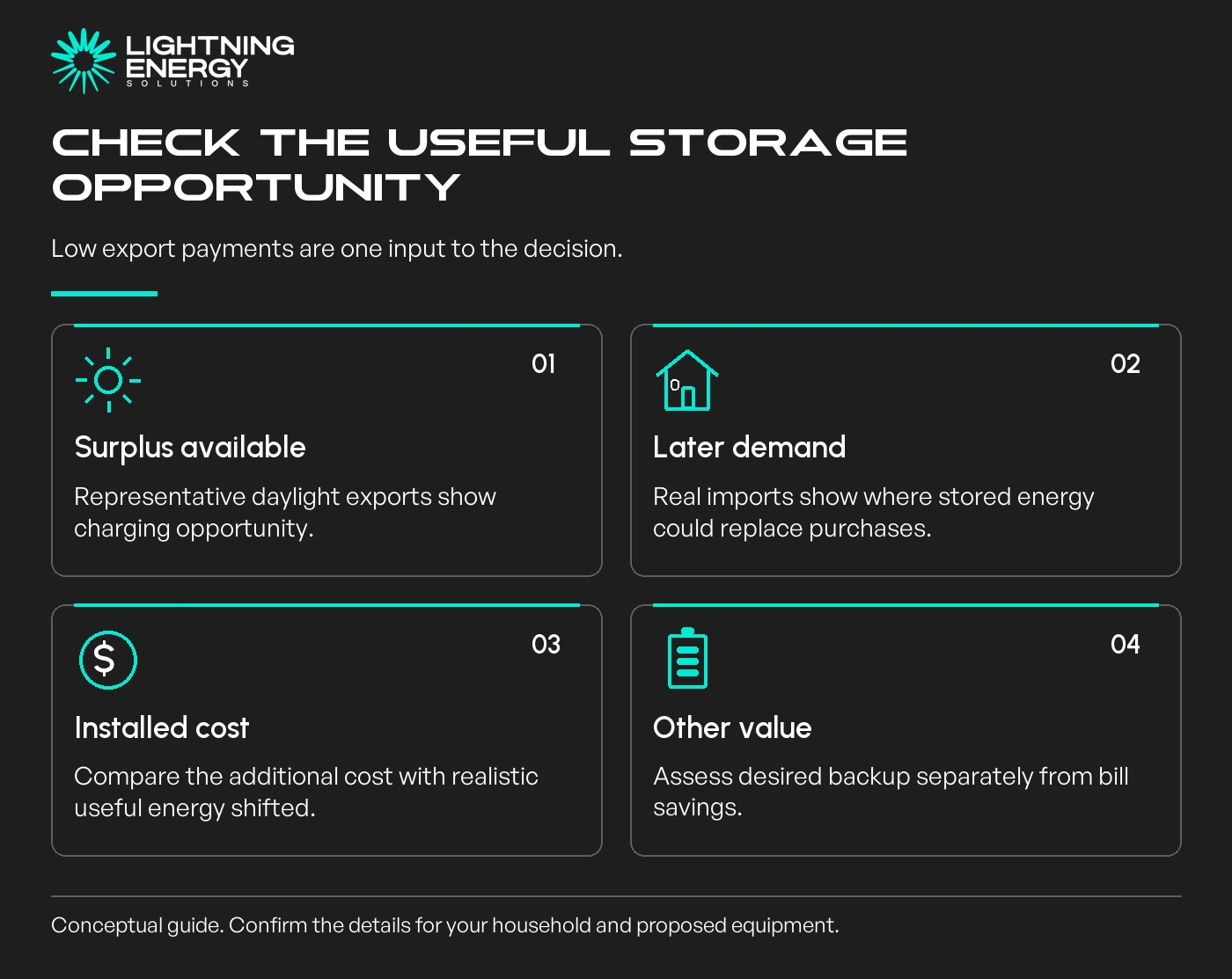
Look at daylight exports alongside later imports across representative seasons.
A battery cannot shift energy that was never surplus, and storing energy does not create a saving until it replaces useful demand or earns an eligible export payment.
A hypothetical household exporting heavily in summer but importing little after sunset may have less useful storage work than the export total suggests. Winter heating can change the pattern again.
Limit any annual estimate to the energy a supported system can realistically charge and discharge. Include charging power, usable capacity, reserve settings and losses rather than multiplying a best summer day by 365.
Moving a suitable appliance to daylight can use solar without passing it through battery storage. That may be a worthwhile first step where the household schedule and appliance controls allow it.
In the same invented 40-cent import and 4-cent export example, using 1 kWh directly instead of importing it later is worth 36 cents, before any other changes. There is no battery conversion step in that comparison.
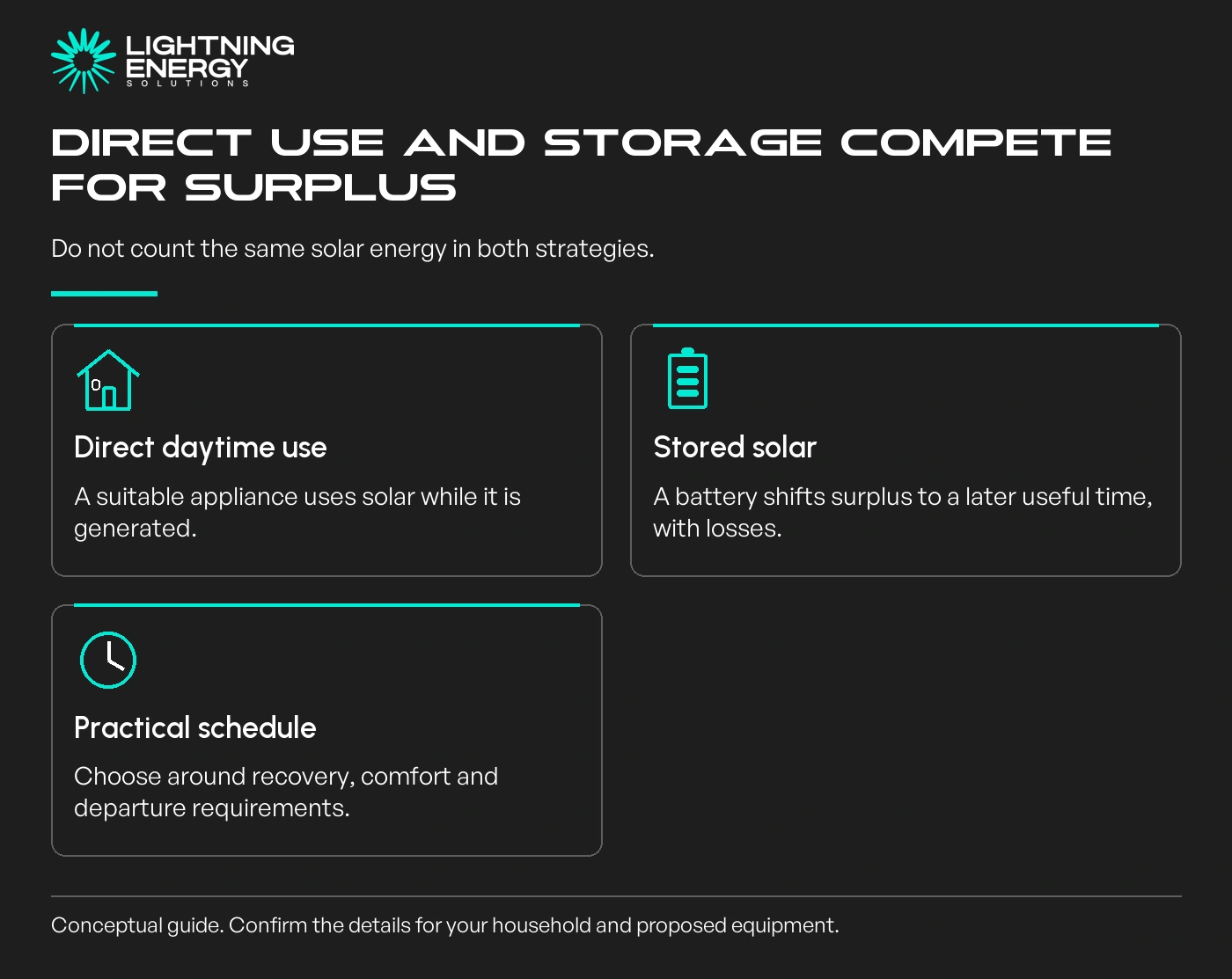
That does not mean every appliance can or should run at lunchtime. Hot-water recovery, comfort and EV departure needs still matter. Compare practical scheduling with storage rather than counting the same solar twice.
A near-zero export payment does not make a battery free. Compare the additional installed cost with the realistic operating benefit, and value any desired backup separately.
If later demand is small, start with a smaller assessed system or improve daytime use. If substantial evening imports remain and solar surplus is available, a battery assessment can quantify the opportunity.
Available times
Book a consultation and we'll map solar, storage, hot water, and the rebates around your bills and your goals.
Question 1 of 6
