
Aussie Households Just Set a Record for Solar and Home Batteries
Aussie homes just set a 2026 first-half record: about 180,878 rooftop solar installs and 276,011 home batteries. The CEC figures, via RenewEconomy.
Aussie homes just set a 2026 first-half record: about 180,878 rooftop solar installs and 276,011 home batteries. The CEC figures, via RenewEconomy.
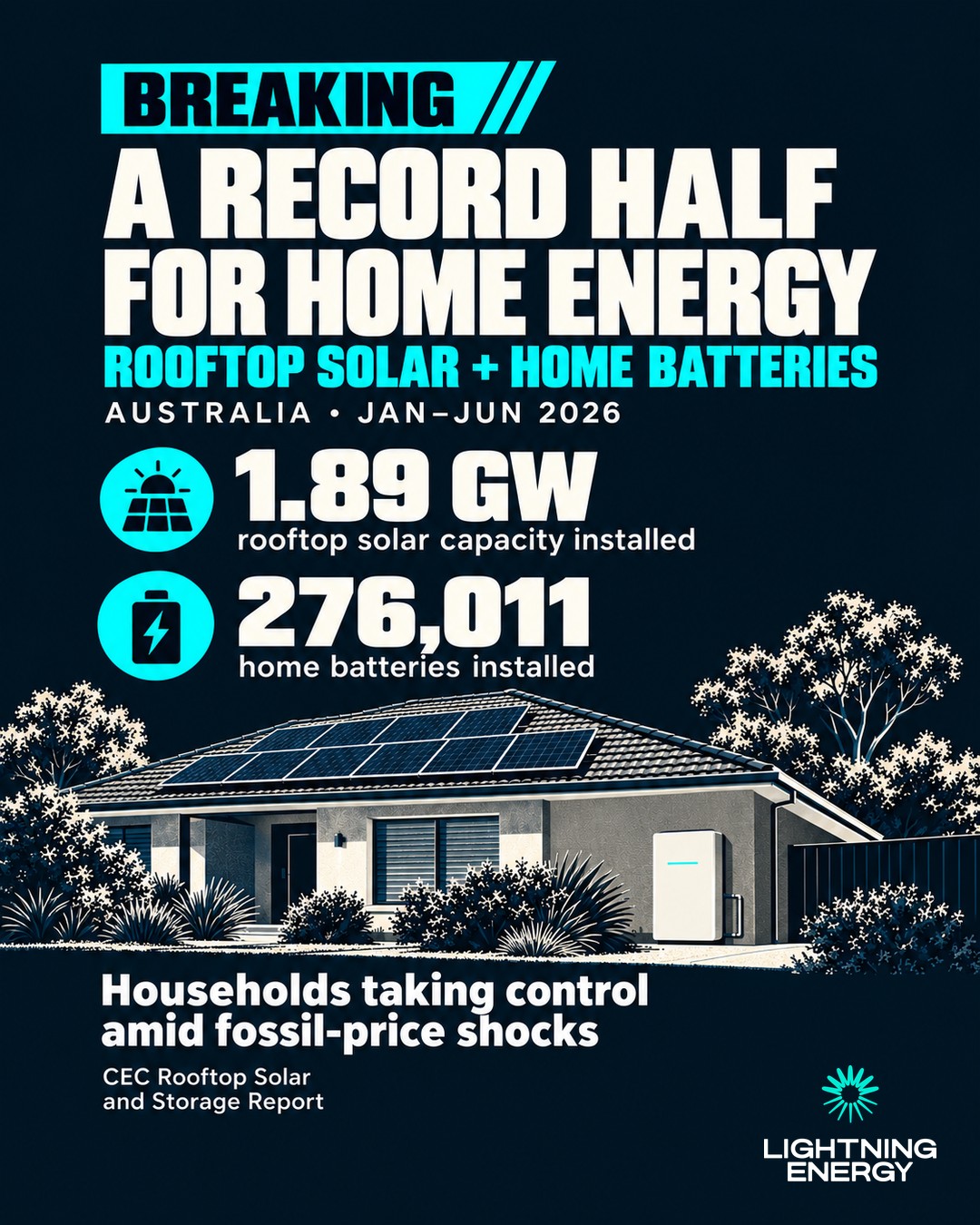
Australian households have just logged their strongest run of new rooftop solar since 2021, and home batteries went in faster still. You don't have to wait for the grid to calm your bill. A lot of homes are already pairing panels with a battery and using their own power after dark.
The numbers come from the Clean Energy Council's Rooftop Solar and Storage Report for January to June 2026. Sophie Vorrath and Joshua S. Hill reported them in RenewEconomy on 29 September 2026. What's below is the Council's count, not a guess about your bill. Sophie Vorrath and Joshua S. Hill in RenewEconomy
About 180,878 rooftop solar systems were installed in the first half of 2026. That's a 35% lift on the first half of 2025, and the strongest six-month install total since 2021.
Batteries outran new roofs. The Council counts 276,011 home battery installs in the same six months. That's 52% higher than the six months before. Across the first 12 months of the federal Cheaper Home Batteries program, the tally is about 457,439 installs and about 12.9 GWh of storage.
Put those rates side by side and you get about 153 batteries for every 100 new rooftop solar systems in the half. Storage is catching up to the panels already on Australian roofs.
By the end of June 2026, about one in 2.5 homes had rooftop solar. About one in seven had a battery.
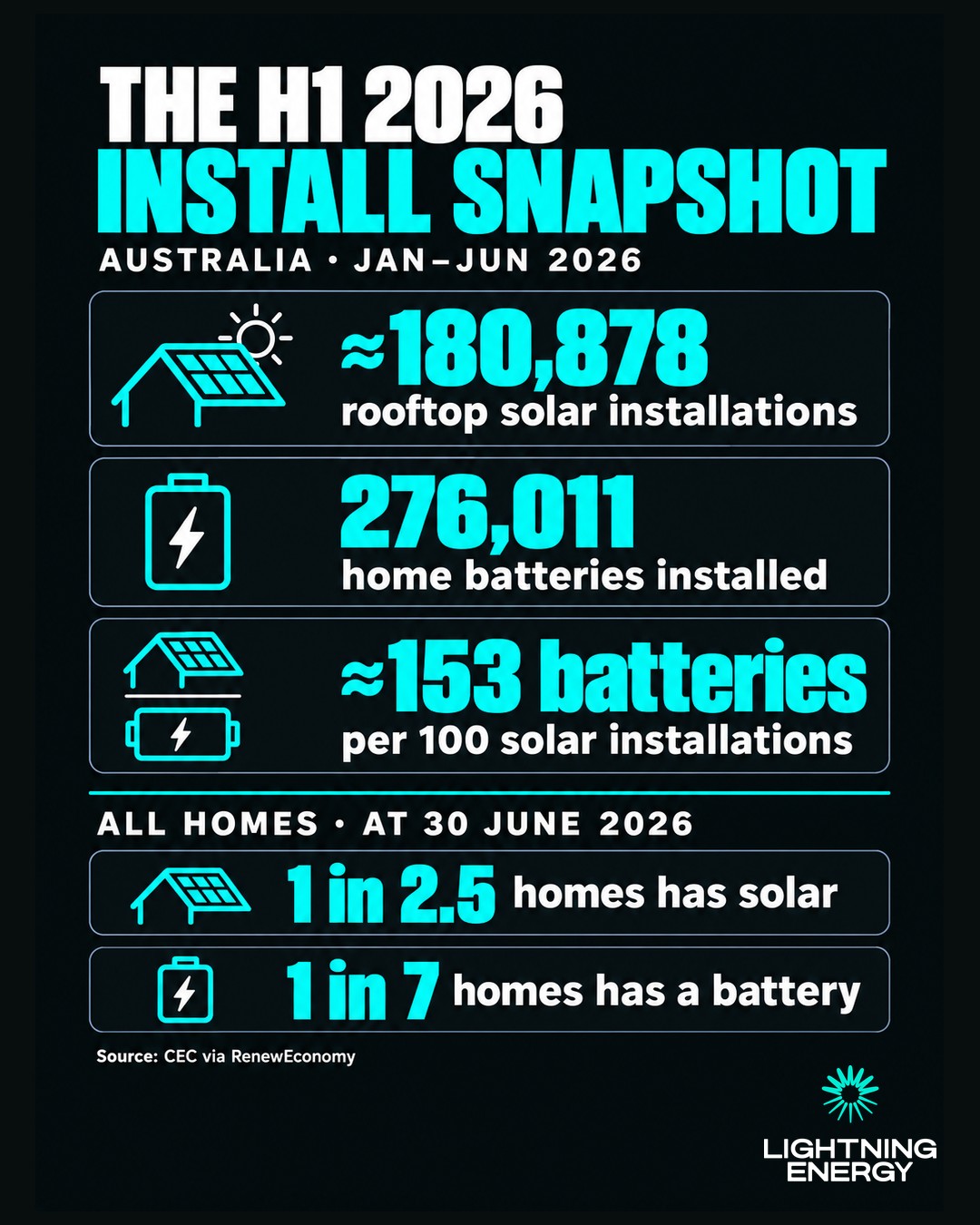
New systems added about 1,894 MW of rooftop capacity in the half, up 41% on the year before. Most of that landed in the June quarter, which set records in every state. Together those records are about 102,234 installs and about 1,079 MW.
Count systems installed since January 2019 and the Council's running total is about 21,979 MW. That stock of rooftop capacity approaches the coal-fired generation capacity still operating in Australia. This is capacity, not energy delivered. Panels don't run at night, so a megawatt on a roof is not a megawatt of coal plant through the evening.
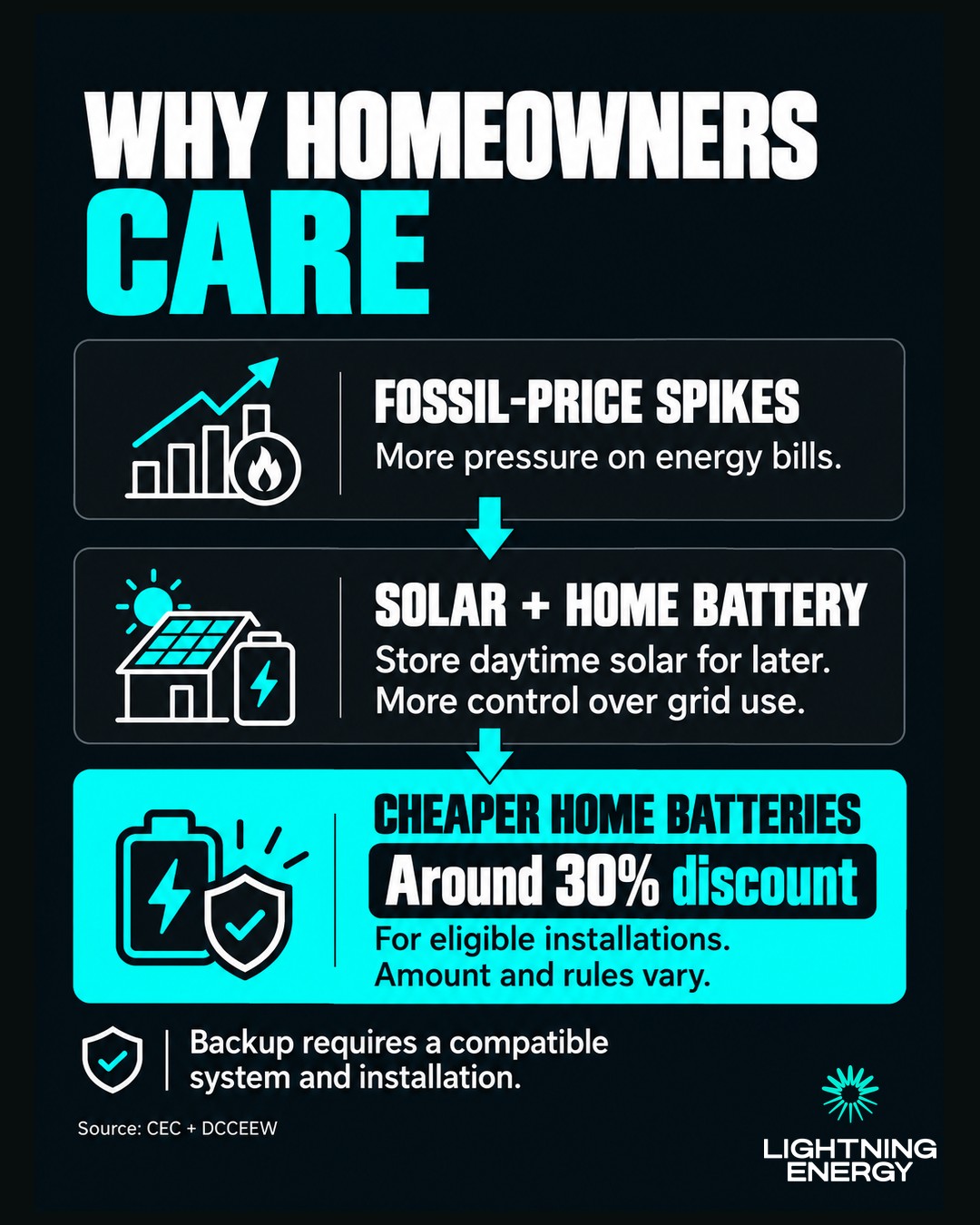
Jackie Trad, chief executive of the Clean Energy Council, ties the rush to fossil fuel price spikes and inflation. Households are choosing solar and batteries for lower bills, reliable power, and cleaner energy. The report doesn't name a dollar saving. This article won't invent one.
A national record doesn't size your battery. Your meter does. Look at the power you still buy once the panels drop off. Cooking, heating, a dishwasher after dinner, a car home at six. That's the gap a battery can cover. If the roof already handles the day, the useful question is the evening, not another row of panels for their own sake.
If you don't have solar yet, the same half shows people doing both jobs together. Panels for the daytime load. Storage for the hours you actually live in the house. You're taking bill control, instead of waiting to see what the next price spike does.
Rebate settings changed in May 2026. The average home battery being installed fell from around 35 kWh at the end of April to around 25 kWh in June. Match the kilowatt-hours to the evening you measured, not to last autumn's average.
Choice went the other way. Home-battery models approved for the federal rebate more than doubled, from 1,259 to 3,406. More models help only when the quote says what the battery will do on a normal week. Read a plain guide before you compare brand names. how to choose a home battery in 2026
Most home batteries are still used for self-consumption. They charge from your roof and run the house later. The Council wants wider use of virtual power plants and flexible tariffs, so a battery can also help at peak times. That can suit some homes. It isn't income you should assume in a quote.
One footnote if you drive an EV. This half brought Australia's first vehicle-to-grid capable charger approvals under the AS/NZS 4777.2 grid connection rules. That opens a later path. It isn't why most households are buying a home battery now.
The Council investigated 567 complaints against approved sellers in the half, up from 317. It took compliance action in 88 cases. Keep that in proportion. It's a prompt to choose an accredited installer, not a scare story.
If current rates hold, the Council puts residential storage at about 59.2 GWh by 2029/30. It also says rooftop solar in the National Electricity Market is on track to sit above AEMO's ISP Step Change projection. Those are outlooks for the system. They are not a forecast of your bill.
The federal Cheaper Home Batteries discount is up to around 30% on eligible batteries. Eligibility depends on the property and the rules in force. It is not a promise that a battery saves a set number of dollars.
If storage is how you'd cover the hours after sunset, start with who the federal home battery discount tends to suit. Then check what a home battery quote should put in writing. A battery is one way to invest in your independence. The record only says plenty of households have already started. who the federal home battery discount tends to suit what a home battery quote should put in writing
The first half of 2026 was a record for new rooftop solar, and a bigger one for home batteries. About one in 2.5 homes have panels. About one in seven have storage. You don't need the national chart to decide. Stake your claim on the power you still buy after dark, and add a battery only if it fits that gap.
Still buying the evening from the grid? Or holding a quote that leads with a big battery and a vague bill? Size it to a normal week, and take it to an accredited installer.
Available times
Book a consultation and we'll map solar, storage, hot water, and the rebates around your bills and your goals.
Question 1 of 6