
South Australia’s REPS VPP Support: What It Means for Your Battery
SA’s REPS can support eligible virtual power plant participation. Understand the provider process, contract questions and how it differs from the federal battery discount.
SA’s REPS can support eligible virtual power plant participation. Understand the provider process, contract questions and how it differs from the federal battery discount.

South Australia has a battery-support pathway that is easy to misunderstand.
The Retailer Energy Productivity Scheme, or REPS, includes an activity for enrolling eligible home batteries in an approved virtual power plant.
It is not a universal cash rebate paid automatically when someone buys a battery.
The useful starting point is the provider’s written offer: what activity is being delivered, whether your property and equipment qualify, what benefit you receive, and what control of the battery you agree to give away.
This guide checks the official framework as at 16 October 2026, rather than promising a particular cashback.
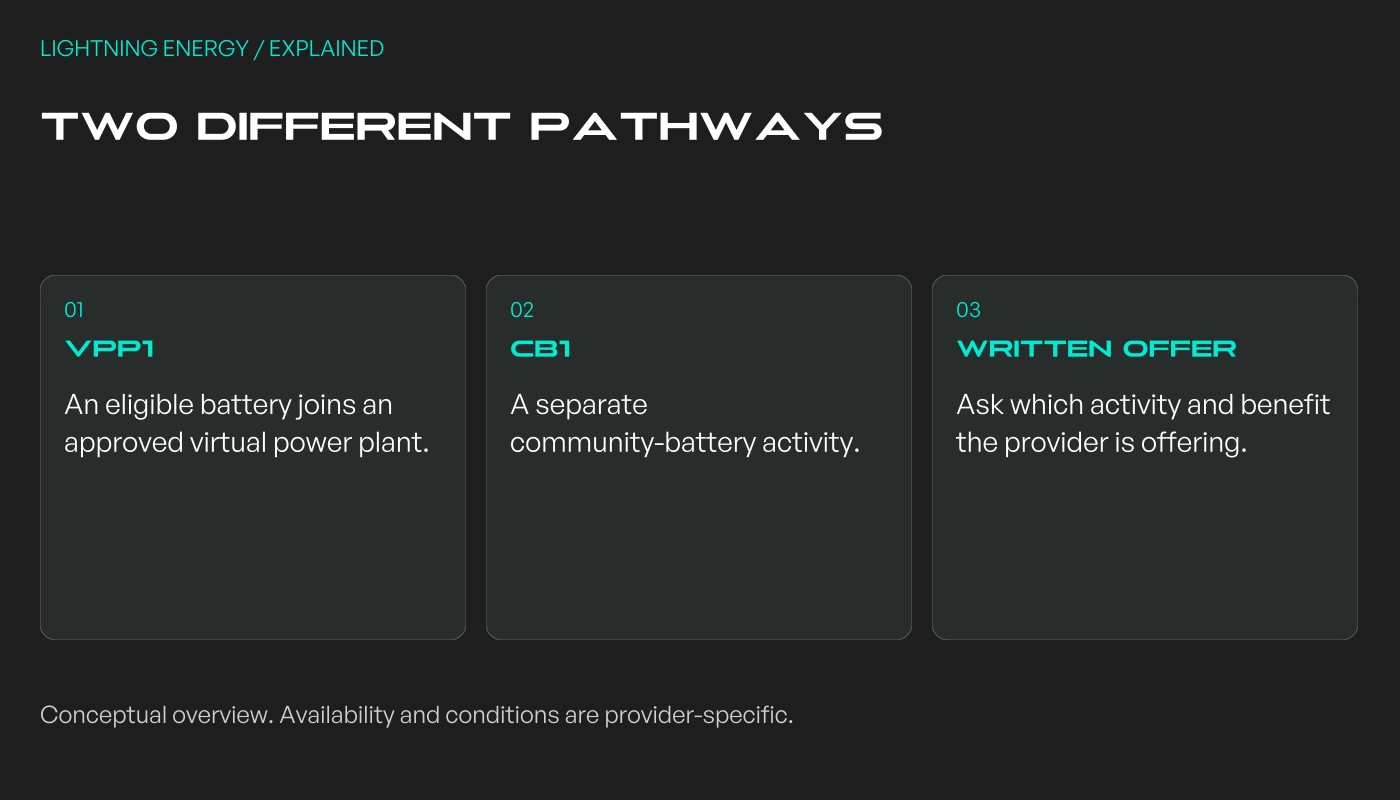
ESCOSA describes VPP1 as a residential activity involving a new or existing battery and an approved VPP.
A separate community-battery activity, CB1, can provide access without the household owning its own battery.
These are different arrangements and should not be bundled together in an explanation of eligibility.
Activities are delivered through participating retailers or providers.
ESCOSA’s residential VPP page lists AGL SA, Demand Manager, Ecovantage and MAC Trade Services among providers.
Contact the listed provider to check its current offer, availability and conditions; being named on a program page does not establish a particular payment for your home.
ESCOSA’s residential VPP activity information.
For the broader control questions, see our guide to who controls your battery in a VPP.
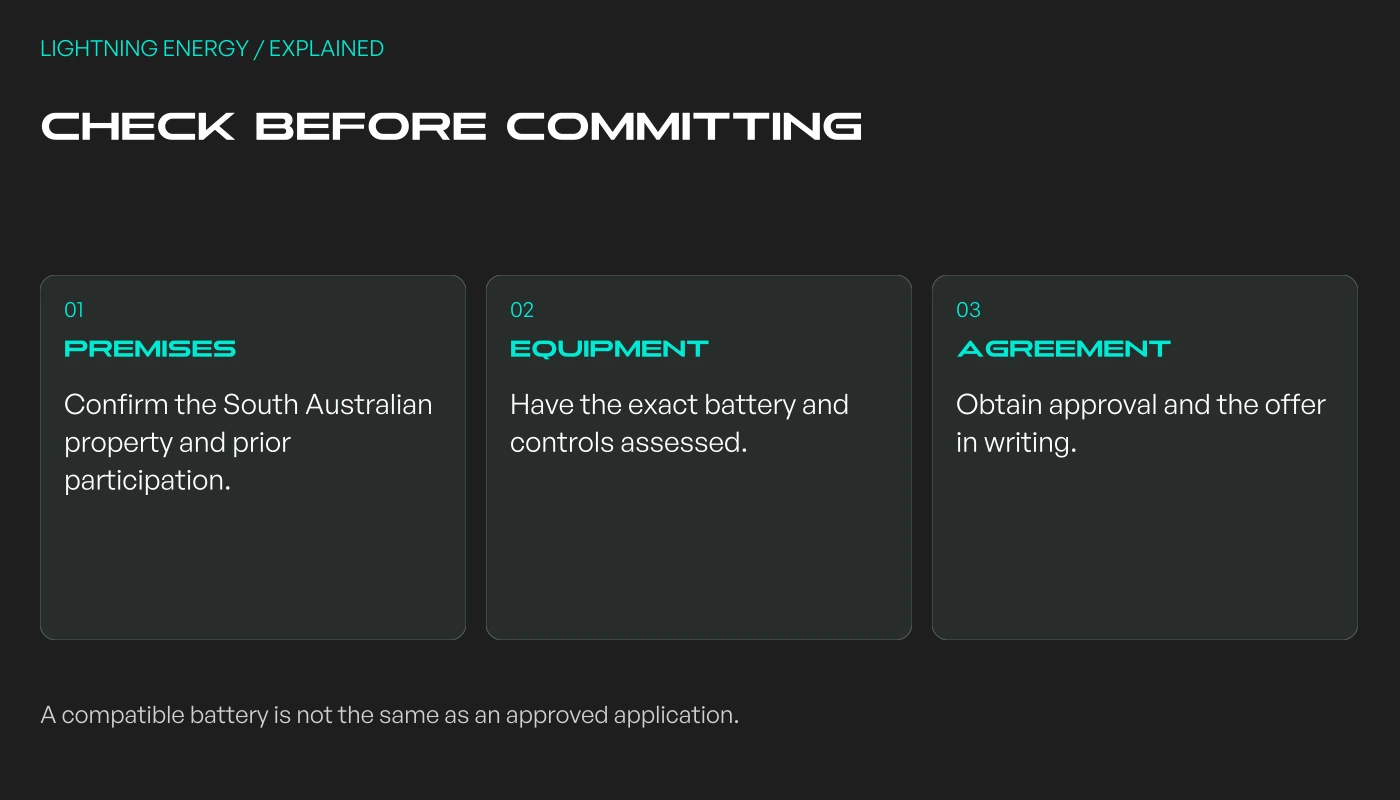
The official VPP1 specification requires a South Australian residential premises, an eligible new or existing battery and participation in an approved VPP.
It specifies at least 2 kWh of usable storage and technical capabilities for remote monitoring and control.
A large battery alone does not establish eligibility.
The activity also has rules about previous participation.
The specification allows a renewal pathway with explicit consent after a previous VPP contract of at least three years.
That is different from assuming every household can claim a new incentive each year.
Ask the provider to check your premises history and explain which eligibility pathway applies.
Read the official VPP1 activity specification.
Request written confirmation before purchasing equipment on the strength of an advertised offer.
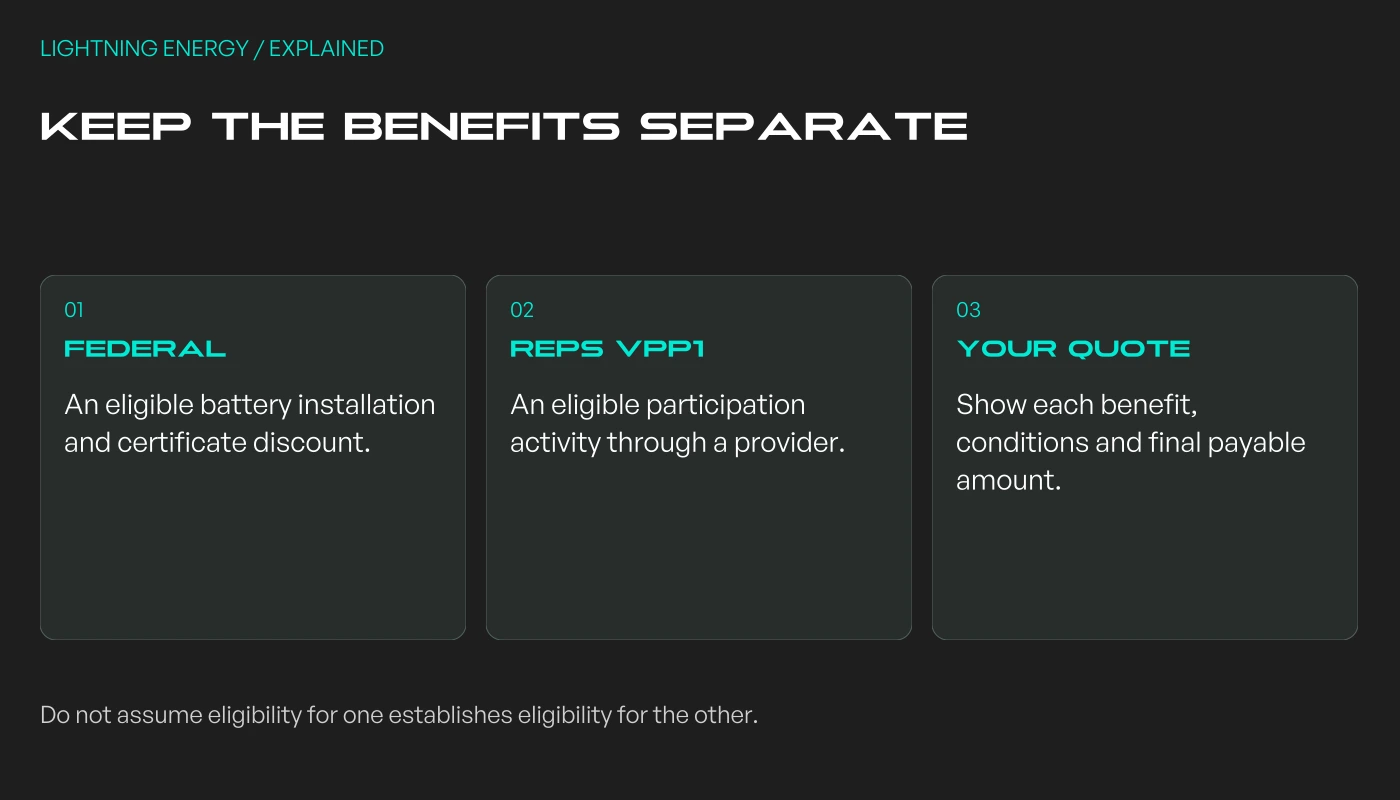
The federal Cheaper Home Batteries Program supports eligible installation through small-scale technology certificates.
REPS VPP1 addresses an eligible participation activity.
They have different rules, evidence and commercial arrangements; do not add two advertised figures together and assume both apply.
For the federal discount, grid-connected systems must be VPP-capable, but the household does not have to join a VPP.
Choosing a REPS-linked participation offer is a separate decision about the contract being offered.
The distinction matters if you want a battery mainly for your own evening consumption or backup.
Check the Clean Energy Regulator’s battery requirements.
Ask for each proposed discount to be itemised in your battery quote.
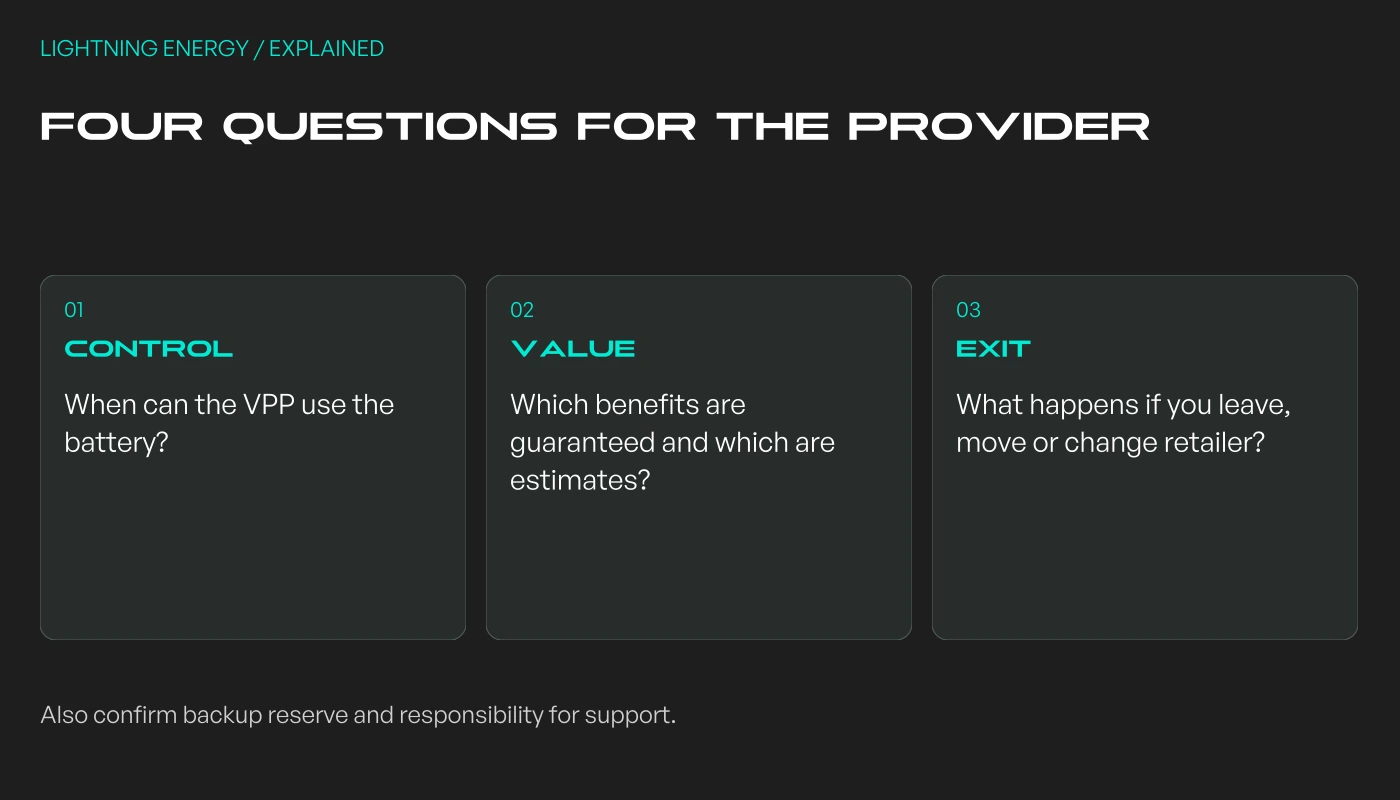
Ask when the provider can charge or discharge the battery, what reserve remains available to you, and what happens during a blackout.
Check the contract duration, exit charges, retailer restrictions, communications requirements and how payments are calculated.
A benefit that looks generous upfront may be less attractive if it limits a feature you value.
Request a simple worked example using your actual tariff and consumption, with assumptions visible.
Separate guaranteed credits from estimated trading returns.
Ask how a change of electricity retailer, internet outage or house move affects the agreement.
Keep the answers with the accepted offer.
Our VPP contract guide explains the wider trade-offs.
When comparing home batteries, decide first whether the priority is bill management, backup or participation income; those goals can require different settings.
The practical next step is to obtain the provider’s eligibility assessment and a full equipment quote before committing.
We can help you discuss the battery design; the REPS provider must confirm its own activity eligibility, contract and benefit.
A clear offer is more useful than a rebate headline without conditions.
Available times
Book a consultation and we'll map solar, storage, hot water, and the rebates around your bills and your goals.
Question 1 of 6
