
Stainless steel or glass-lined heat pump tank?
Compare stainless steel and glass-lined heat pump tanks through water suitability, servicing and total ownership costs, rather than material alone.
Compare stainless steel and glass-lined heat pump tanks through water suitability, servicing and total ownership costs, rather than material alone.

A stainless-steel heat pump tank is worth comparing with a glass-lined tank, but the material does not choose the winner. Water suitability, corrosion protection, service access and the written warranty matter together.
The tank stores your hot water; the heat pump supplies the heat. A longer tank warranty therefore does not automatically cover the compressor, controls or the cost of every service visit for the same period.
Glass-lined, also called vitreous-enamel, normally describes a protective coating inside a steel cylinder. It does not mean the household has a large glass bottle standing outside.
Stainless steel uses a different corrosion-resistant material. Rheem's material explanation distinguishes stainless cylinders from enamel-coated steel cylinders protected with sacrificial anodes.
Rheem tank-material explanation.
That is a useful construction principle, not permission to apply one manufacturer's service instructions to another tank. Obtain the manual for the exact cylinder on your quote.
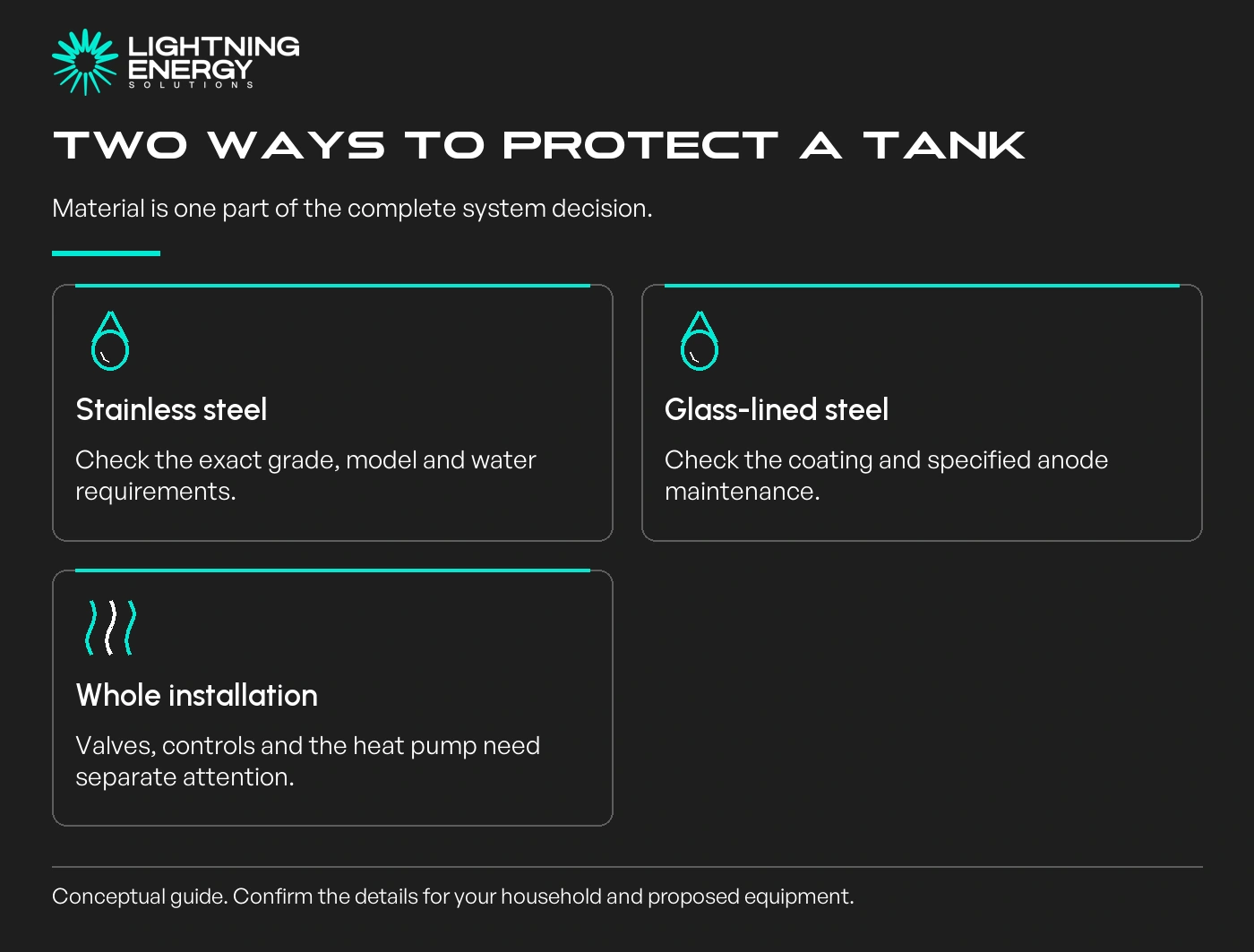
Stainless steel is not immune to unsuitable water. Manufacturers still place conditions on water chemistry, so a material described as premium may be the wrong choice for a particular supply.
Sanden publishes separate stainless-steel and vitreous-enamel tank models. Its product range illustrates why a quote should name the cylinder rather than simply saying 'Sanden tank'.
Sanden Australian specifications.
Ask the supplier to explain why the proposed option suits your mains, rainwater or other supply. When reviewing heat pump systems, request that answer before comparing cosmetic finishes or marketing labels.
For a tank with an anode, ask about inspections, replacement parts, labour and the physical clearance needed for servicing. A lower purchase price may still be attractive when those costs are understood.
For a tank without a sacrificial anode requirement, do not translate that into 'no maintenance'. Other parts of the complete hot-water installation still need the manufacturer's recommended attention.
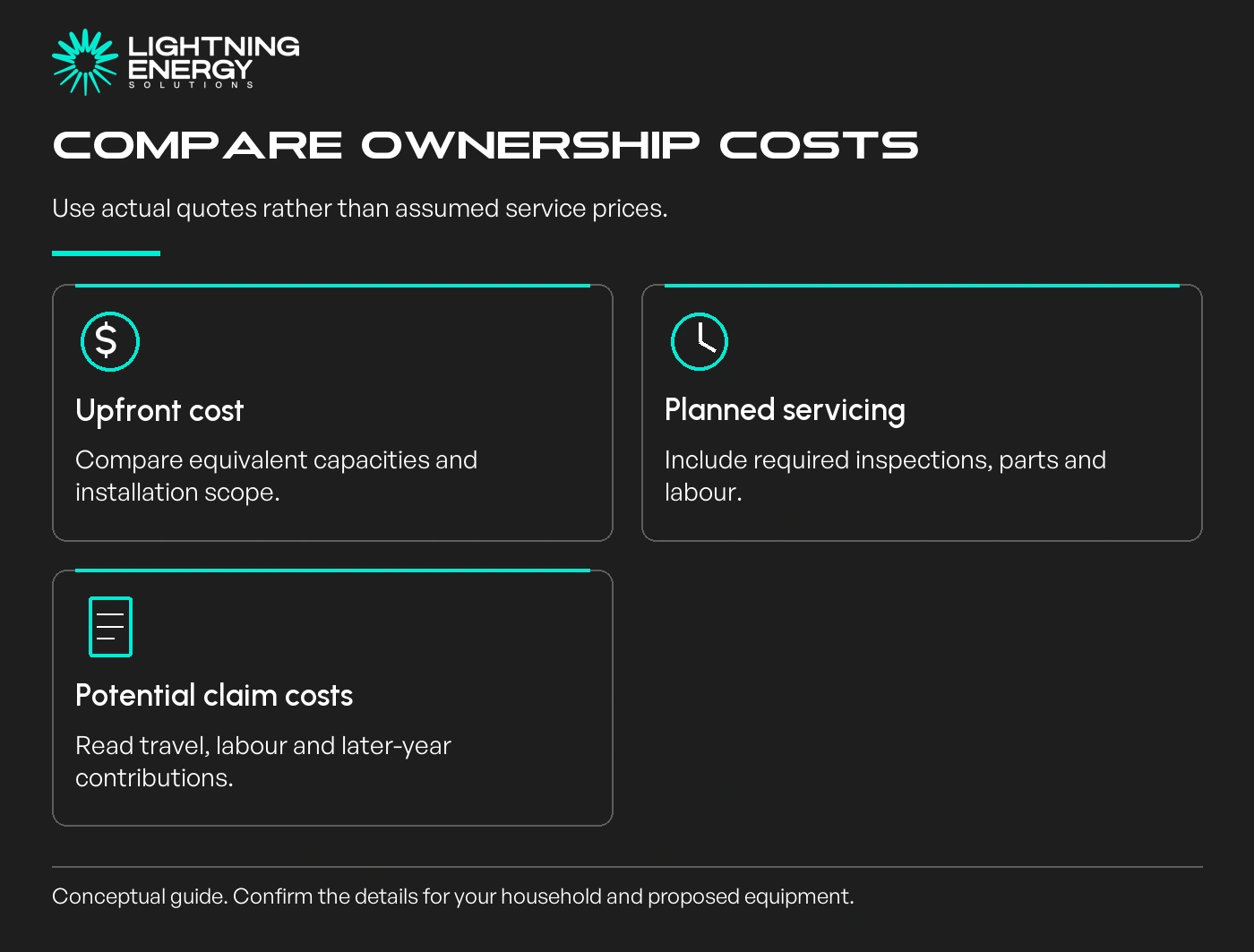
For example, suppose two suitable systems differ by an illustrative $700 upfront. If the cheaper option involves additional planned servicing, obtain those service prices and dates before deciding whether the saving remains worthwhile.
Do not assume the more expensive option saves exactly $700 later, or lasts a fixed number of extra years. The comparison needs actual quotations, not an invented lifespan advantage.
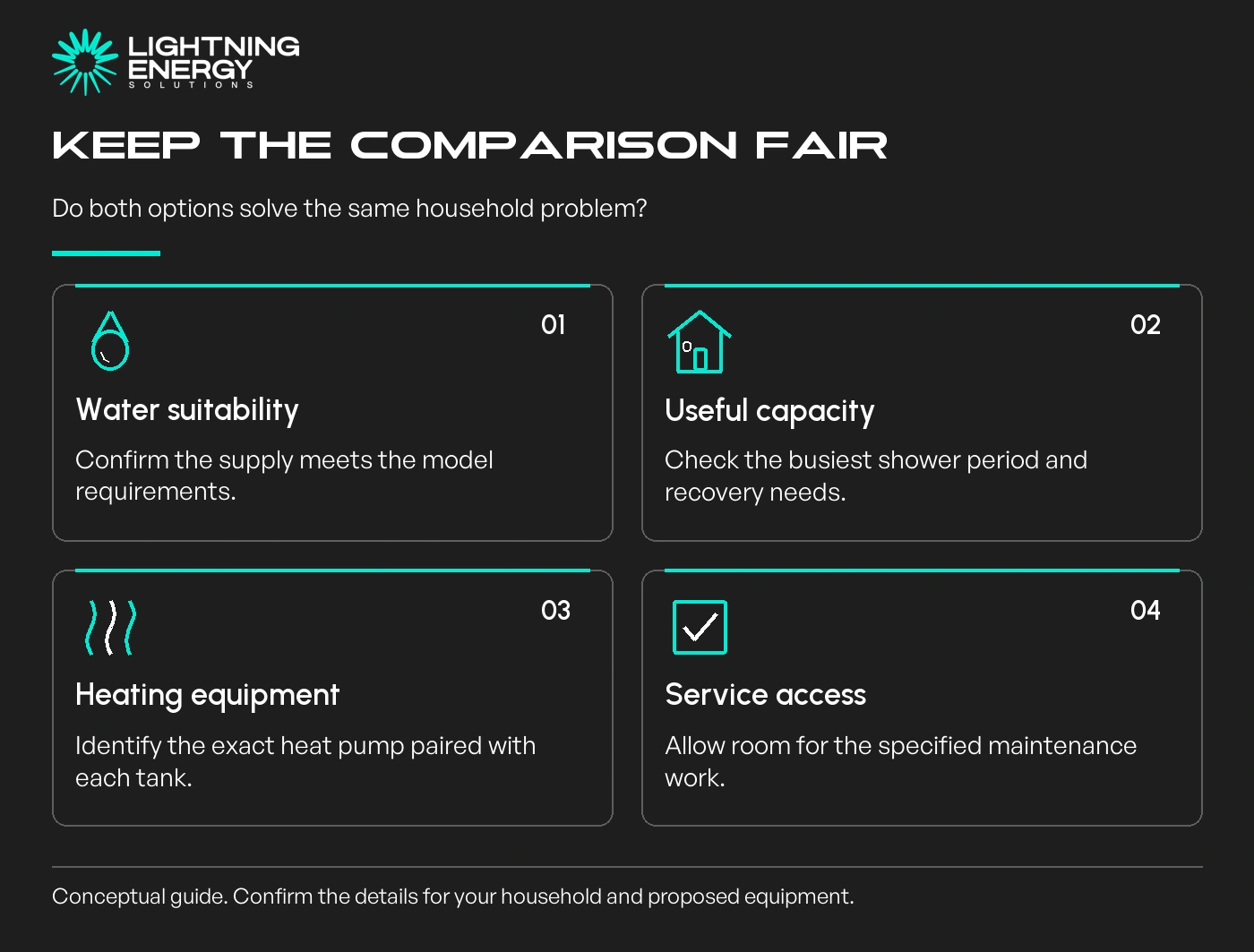
Keep capacity, heat-pump model and household demand comparable when assessing the tank premium. Otherwise a larger system may appear expensive because it solves a different hot-water problem.
For a family with evening showers, the ability to store enough useful hot water after daytime heating matters more than the tank material badge alone.
Our daytime heating guide covers that operating decision. Material choice should not distract from winter recovery or the family's busiest use period.
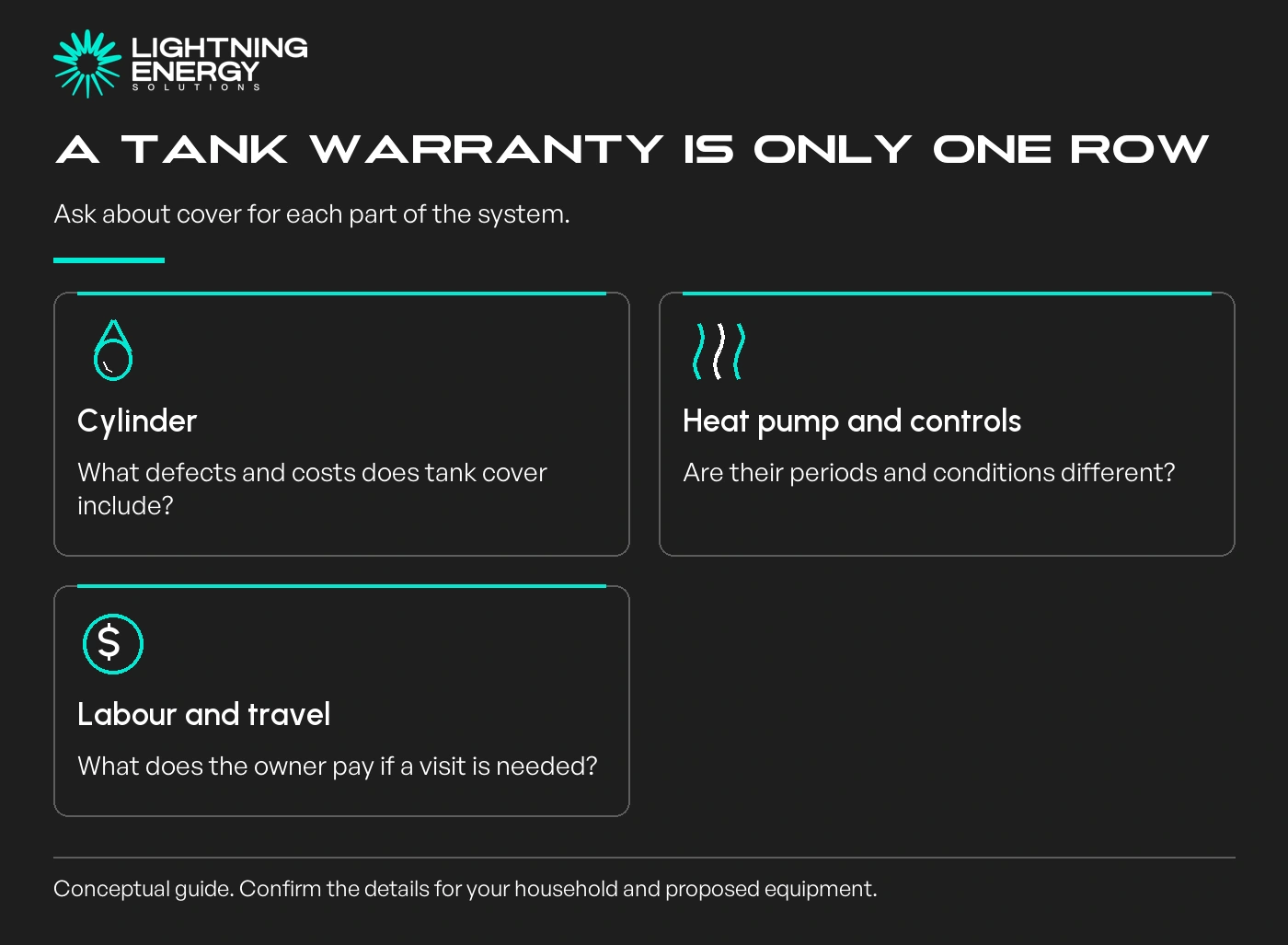
Ask for tank, heat-pump, controller and labour terms. Check whether later years are parts-only or involve a contribution from the owner, and whether transport or travel costs are included.
Keep product cover separate from the installer's workmanship commitment. A long cylinder promise is useful only when you understand the faults and costs it addresses.
Choose the material that suits the documented supply and a service plan you can maintain. If a glass-lined option does that at a manageable total cost, paying more for stainless steel is not automatically necessary.
Include that comparison in your electrification budget, alongside other upgrades competing for the same money.
Plan your hot water upgradeAsk us for a tank comparison with exact models, water suitability, maintenance requirements and component warranties shown beside the installed prices.Available times
Book a consultation and we'll map solar, storage, hot water, and the rebates around your bills and your goals.
Question 1 of 6
