Solar and Battery Support for Sydney Renters and Landlords: Who Applies and Who Pays?
Sydney renters and landlords: understand who can apply for Home Energy Saver discounts or loans, who signs and pays, and what to agree before solar or battery work.
LLuke CoveLightning Energy22 November 2026 · 5 min read
A Sydney rental-property upgrade involves two households with different roles.
A tenant’s eligibility for a discount does not automatically make the tenant eligible for a property-owner loan, or settle who owns and pays for the equipment.
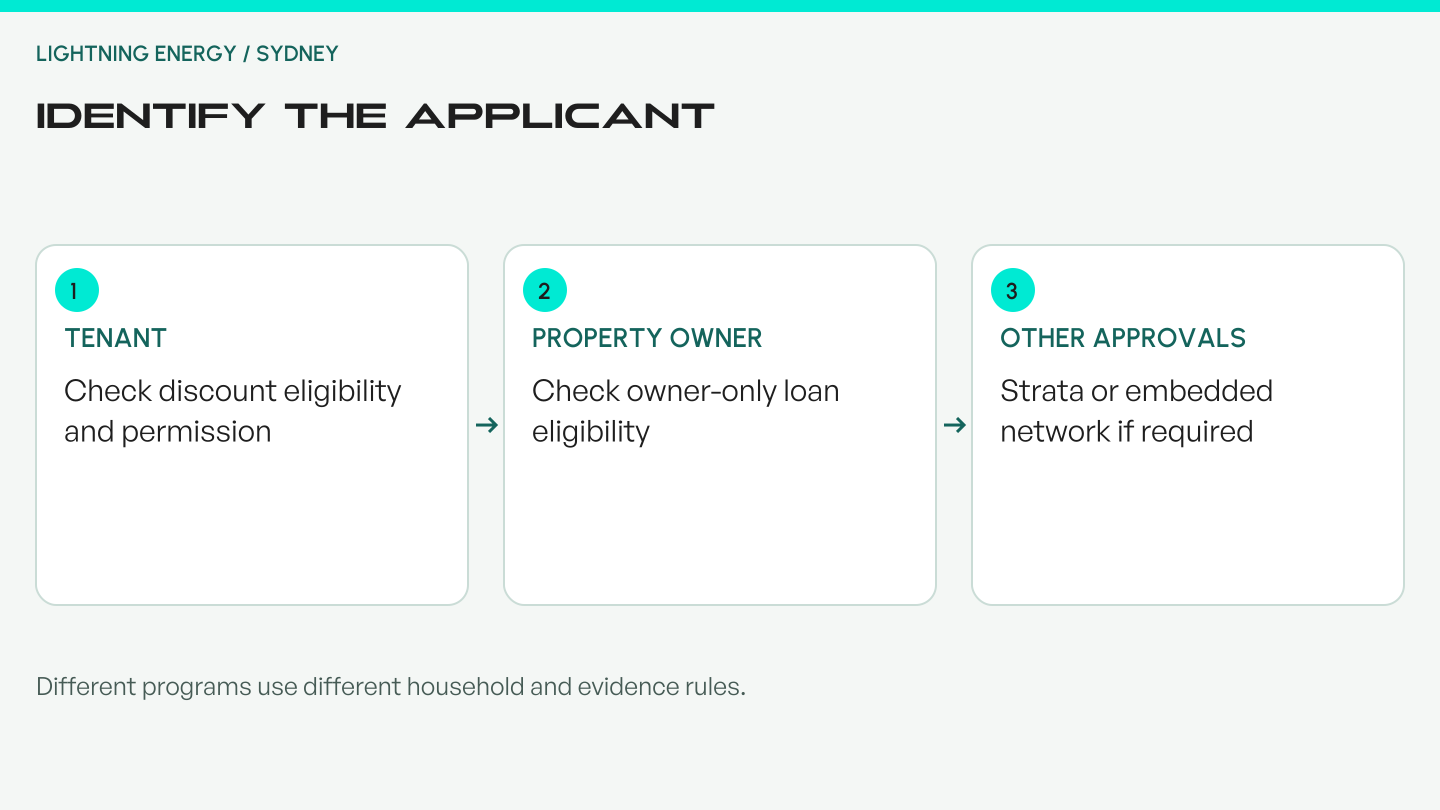
Before applying, identify the applicant, the property owner, the electricity account holder and anyone whose permission is needed. Put those roles alongside the proposed solar or battery scope.
Rules and sources checked on 22 November 2026. This guide explains the decision process; eligibility and the final installation scope need to be confirmed for your property.
Discount and loan eligibility are not interchangeable
The dwelling must be the household’s principal residence, with the required ownership or tenancy evidence.
The discount income route uses combined gross household income up to $80,000, with a separate eligible-concession-card route. Citizenship or permanent residency applies to the income route; check the complete criteria.
The loan guidelines require the borrower to own the property.
A landlord may apply if the owner household meets the applicable income, residency, property and lending tests.
A tenant should therefore not assume they can borrow under the owner-only loan because they qualify for a discount. The two applications may concern different people and documents.
Different programs use different household and evidence rules.
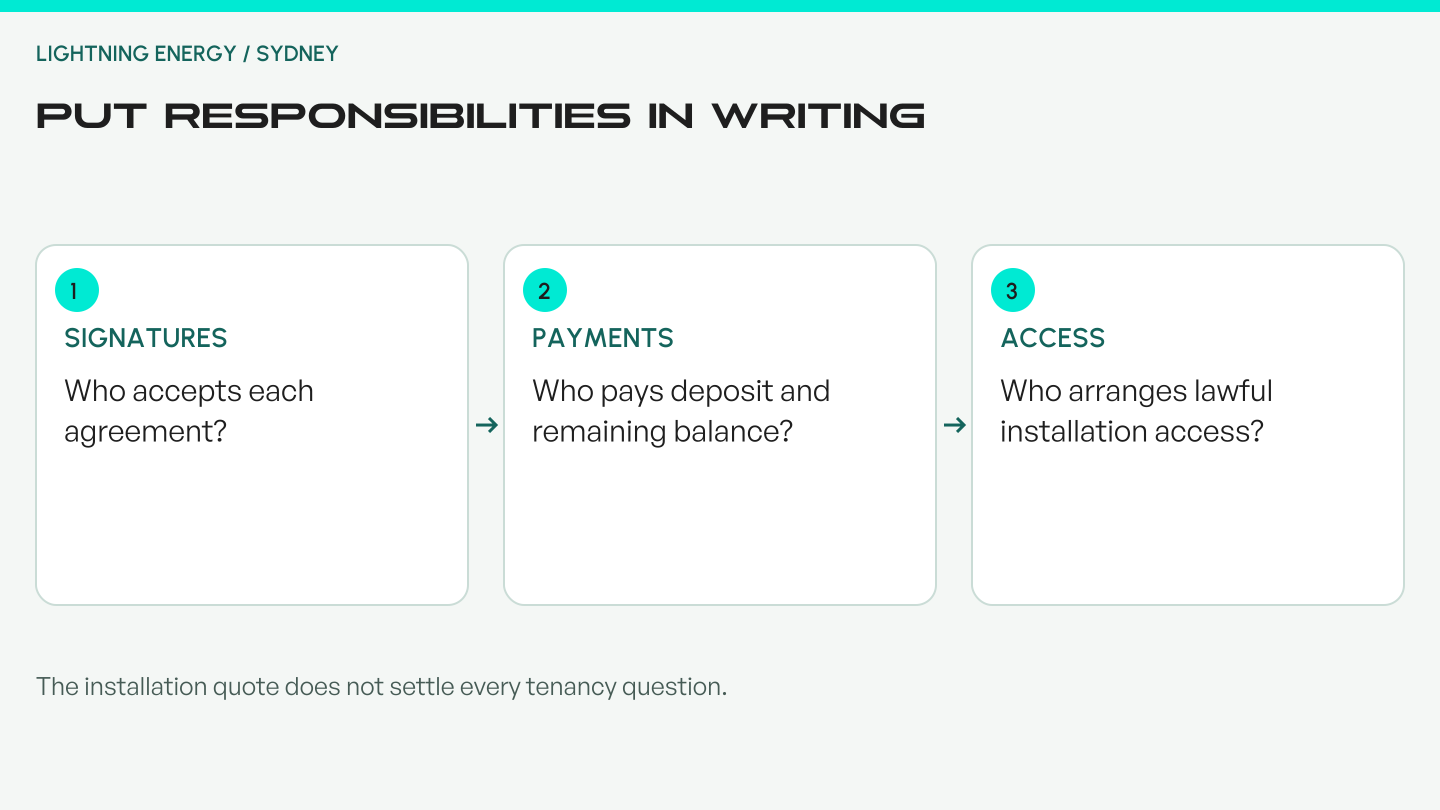
Confirm the required agreements and who pays the deposit and remaining installation cost with the provider.
Create a written project summary before an application: the equipment, intended location, who pays each amount and who authorises access. Make sure the owner and tenant are working from the same version.
If the property is in strata or an embedded network, identify any additional permissions and connection arrangements. An individual household approval does not authorise work on shared property.
Keep any proposed change to rent or tenancy terms separate from the installer’s quote and obtain appropriate tenancy advice. Do not treat an energy-saving estimate as agreement to a rent increase.
The installation quote does not settle every tenancy question.
Check who receives the electricity benefit
For rooftop solar, identify the meter that records generation and consumption. A system serving a common-area meter may not directly reduce an individual tenant’s electricity bill.
For a battery, record the circuits served and the connection arrangement. Do not assume a battery on the building supplies every apartment or provides backup to all occupants.
Ask who can access monitoring and who controls operating settings. If a VPP is proposed, identify the person signing the electricity or battery-control agreement and the account receiving payments.
The agreement should remain understandable when a tenant moves. Document how monitoring access and relevant account arrangements will be handed over without sharing passwords unnecessarily.
Map the payment sequence before booking installation
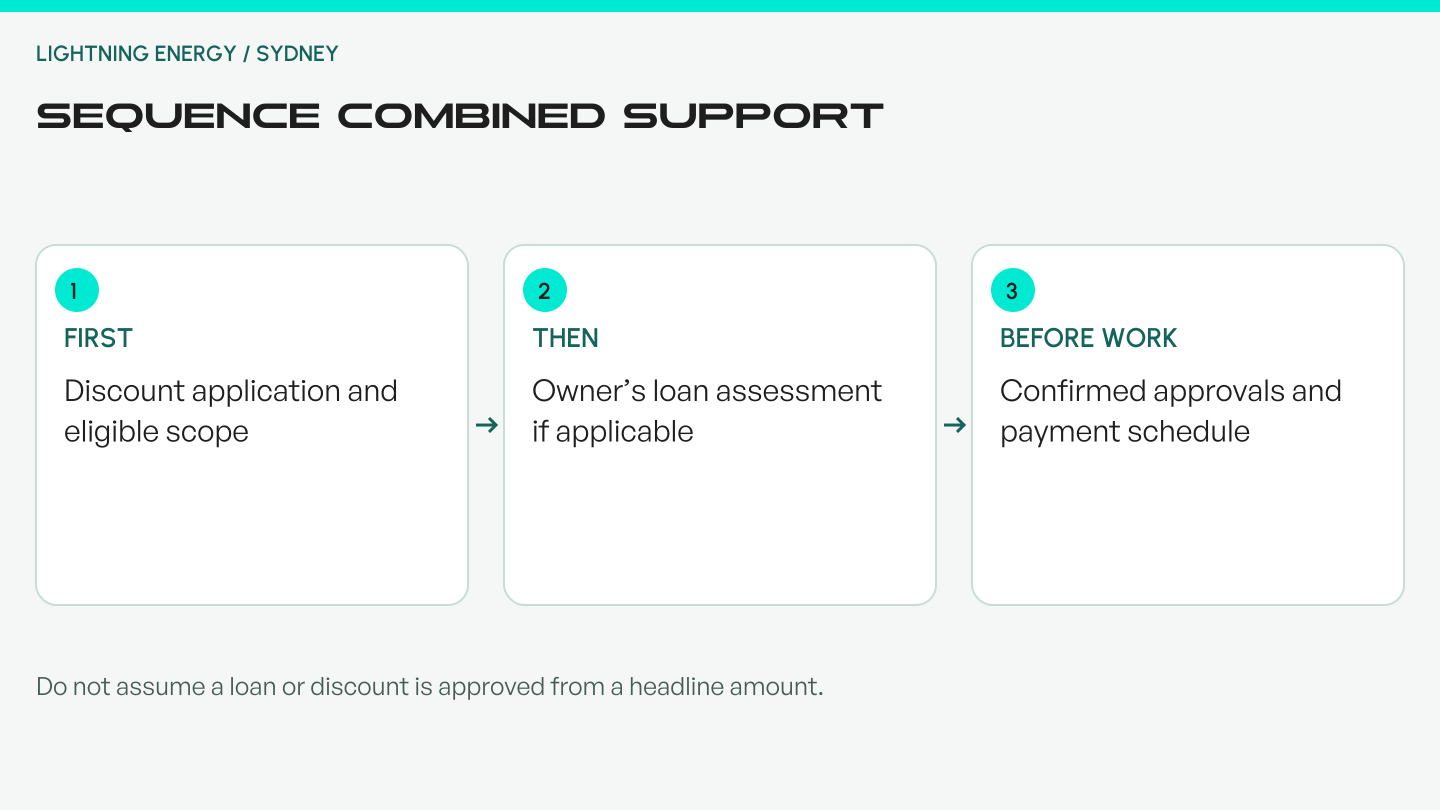
Where both Home Energy Saver pathways are being combined on one purchase, the discount application comes first. The eligible owner then needs the finance provider’s approval for any loan-funded balance.
Ask for a payment schedule showing the deposit, confirmed incentives, approved loan amount and any cash balance. A maximum advertised discount is not a confirmation of the final amount.
If the owner cannot obtain finance, clarify what happens to the proposed installation and any payment already made. Read the program and contract terms before treating the project as booked.
Keep the ordinary equipment warranty and installer obligations visible. The presence of government support does not remove the need for a clear installation contract.
Do not assume a loan or discount is approved from a headline amount.
Plan maintenance and future tenancy changes
Agree who reports faults and how the property manager contacts the installer. Provide simple operating instructions so normal use does not depend on the departing tenant’s phone.
Keep the serial numbers, commissioning records and warranty details with the property file. Retain the rebate and finance records with the party responsible for them.
If electricity retailers or occupants change, check the effects on any VPP arrangement separately. A battery’s installation eligibility and the current energy contract are different matters.
For an upcoming sale or lease change, discuss the timing with the scheme provider and obtain appropriate advice on the agreements. Do not assume a loan or account transfers automatically.
Use a four-party checklist
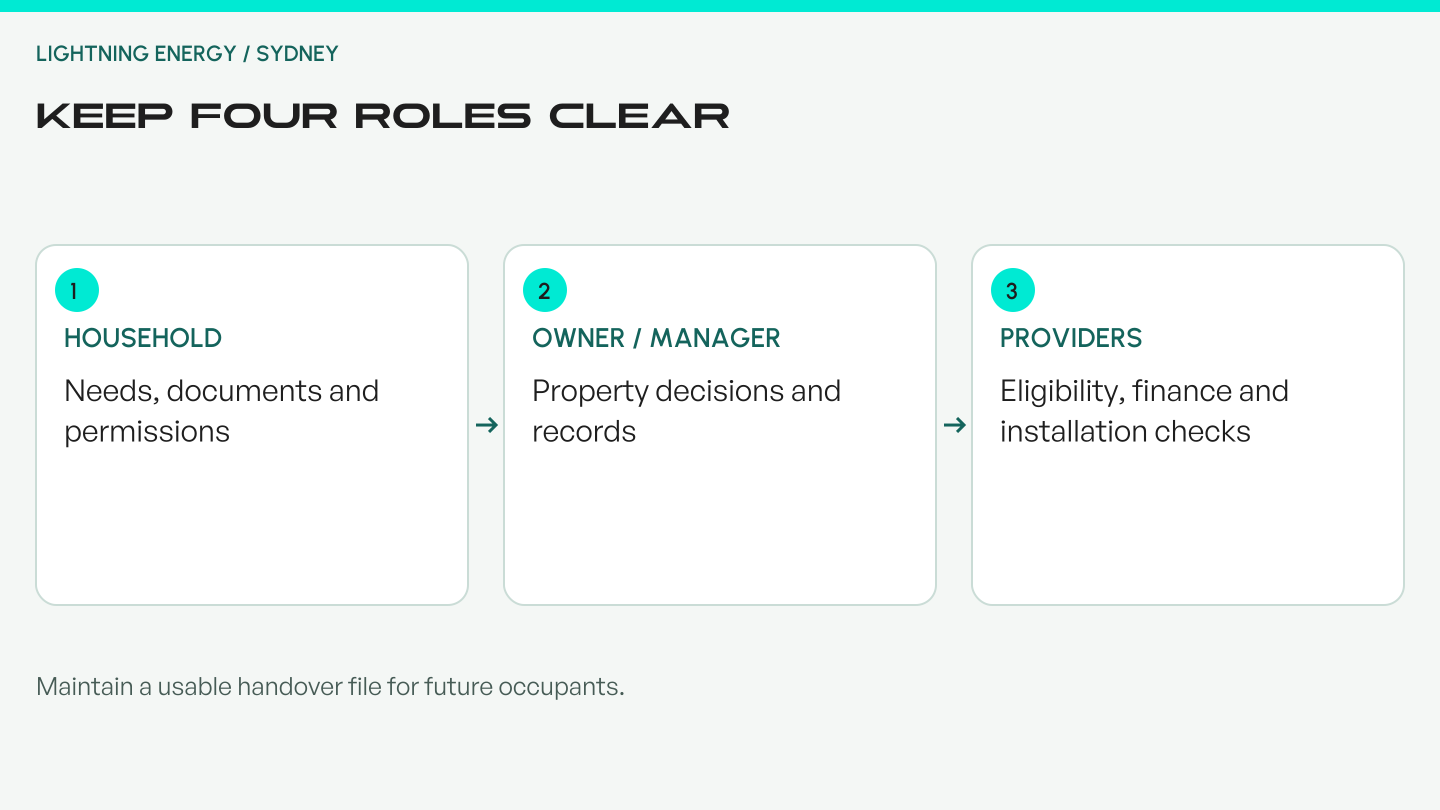
The tenant identifies comfort or bill concerns and provides the required tenancy information. The owner approves the property work and confirms their financial commitments.
The scheme or finance provider assesses eligibility and application sequencing. The installer verifies the site, equipment and connection requirements.
Where a property manager is involved, ask them to keep the agreed scope and access arrangements together. Clear responsibilities are more valuable than a headline that combines several conditional benefits.
Maintain a usable handover file for future occupants.
Frequently asked questions
Can a Sydney tenant apply for a Home Energy Saver loan?
The current loan pathway requires property ownership. An eligible tenant may be able to use the separate discount pathway with landlord permission, while the owner’s loan eligibility is assessed separately.
Does a landlord’s income decide the tenant’s discount eligibility?
The discount and loan use their own household definitions and evidence. Ask the providers to assess the relevant tenancy household and owner household rather than combining the two tests informally.
Cover: existing Lightning Energy website photography, used as installation or home-energy context. The pictured property is not claimed to be in the suburb discussed or to have received a particular incentive.
Book a consultation and we'll map solar, storage, hot water, and the rebates around your bills and your goals.
Loading consultations…
Lightning EnergyPlan your next energy upgrade.
⚡
Hi, I’m Lightning Energy’s project guide. I’ll ask a few practical questions, explain what usually matters for your project, and help you decide on a useful next step — no guesswork or sales pressure.
First, what kind of property are we planning for?