
Solar or Battery First in Sydney? Planning a $15,000 Home Energy Saver Loan
Compare solar first, a battery for existing solar and a combined system within a Sydney Home Energy Saver loan budget. Separate rebates, repayments and cash costs.
Compare solar first, a battery for existing solar and a combined system within a Sydney Home Energy Saver loan budget. Separate rebates, repayments and cash costs.

A $15,000 loan limit is a financing ceiling, not a recommended system size.
For a Sydney household, the useful first question is which upgrade addresses the electricity you currently buy and whether the resulting repayments fit the budget.
Compare solar first, a battery added to suitable existing solar, and a combined installation. Use the price after confirmed incentives, then separate the amount borrowed from any cash contribution.
Rules and sources checked on 22 November 2026. This guide explains the decision process; eligibility and the final installation scope need to be confirmed for your property.
For new applications, the November Home Energy Saver guidelines set a combined taxable household income limit of $150,000.
The borrower must own the NSW property and meet the residency and other program requirements.
The previous $210,000 threshold is not the current limit for a new application. Finance-provider approval is still required even when the household appears to meet the program criteria.
Check approved suppliers and eligible products before committing to an installer. A quote from outside the provider’s accepted process should not be assumed to qualify later.
Ask whether the whole proposed scope can be financed, including any necessary electrical work. If some costs are excluded, show the cash contribution separately.
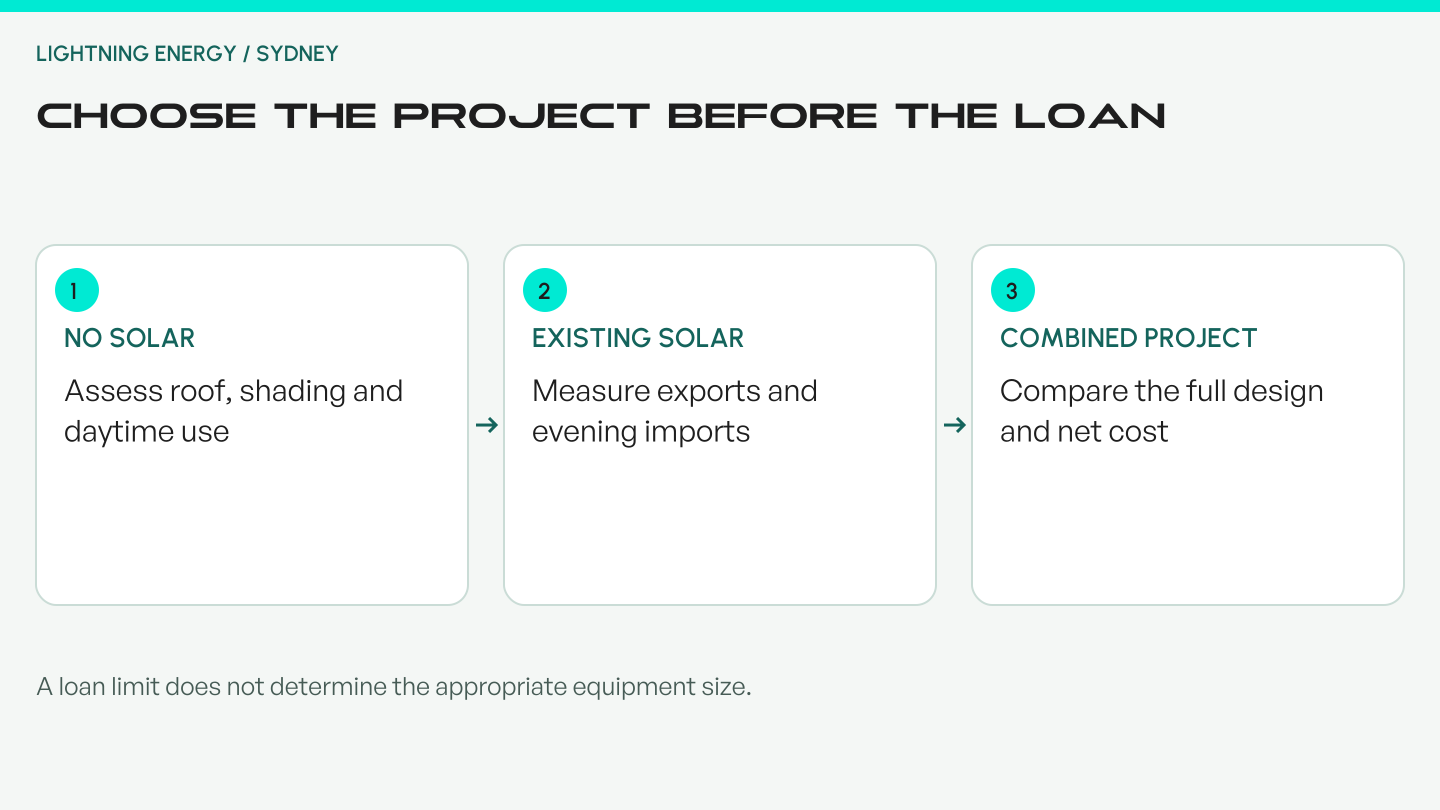
If the house has no solar, begin with roof suitability, shading, daytime consumption and the network connection process. A battery cannot create the energy that the household uses.
A solar-first design can prioritise electricity used while the system generates. Review how much consumption could sensibly move into daylight hours without assuming every appliance can be rescheduled.
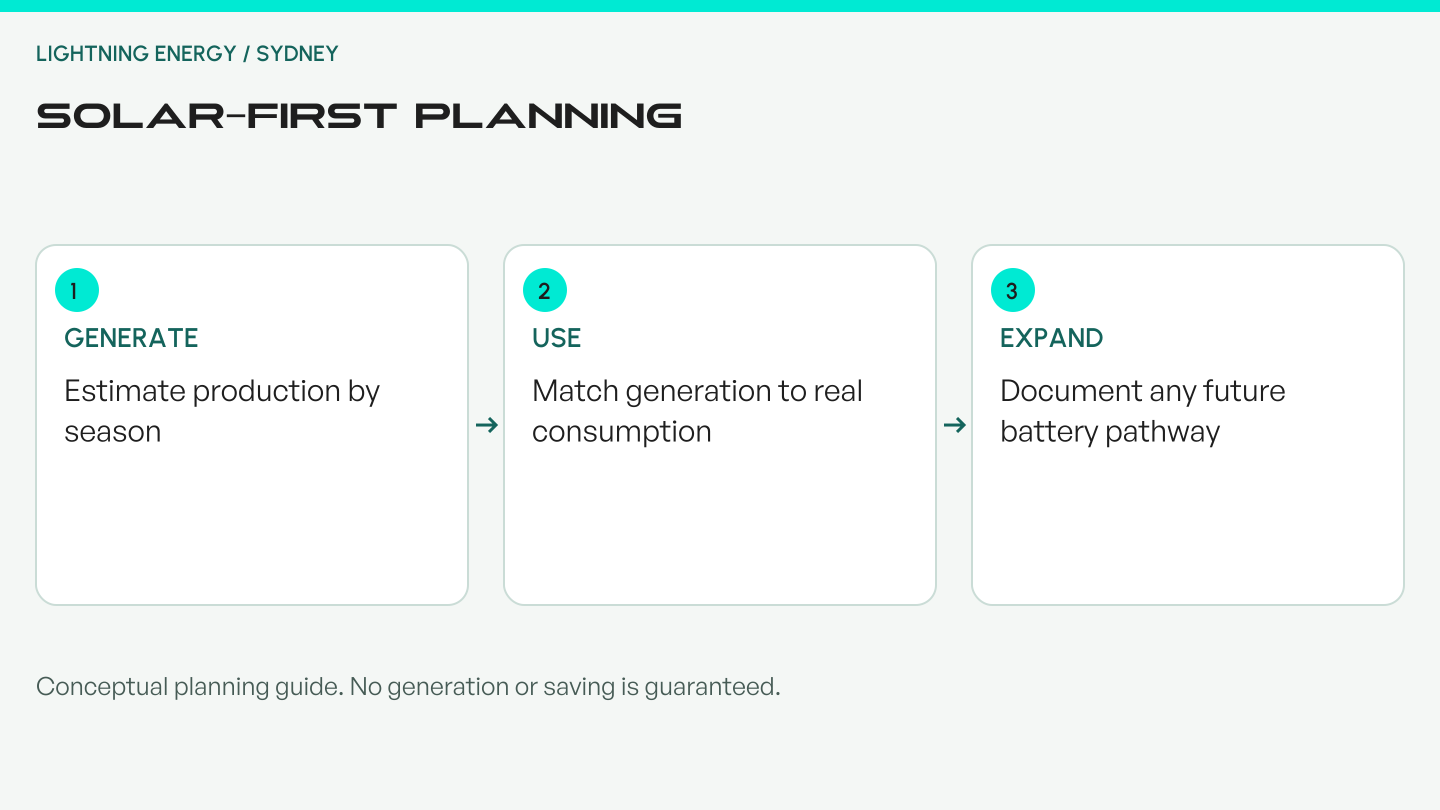
Ask for seasonal production estimates and the assumptions behind them. A single annual generation figure can hide winter shortfalls or summer exports that have a lower value than avoided imports.
If a battery may follow later, discuss the future connection method, available space and likely extra labour. Do not pay for an unspecified future capability without understanding what equipment it requires.
For a home with working solar, inspect interval data for midday exports and evening imports. Compare actual energy flows before deciding how much storage would be useful.
Confirm the existing inverter and battery connection design. A compatible installation may keep the solar inverter, while another design may require replacement or additional equipment.
The federal battery rules cover eligible batteries with new or existing solar.
They also limit repeat battery STC claims at a premises, so a staged plan needs careful checking.
Battery backup is a separate scope item. Ask which circuits remain powered during an outage, what switching equipment is needed and whether that work is included in the quote.
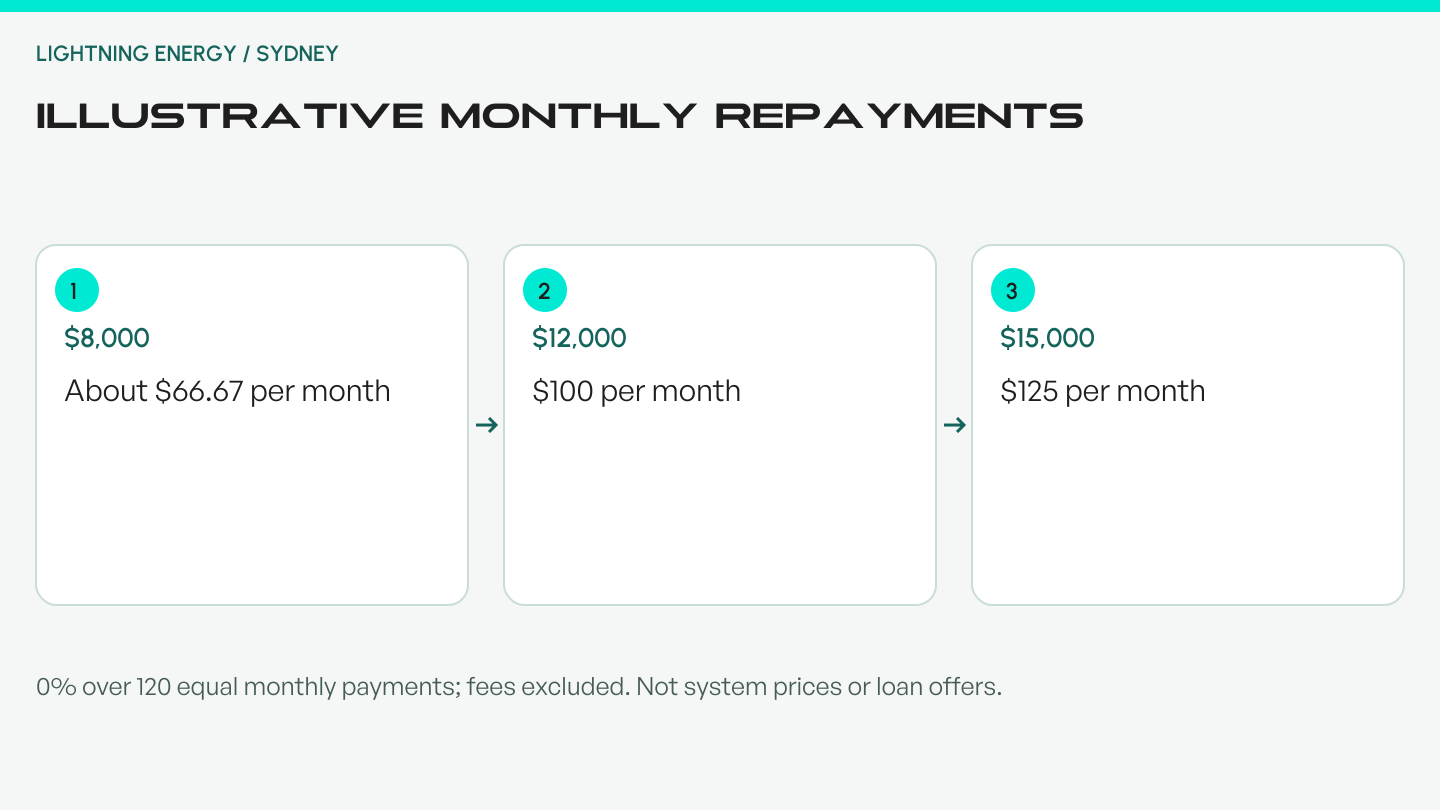
The following amounts are arithmetic examples only, not Lightning Energy offers or estimates of what a particular system should cost. Assume each is an eligible net installation price after confirmed incentives.
An $8,000 upgrade financed over 120 equal monthly payments at 0% is about $66.67 per month. A $12,000 upgrade is $100 per month, and a $15,000 upgrade is $125 per month.
These examples exclude any fees and use a ten-year term that must actually be offered and approved. A shorter term raises the payment. The lender’s repayment frequency and rounding may differ.
Compare those repayments with a conservative bill-saving estimate, not with a guaranteed claim that the system pays for itself. Keep a budget for electricity bills, maintenance and any unfinanced work.
If the household may qualify for Home Energy Saver’s separate discount, check that pathway before finalising the loan. The sequence can affect whether both forms of support can be used on the same purchase.
Brighte’s program page states that the discount is separate from its loan and must be applied for first when combining them.
Do not subtract a potential discount until eligibility and the quote are confirmed.
For loan terms, compare the actual offers. Brighte lists no establishment or weekly account-keeping fee, but missed-payment fees can apply. Plenti also publishes late-payment terms on its program page.
Zero interest does not mean the principal disappears. Keep a written record of the amount financed, total repayments, late-payment terms and the date repayments begin.
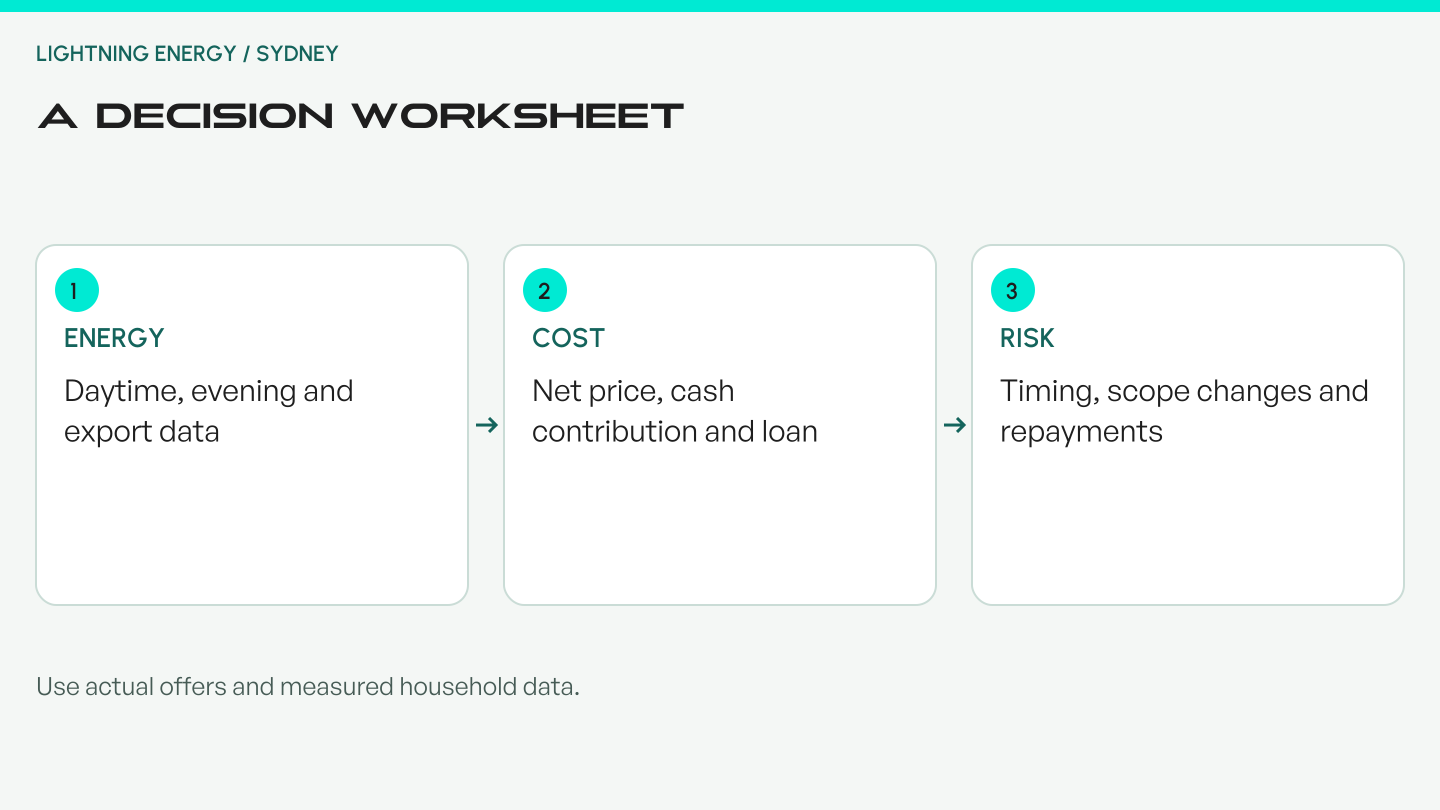
Create one worksheet with daytime imports, midday exports, evening imports, the current tariff and the proposed net cost. Use actual bills or interval data, with gaps in the data clearly identified.
Ask for a solar-first option and a combined option if the house has no solar. For an existing solar home, compare the battery upgrade with any necessary solar or inverter work.
The strongest decision is the smallest complete project that meets the household’s stated needs and leaves room in the budget. Borrowing the maximum is not a requirement of the program.
No. It is repayable finance. Any approved installation incentive reduces the purchase cost; the loan finances an eligible balance that still has to be repaid.
The Home Energy Saver program has its own cap. A project costing more needs an agreed cash contribution or separately assessed finance; do not assume the excess qualifies for the same terms.
Size a battery from interval data.
November 2026 loan guidelines.
Brighte Home Energy Saver terms.
Plenti Home Energy Saver terms.
Cover: existing Lightning Energy website photography, used as installation or home-energy context. The pictured property is not claimed to be in the suburb discussed or to have received a particular incentive.
Diagrams are conceptual guides.
Available times
Book a consultation and we'll map solar, storage, hot water, and the rebates around your bills and your goals.
Question 1 of 6