
When Do Microinverters or Optimisers Justify Their Extra Cost?
Find out when microinverters or optimisers solve a real roof problem, and how to compare their added cost, shade benefit, monitoring and service access.
Find out when microinverters or optimisers solve a real roof problem, and how to compare their added cost, shade benefit, monitoring and service access.

Microinverters or optimisers can be worth paying for when they address a specific layout, shade or monitoring requirement. They are harder to justify when the quote offers a blanket generation claim without modelling your roof.
The right comparison is a supported string-inverter design against a supported alternative on the same house. Panel-level electronics cannot create sunlight that an obstruction prevents from reaching a panel.
Start with a proper shade assessment. Its timing and location matter more than simply saying the roof is shaded.
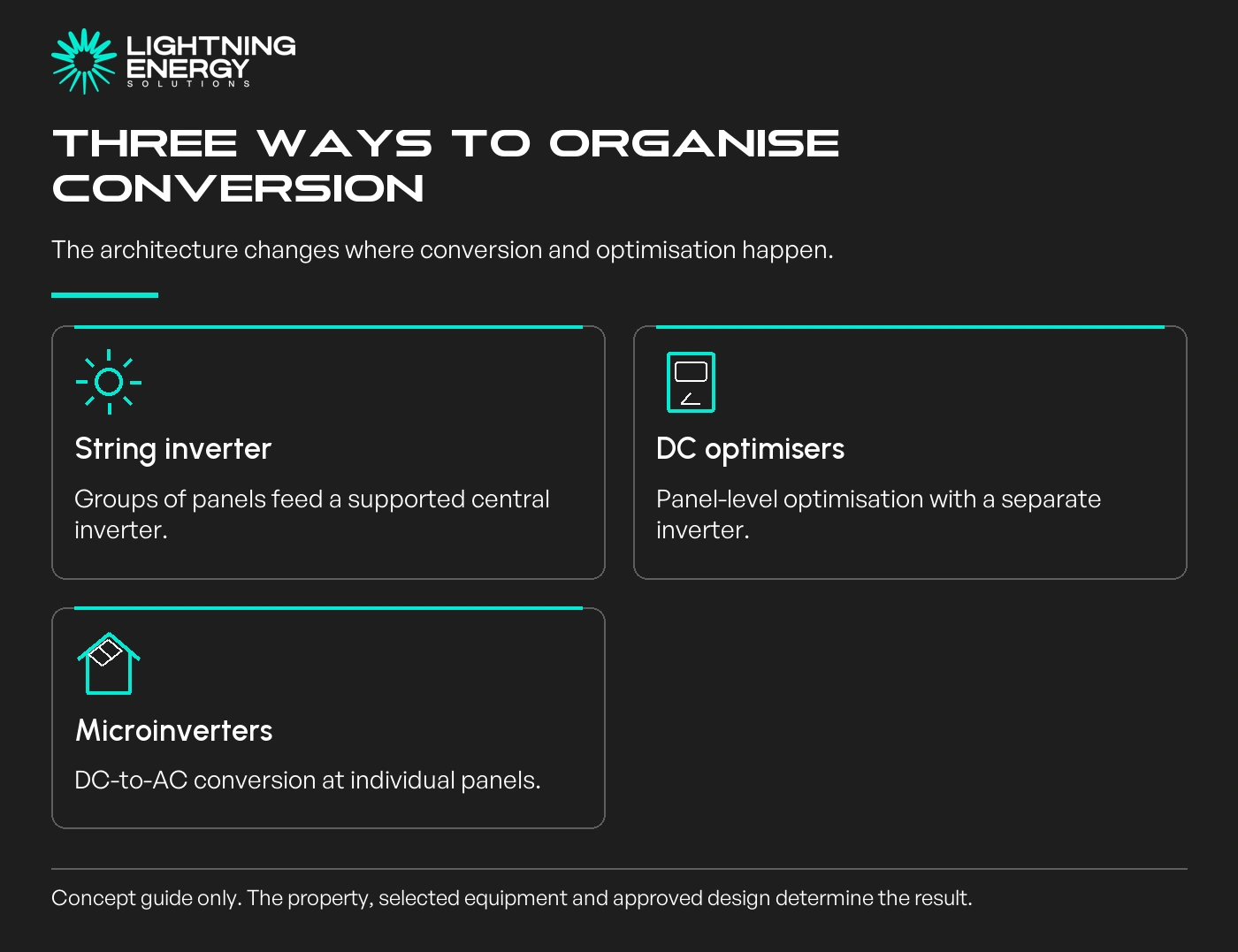
A string inverter converts the DC output from groups of panels into AC electricity. Its supported inputs and tracking arrangements determine how different panel groups can be organised.
Microinverters perform that conversion at individual panels. DC optimisers manage panel output while retaining a separate inverter for DC-to-AC conversion. The equipment must be designed to work together.
The Australian Government inverter guide explains these functions and their possible benefits on complex or partially shaded roofs.
Do not assume every optimiser is interchangeable or that every microinverter suits every panel. Current, voltage, permitted configurations and communications requirements remain model-specific design checks.
SolarEdge's Australian product information describes its optimiser and inverter approach. It is not the installation specification for another manufacturer's system.
A roof split into several small faces may constrain a conventional string layout. Panel-level conversion can offer useful flexibility where the selected equipment and network connection support the arrangement.
On a simpler roof, a well-designed string system may already provide a practical solution. Paying for more roof electronics does not automatically produce a meaningful additional bill reduction.
Imagine one proposed layout places panels behind an afternoon chimney shadow. Compare relocating those panels, changing the grouping and using panel-level electronics before assuming the most expensive architecture wins.
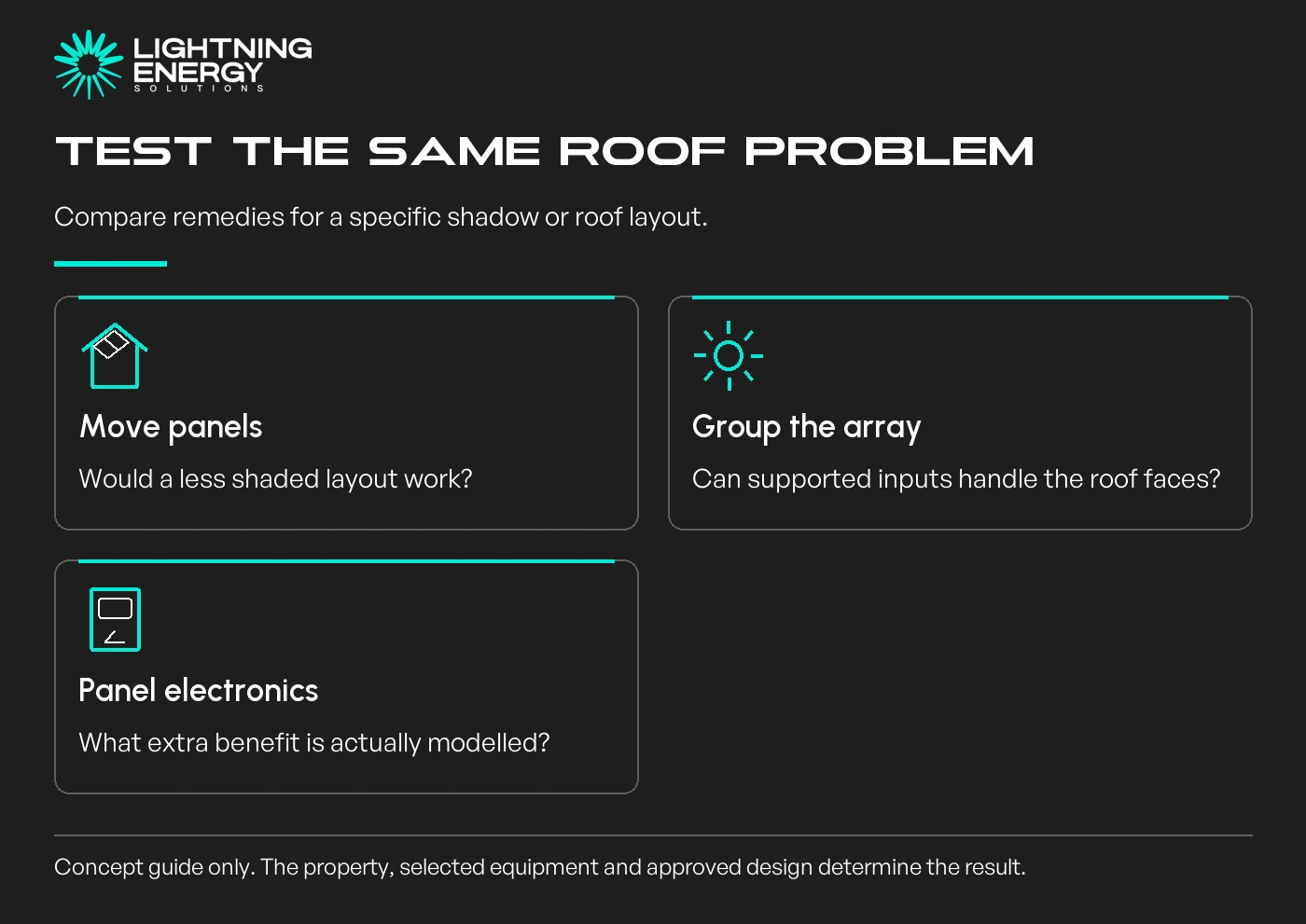
Require the same panel capacity, weather file, roof directions and shade assumptions in the energy estimates. Otherwise, a claimed advantage may partly come from comparing different systems.
Ask for the additional annual energy estimate and its uncertainty. Then ask how much of that extra generation the household can use or export under the actual connection and tariff.
Our solar design service can compare those alternatives before equipment selection becomes a fixed decision.
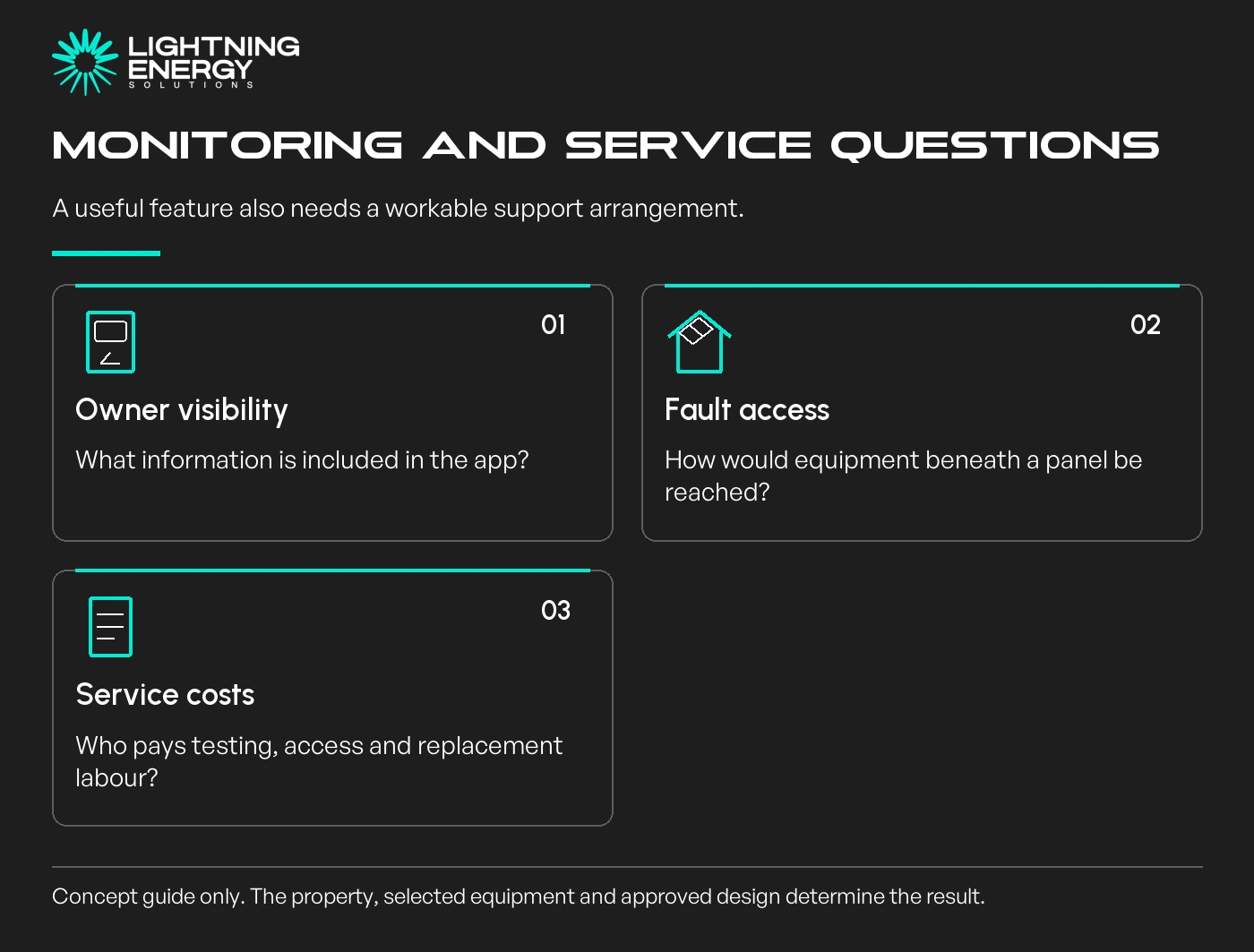
Panel-level monitoring can help reveal differences between modules, when the specified monitoring equipment and service are included. Confirm what the homeowner can actually see and whether extra metering is required.
Also ask how a failed unit is diagnosed and accessed. Equipment beneath a panel may require roof access and panel removal to service. A long product warranty does not answer every labour-cost question.
Keep a clear distinction between resilience and immunity from failure. A system can retain some generation after an individual component fault without being guaranteed uninterrupted operation.
Our inverter guide explains the wider system roles, including later battery integration. Future storage plans should be included in this comparison too.
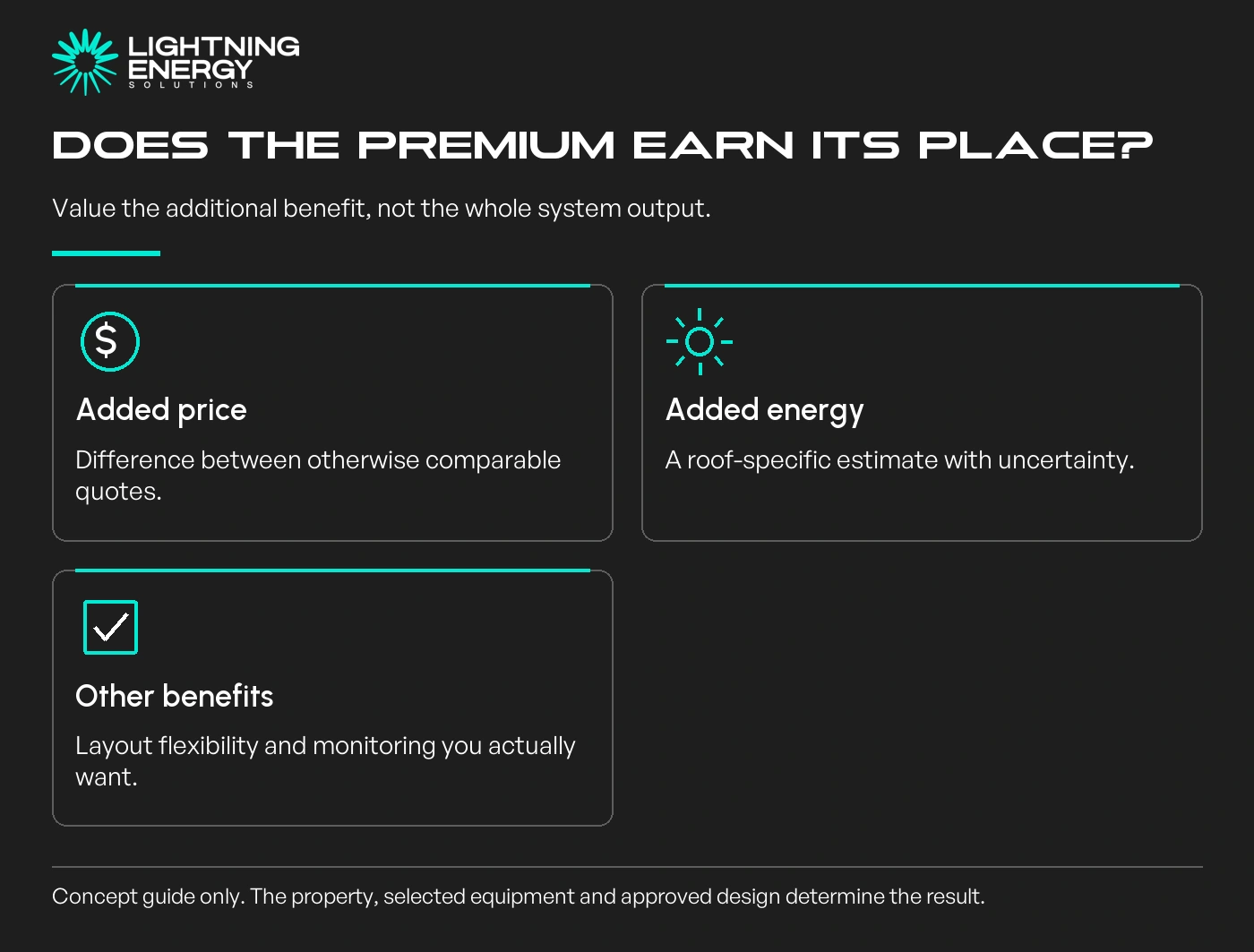
Compare the incremental installed price with the estimated incremental benefit. Use the value of the extra energy at the times it occurs, rather than valuing every extra kilowatt-hour at your import rate.
If the expected benefit is small, uncertain or mainly exported for a modest credit, a premium may take longer to justify. Better monitoring or layout flexibility can still be reasons to choose it, provided you value them explicitly.
There is no universal shade percentage or roof shape that makes one architecture the correct purchase. The supported layout, credible modelling and service arrangement should drive the decision together.
Request two comparable designs, including the shade model, full equipment list and after-sales terms. That turns an argument about technology into a practical decision about your home.
Available times
Book a consultation and we'll map solar, storage, hot water, and the rebates around your bills and your goals.
Question 1 of 6