
Why a Large Home Battery May Not Fill During Melbourne Winter
Understand why a larger battery can remain partly empty in Melbourne winter, and compare solar surplus, daytime heating and supported charging options.
Understand why a larger battery can remain partly empty in Melbourne winter, and compare solar surplus, daytime heating and supported charging options.

A larger battery cannot store electricity that was never available to charge it. In Melbourne winter, the useful question is how much solar remains after the household's daytime use, not simply how much storage fits on the wall.
An oversized summer result can hide that difference. A system that exports plenty on a bright January afternoon may face a very different balance when heating runs through a cloudy July day.
The battery shares solar with appliances already operating. Compare generation and household demand interval by interval to identify the charging opportunity. Keep any grid charging visible as a separate source of energy.
The Australian Government's solar guide explains that seasonal production and electricity use can change together, including lower winter generation and greater heating demand.
Government guidance on seasonal solar and battery use.
For the generation side of that picture, read our Melbourne winter solar guide.
A seasonal decline is different from a fault, though unexplained changes still deserve investigation.
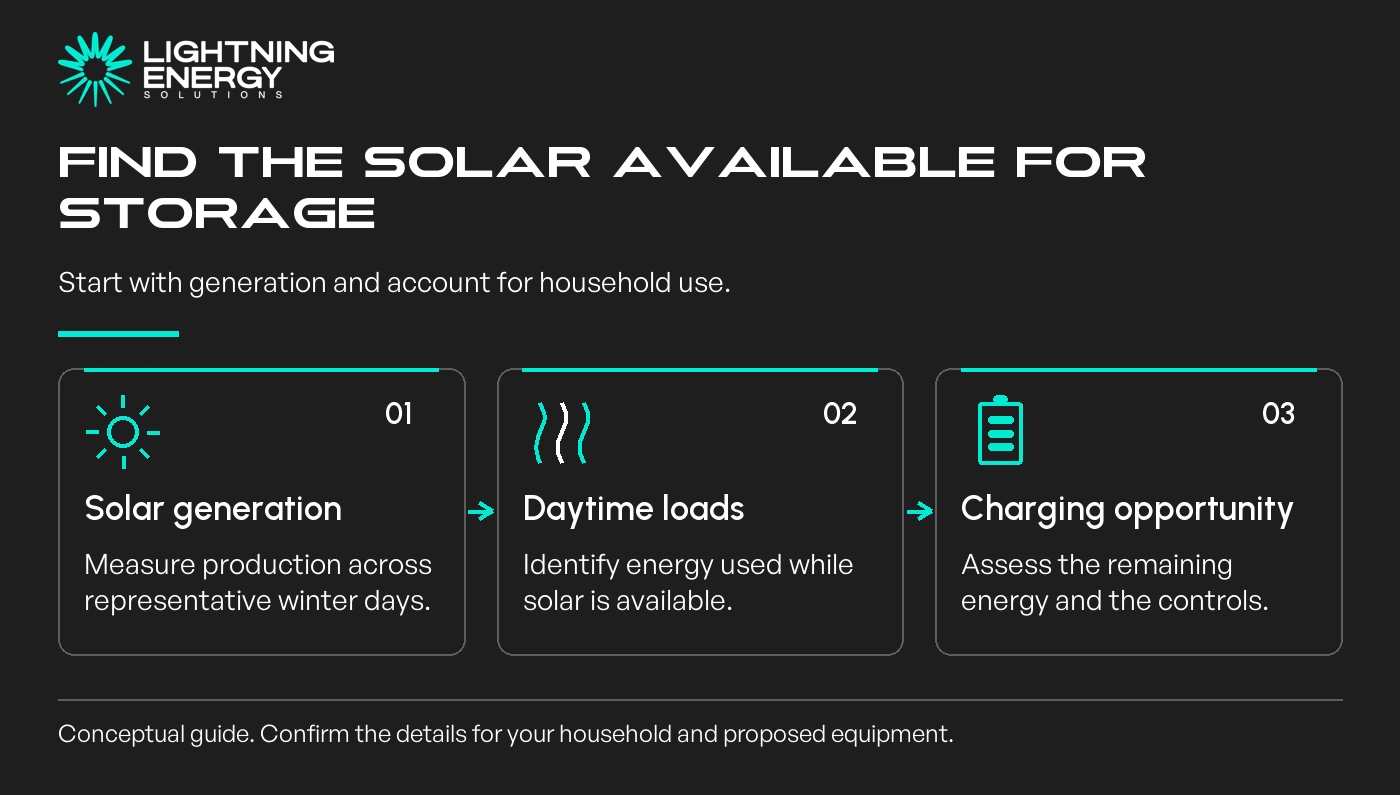
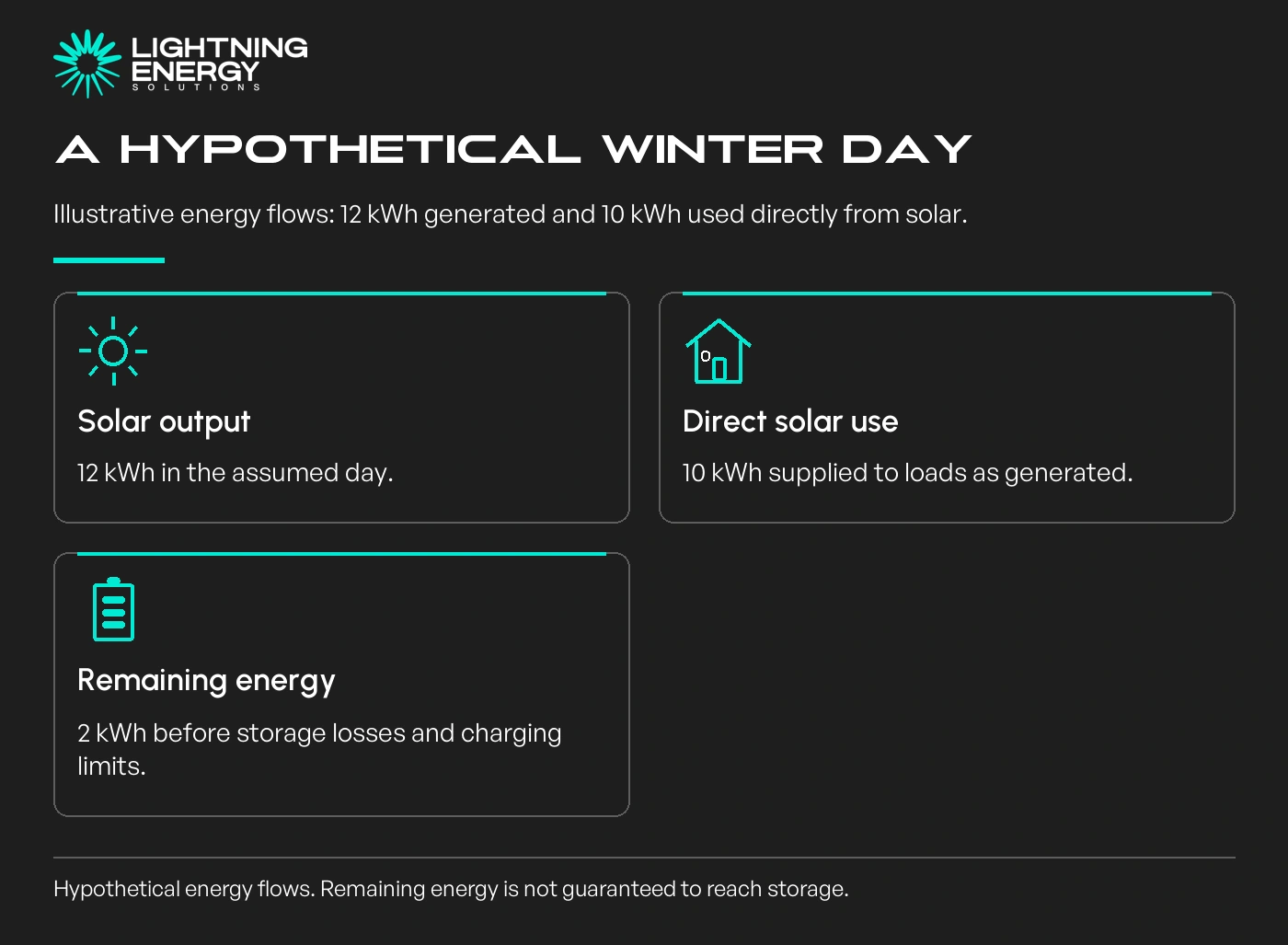
For illustration, suppose solar generates 12 kWh and directly supplies 10 kWh to household loads as it is generated. That leaves 2 kWh before storage losses. A 15 kWh battery does not create a larger surplus.
These are assumed energy paths, not totals copied from a bill. Subtracting total daytime demand from daily generation alone does not show battery charging. A designer must use interval data, charging limits and controls.
If direct solar use falls to 8 kWh with the same 12 kWh generation, 4 kWh remains before storage losses. Actual timing and controls determine whether that energy can reach the battery.
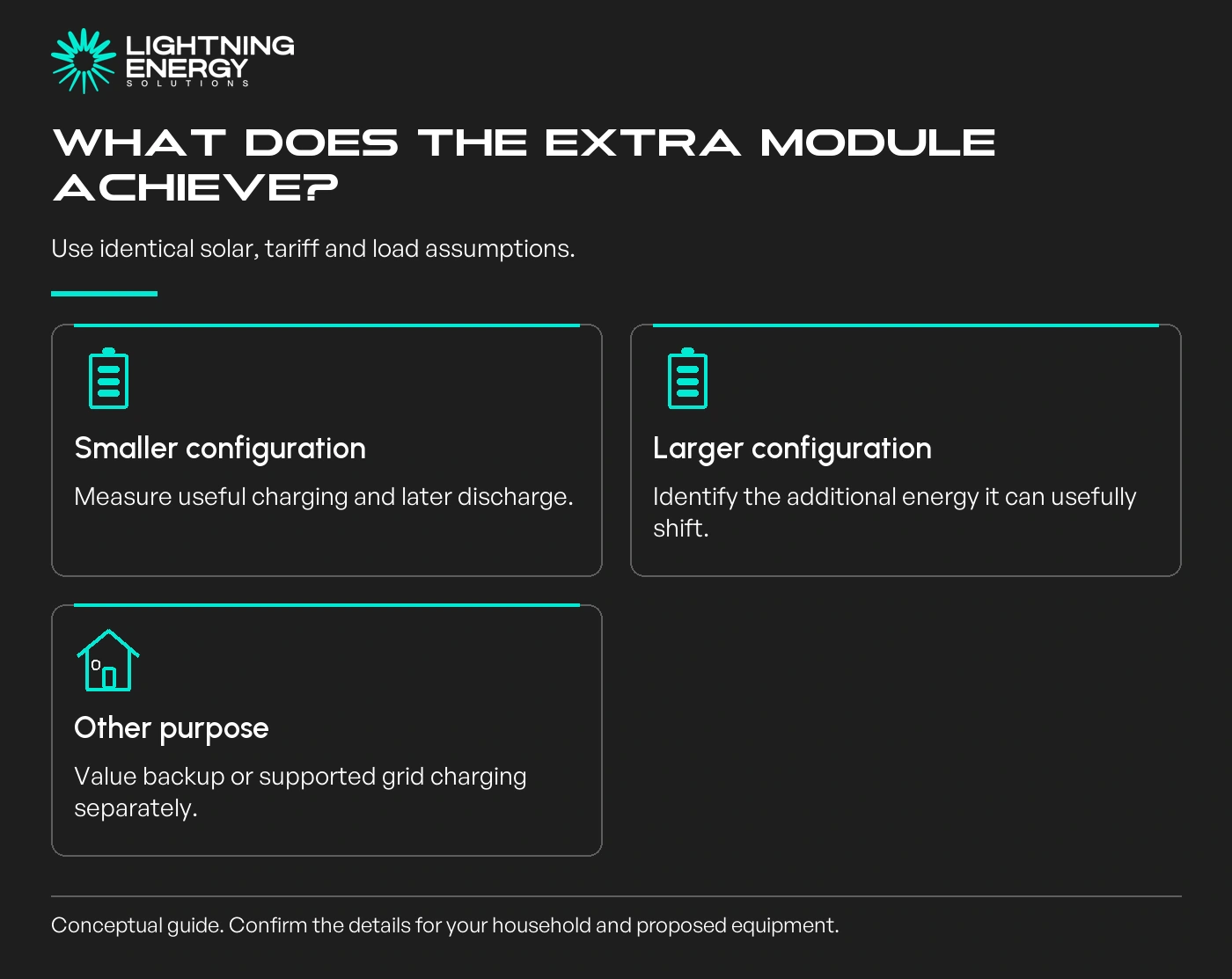
Ask the supplier to model both configurations against the same solar system and usage. Count the extra energy the larger option could actually shift, including the days when neither configuration fills from solar.
A larger system may still serve a separately valued backup need or an economical supported grid-charging strategy. State that purpose clearly rather than calling every additional module a winter solar-savings upgrade.
Our battery value guide provides the wider financial context. Your own tariff and charging opportunities are the inputs that matter.
If roof space is constrained, ask whether the existing solar is performing as expected and whether any practical array changes are supported. Do not assume a battery can compensate for every limit on generation.
Heating and other essential loads must still meet household needs. Where timing is flexible, compare direct solar use with storing energy first. Avoid shifting a load merely to make the battery's app appear busier.
Grid charging needs its own calculation. Confirm the system supports it, read the actual tariff conditions and allow for losses. A low advertised rate may apply only during specific hours or alongside other charges.
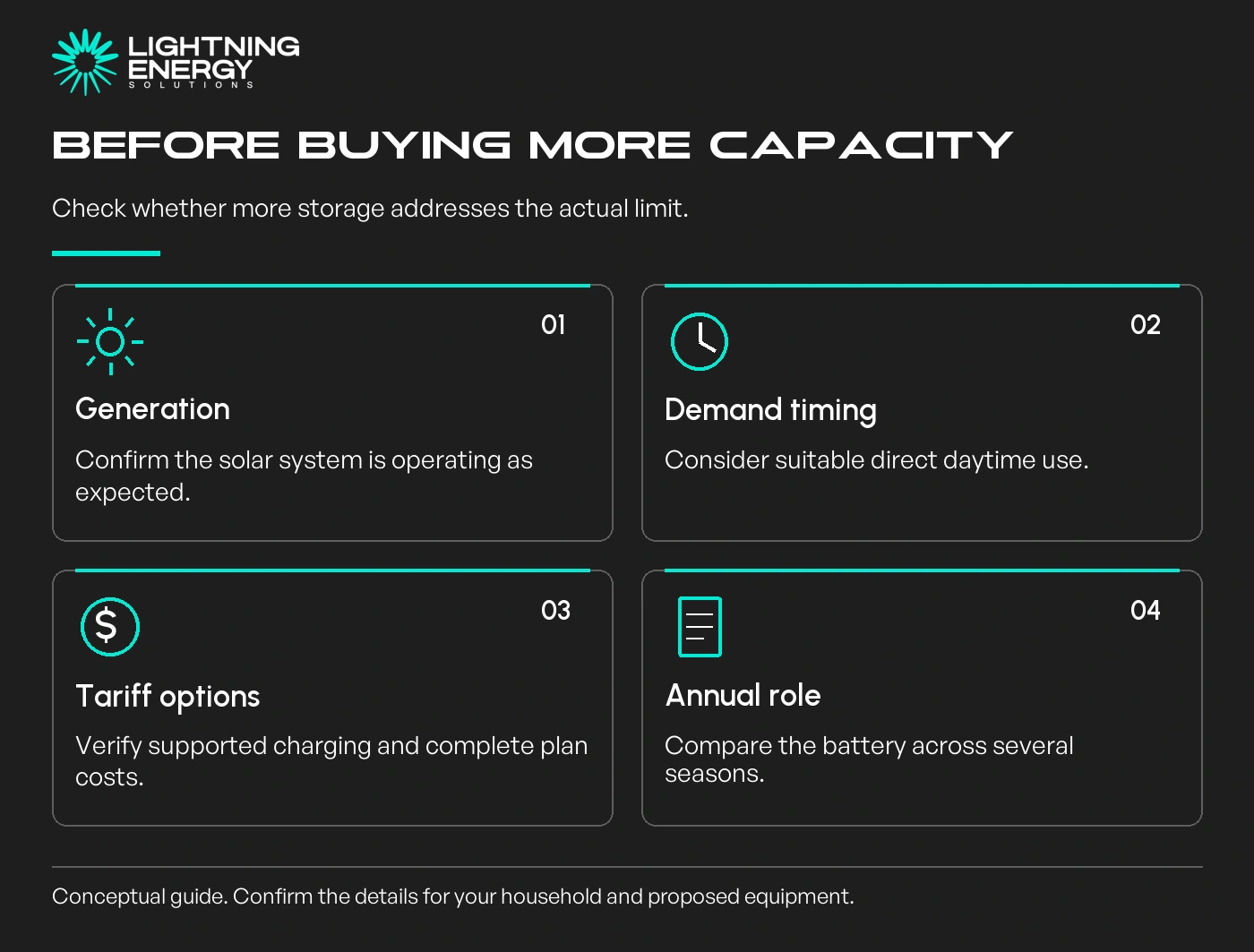
A winter battery that does not reach 100% is not automatically faulty or badly chosen. Judge it against the agreed design, available energy, settings and the work it performs across representative seasons.
However, paying for spare capacity that has no regular charging source or useful role is difficult to justify. Ask for that extra capacity's benefit to be shown separately before committing to it.
The battery quote checklist helps record those assumptions. Keep a copy of the seasonal model so you can compare actual operation with what was proposed.
Plan your battery upgradeAsk Lightning Energy to compare winter and summer charging opportunities before deciding whether a larger battery is useful for your home.Available times
Book a consultation and we'll map solar, storage, hot water, and the rebates around your bills and your goals.
Question 1 of 6