Anker SOLIX XE in Australia: Two Battery Cycles a Day, but What Does That Mean for Your Home?
Anker’s XE announcement puts two-cycle battery operation and balcony solar in the spotlight. We check the tariff maths, backup questions and Australian approval gaps.
LLuke CoveLightning Energy29 October 2026 · 8 min read
Anker SOLIX has put its XE home battery and balcony-solar range in front of Australian buyers at All Energy Australia.
The interesting question is what these products could change at home, beyond the exhibition headlines.
This is a researched announcement analysis, checked on 29 October 2026.
We have not installed or tested the XE, and we have not confirmed local stock, installed pricing or a delivery date for a particular configuration.
It introduces the XE alongside Solarbank 4 Pro and Solarbank 4 Max AC balcony products.
Treat it as a launch announcement, not an independent performance test.
What Anker is saying about the XE
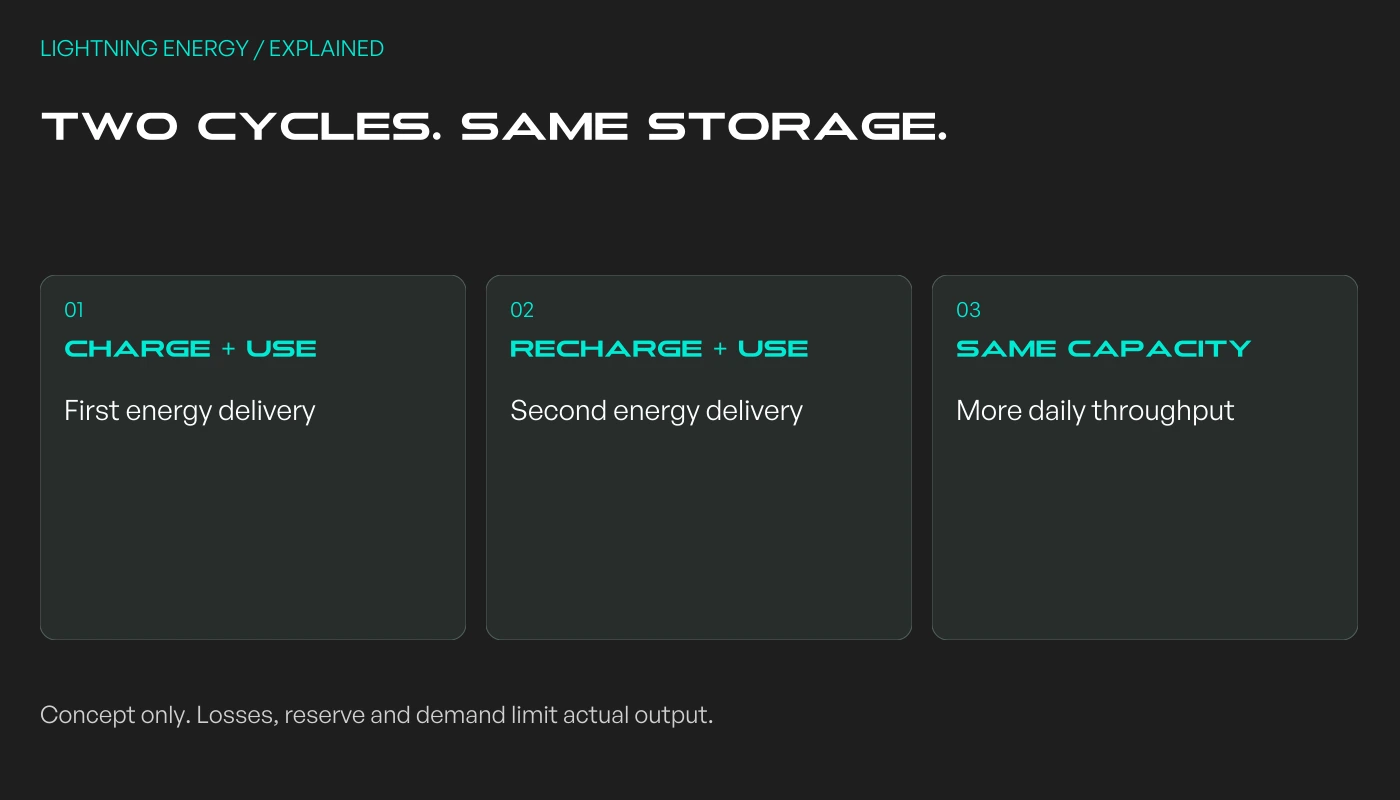
Anker’s Australian XE page describes an integrated inverter and 7 kWh battery architecture, a 28 kWh configuration about 1.3 metres tall, and operation involving up to two charge-and-discharge cycles per day.
The company advertises 10,000 cycles and a ten-year warranty, with Power Dock Mini for backup and Anka energy-management software.
These are manufacturer claims, not results from our testing.
There is a specification issue to resolve before quoting: the page advertises up to 30 kWp solar input, while its technical table displays 1,500 W.
We cannot reconcile those figures from the page and will not choose one for a system design.
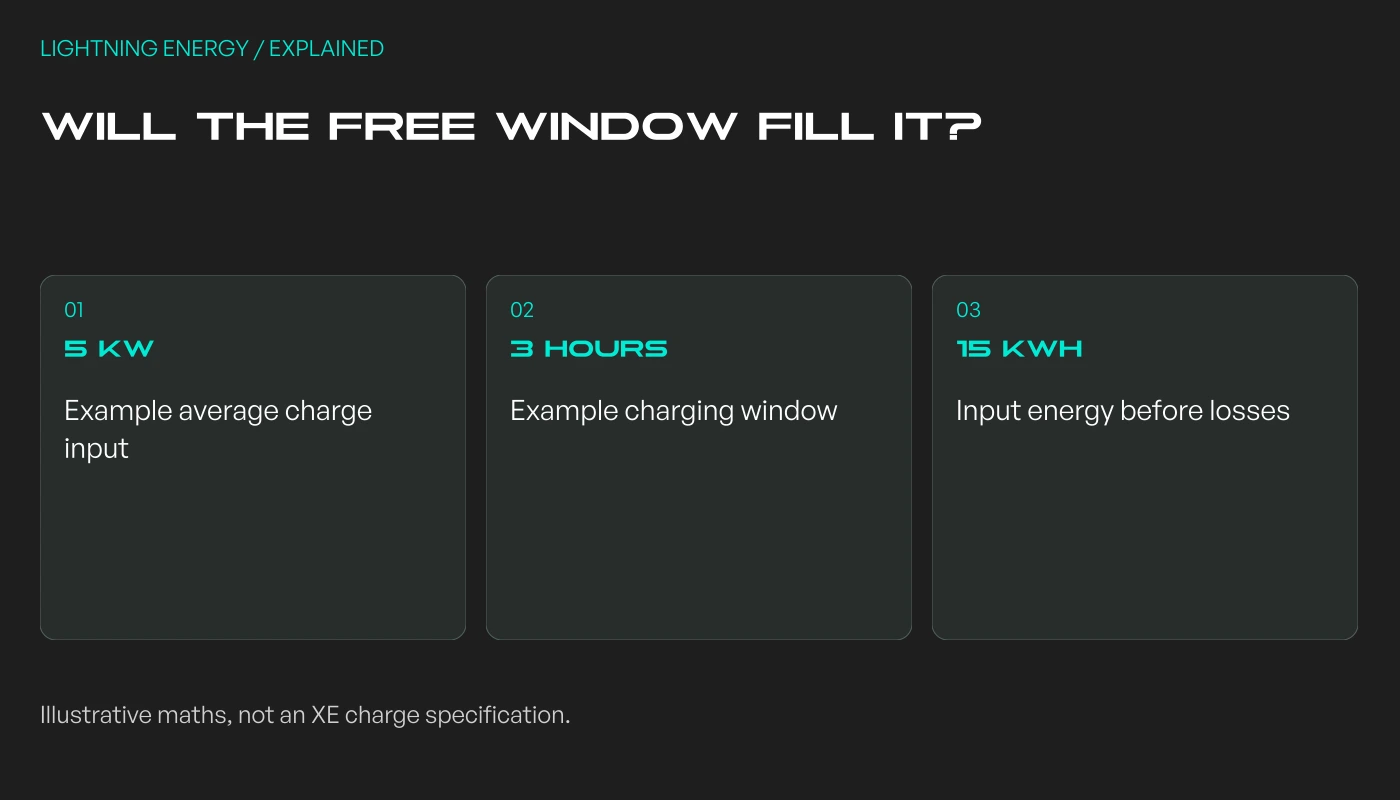
Here is a charging-window example, independent of any XE specification: a charger averaging 5 kW for three hours takes in 15 kWh.
The energy retained in the battery is lower once charging losses are allowed for.
A 28 kWh battery therefore cannot be assumed to fill from empty merely because the free period lasts three hours.
Its starting charge, actual charge power, household loads and available solar all change the result.
Illustrative arithmetic only. The 5 kW value is an example, not a confirmed XE charge rating.
A second cycle has to earn its place
Cheap overnight power is still a cost.
The useful calculation is the value of electricity avoided later, minus the charging cost, losses and any extra fees or changes to the electricity plan.
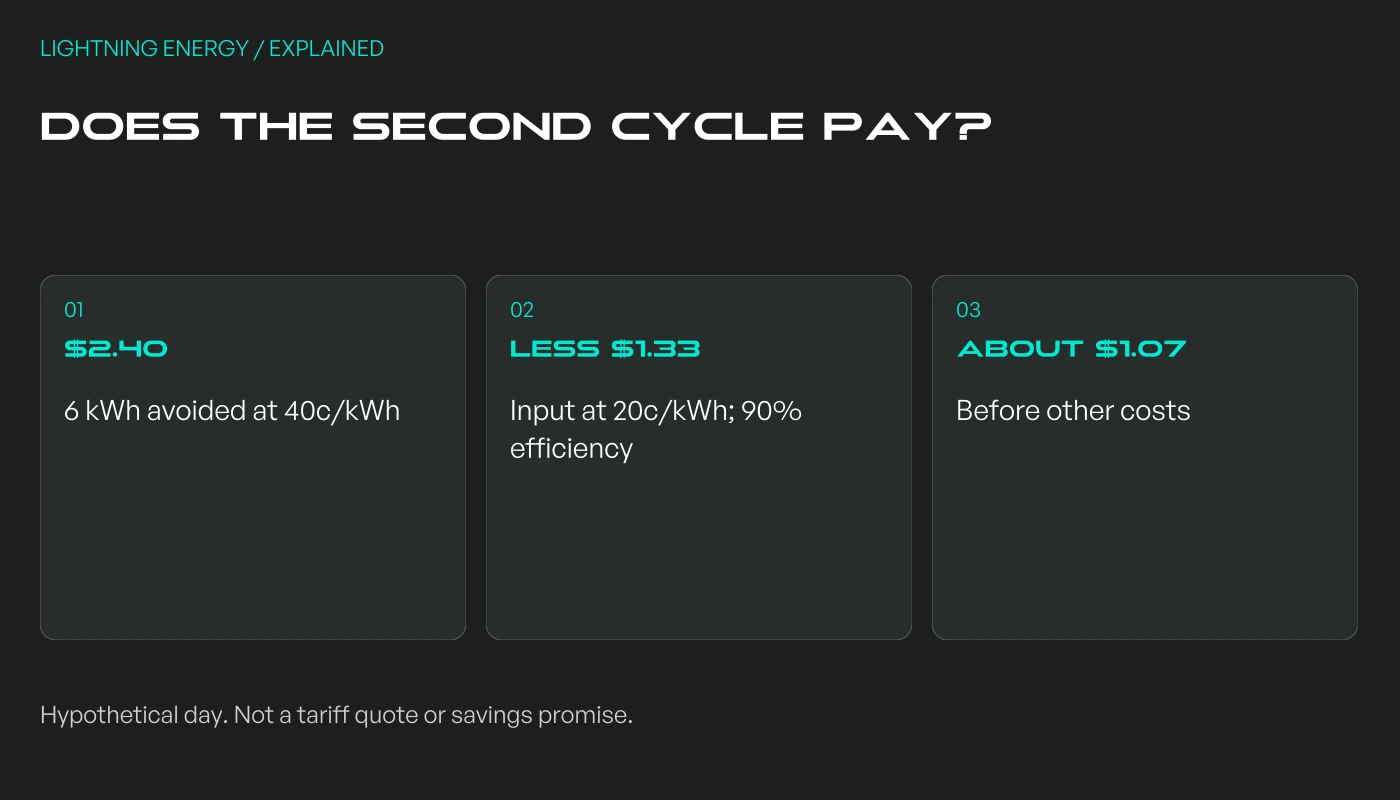
For example, assume a second cycle delivers 6 kWh to appliances, round-trip efficiency is 90%, charging costs 20 cents/kWh and the displaced electricity would cost 40 cents/kWh.
It needs about 6.67 kWh of input, costing $1.33.
Avoiding 6 kWh at 40 cents saves $2.40, leaving about $1.07 for that day before other costs.
These are invented assumptions for a calculation, not XE performance or current tariff quotes.
That benefit disappears if the energy would not otherwise have been bought at the assumed price.
It also changes when the battery needs to keep energy in reserve, or when using stored energy means giving up another reward.
Assumes 6 kWh delivered, 90% round-trip efficiency, 20c/kWh charging and 40c/kWh avoided purchase. Not a product savings estimate.
A useful proposal models a year of your interval data, including winter, against the same home without the new battery.
A cycle-life headline and a written warranty answer different questions.
Ask what retained capacity is promised, whether throughput is limited, and which operating conditions apply to repeated cycling and VPP control.
Also establish who covers diagnosis, labour, travel, removal and reinstallation.
Keep the exact warranty supplied with the quote; a document for the X1 should not be assumed to cover the XE.
For backup, give the installer a load list: refrigeration, lights, internet, cooking, air conditioning and any medical equipment that needs a separate continuity plan.
Ask which circuits work and what happens when several loads start together.
A large energy figure does not prove that every appliance can run at once.
Ask about continuous power, surge capability, phase arrangements, solar operation during an outage and any required gateway or switchboard work.
Our battery warranty guide helps turn those questions into a comparison you can keep with each quote.
Balcony solar: an exhibition is not an installation approval
Small solar and storage systems could give more renters and apartment residents a way to use locally generated electricity.
But the connection method and Australian approval pathway must be established before anyone buys on that expectation.
Western Australia is consulting on a pathway to legalise plug-in solar and batteries.
Its proposal includes up to 2 kW DC of panels and an 800 W AC inverter, with submissions due by 9 December 2026.
That is a proposal, not a completed nationwide permission.
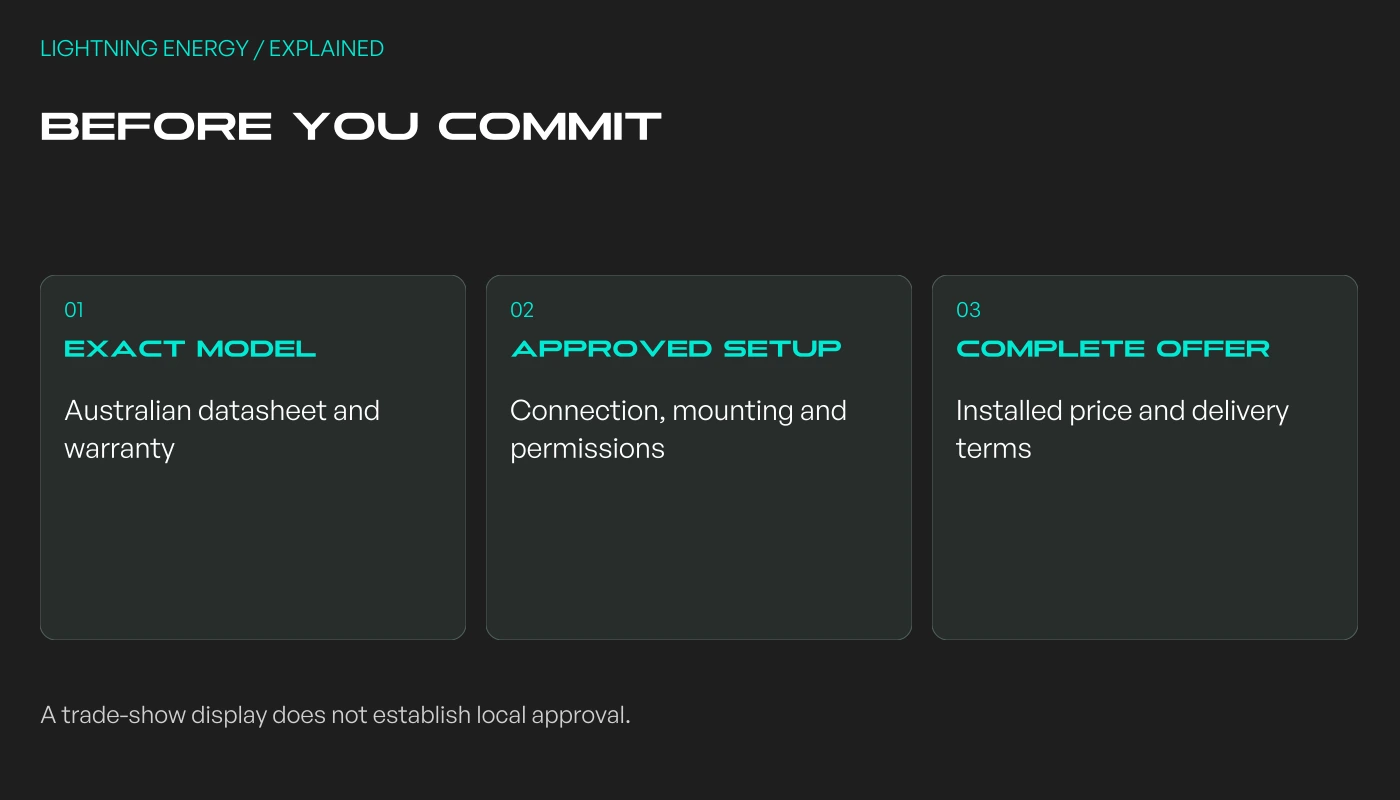
For a balcony product, ask for written confirmation of the exact Australian variant, permitted connection method and applicable electrical and network requirements.
Check rental or owners-corporation permission and the mounting design too.
A portable power station supplying an appliance from its own outlet is a different arrangement from equipment feeding the home’s fixed wiring.
Do not infer permission for the latter from a portable-product demonstration.
Conceptual buyer checklist. Exhibition availability does not establish installation approval or local stock.
Our take: worth investigating, with the details in writing
The useful idea here is matching storage operation to more than one cheap-energy window.
Whether it is worth paying for depends on your home’s demand, the actual equipment and the total tariff, not how often a battery can theoretically cycle.
For an XE quote, request a model-specific technical schedule, a proposed installation date, the full installed price and a documented backup design.
Have the installer resolve conflicting web specifications before work is booked.
For balcony solar, wait for a confirmed local installation pathway for the exact product.
We are not treating a trade-show display as evidence that a renter can connect it to an ordinary household socket today.
Contact Lightning Energy with your electricity bill, existing solar details and the loads you want to support.
We can assess the design questions and confirm what equipment and service options we can actually offer.
Book a consultation and we'll map solar, storage, hot water, and the rebates around your bills and your goals.
Loading consultations…
Lightning EnergyPlan your next energy upgrade.
⚡
Hi, I’m Lightning Energy’s project guide. I’ll ask a few practical questions, explain what usually matters for your project, and help you decide on a useful next step — no guesswork or sales pressure.
First, what kind of property are we planning for?