
Home Charging an Electric Ute: Solar, Supply and Workday Planning
Plan an electric ute charger around daily driving, time at home, available supply and solar. Check charging power, battery priorities and the full electricity bill.
Plan an electric ute charger around daily driving, time at home, available supply and solar. Check charging power, battery priorities and the full electricity bill.

An electric ute spends its working day away from the driveway. That makes home charging a scheduling question as much as a charger purchase.
Start with the kilometres you need tomorrow, the hours the vehicle is parked at home and the electrical capacity available. A larger charger is useful only if the vehicle and property can use it.
This Australian guide was checked on 3 November 2026. It is a planning guide, not a vehicle road test or a promise about towing range.
Ask the dealer for the exact Australian variant’s AC charging limit. A fast DC charging figure from a highway charger does not describe what the vehicle can accept from an AC wall charger at home.
The Australian Government’s charging guide explains the difference between a power point and a dedicated home charger.
As an illustration, replacing 35 kWh at a steady 7 kW takes five hours before charging losses. That is arithmetic, not a prediction for a particular ute. Reduced power and other limits can extend the session.
A plug-in hybrid may have a different charging limit from a fully electric ute. Check its manual instead of choosing equipment from the battery capacity alone.
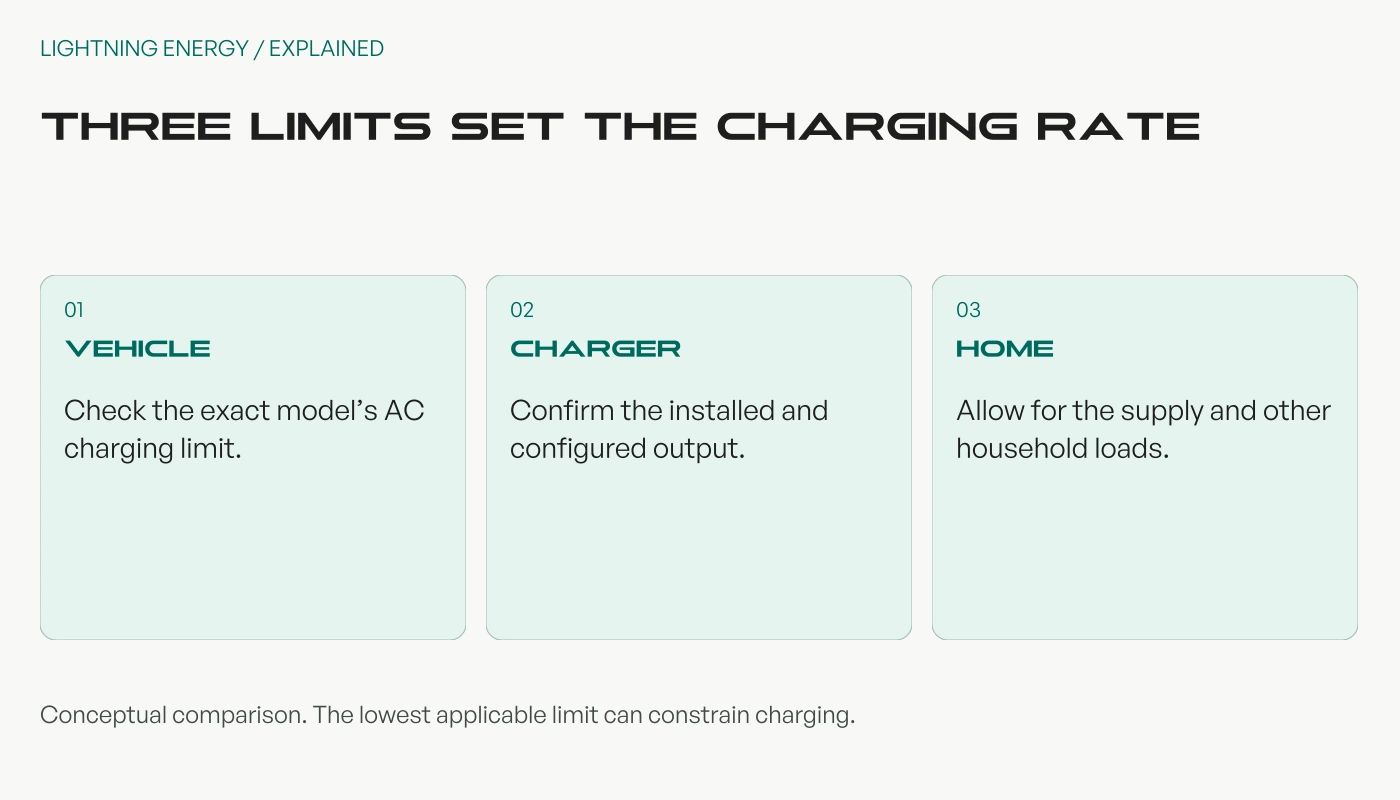
A licensed electrician should assess the supply, switchboard, protection and cable route. Include planned hot water, heating and cooking upgrades in that discussion.
Ergon’s charging guidance describes single-phase home charging and the importance of available capacity.
Ask whether suitable load management can reduce the charger’s demand when the home is busy. Get its equipment, commissioning and operating limits included in the quote.
Our switchboard planning guide explains why spare physical space is different from spare electrical capacity.
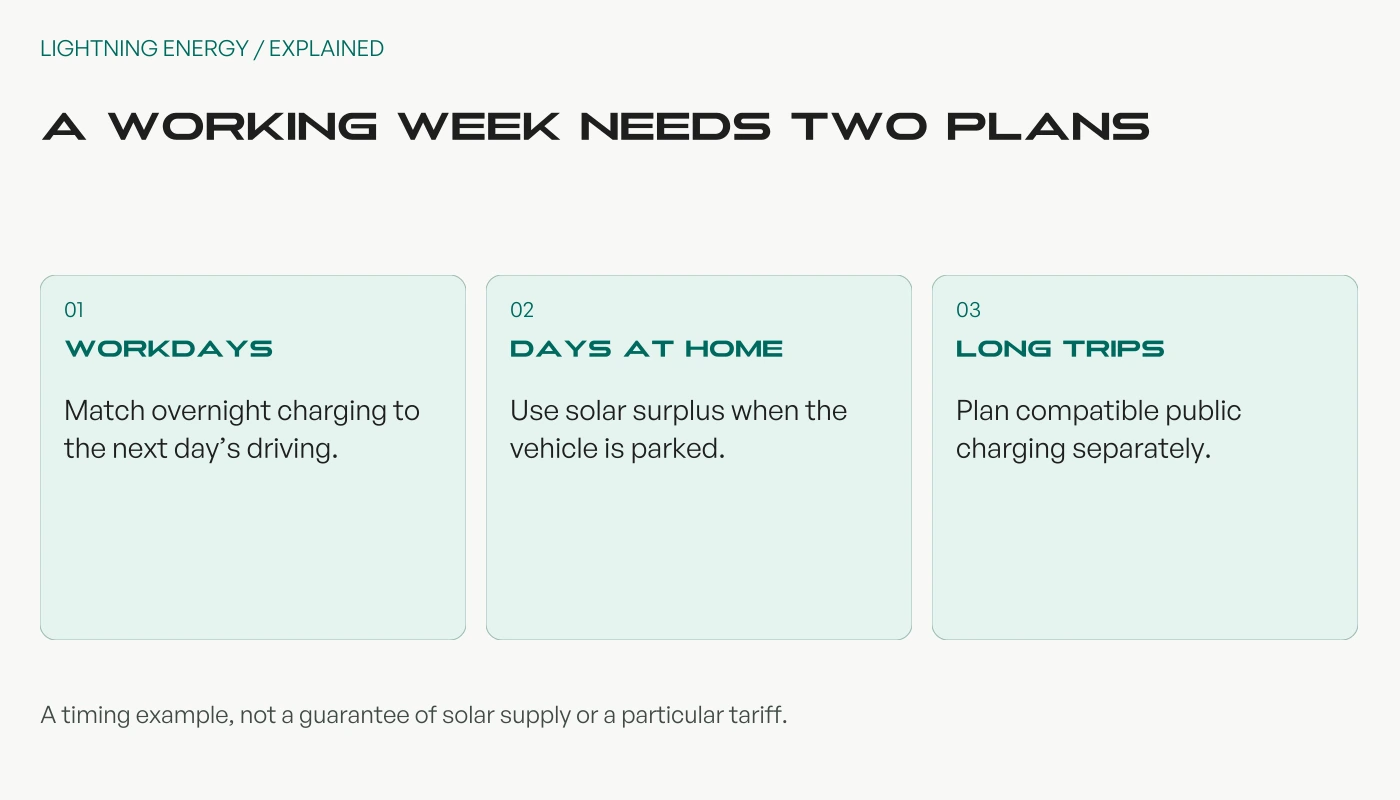
If the ute is on site at lunchtime, rooftop generation cannot directly charge it in the driveway. Weekend charging may help, but it needs to match the next working week’s energy requirements.
Compare an overnight schedule with the whole retail plan, including supply charges and rates outside the cheap period. A cheap charging window alone does not establish the lowest annual household bill.
See our solar and home battery priorities guide before giving the vehicle unrestricted access to energy stored for the house.
A home battery can serve evening household loads while the ute charges later. Whether that is economical depends on tariffs, losses, equipment cost and actual use. It is not automatically the cheapest charging source.
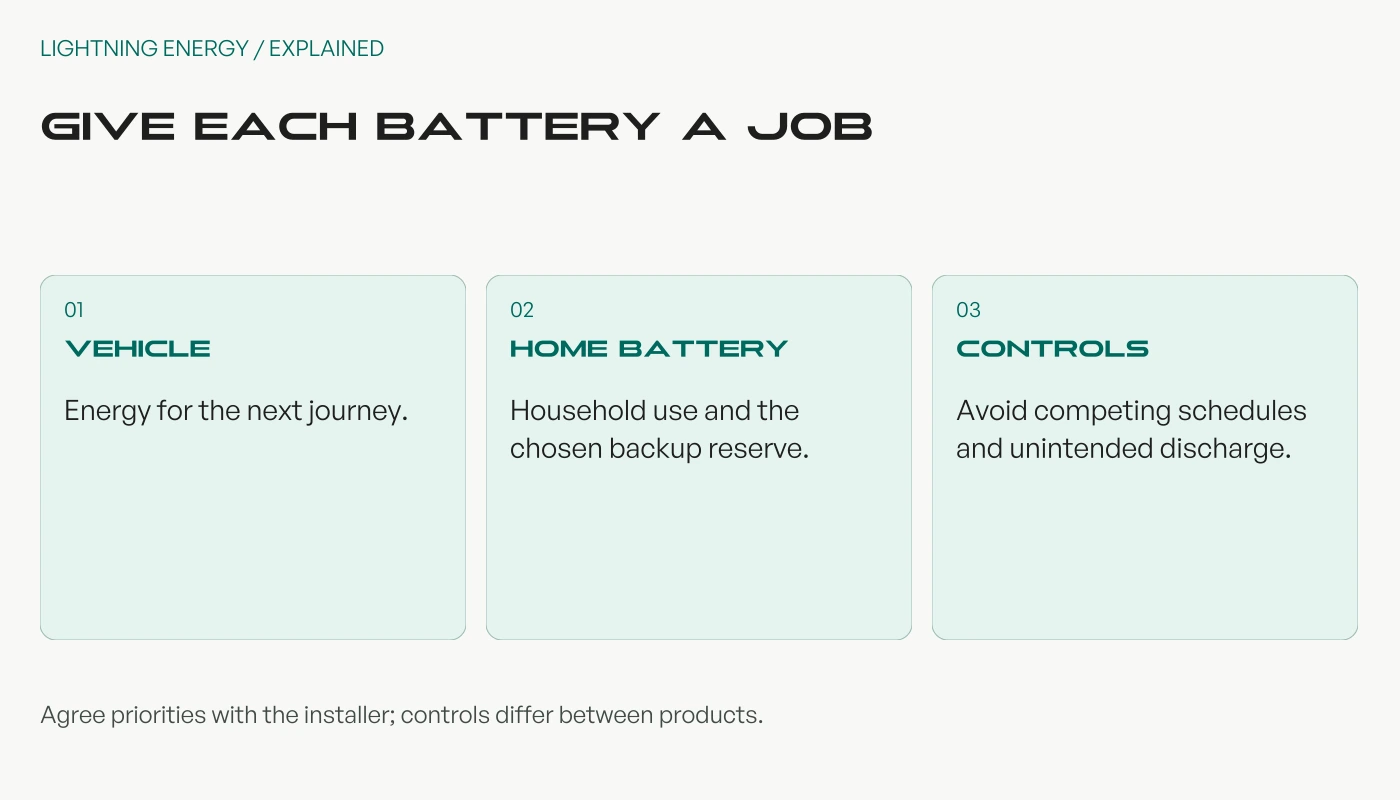
Some vehicles can supply appliances through vehicle-to-load equipment. The permitted loads and conditions are model-specific. Follow the vehicle manufacturer’s instructions.
A vehicle outlet does not by itself create a compliant house backup system. Never back-feed a power point. Connections to fixed wiring require an approved design and a licensed electrician.
Our V2L, V2H and V2G explainer separates these different capabilities.
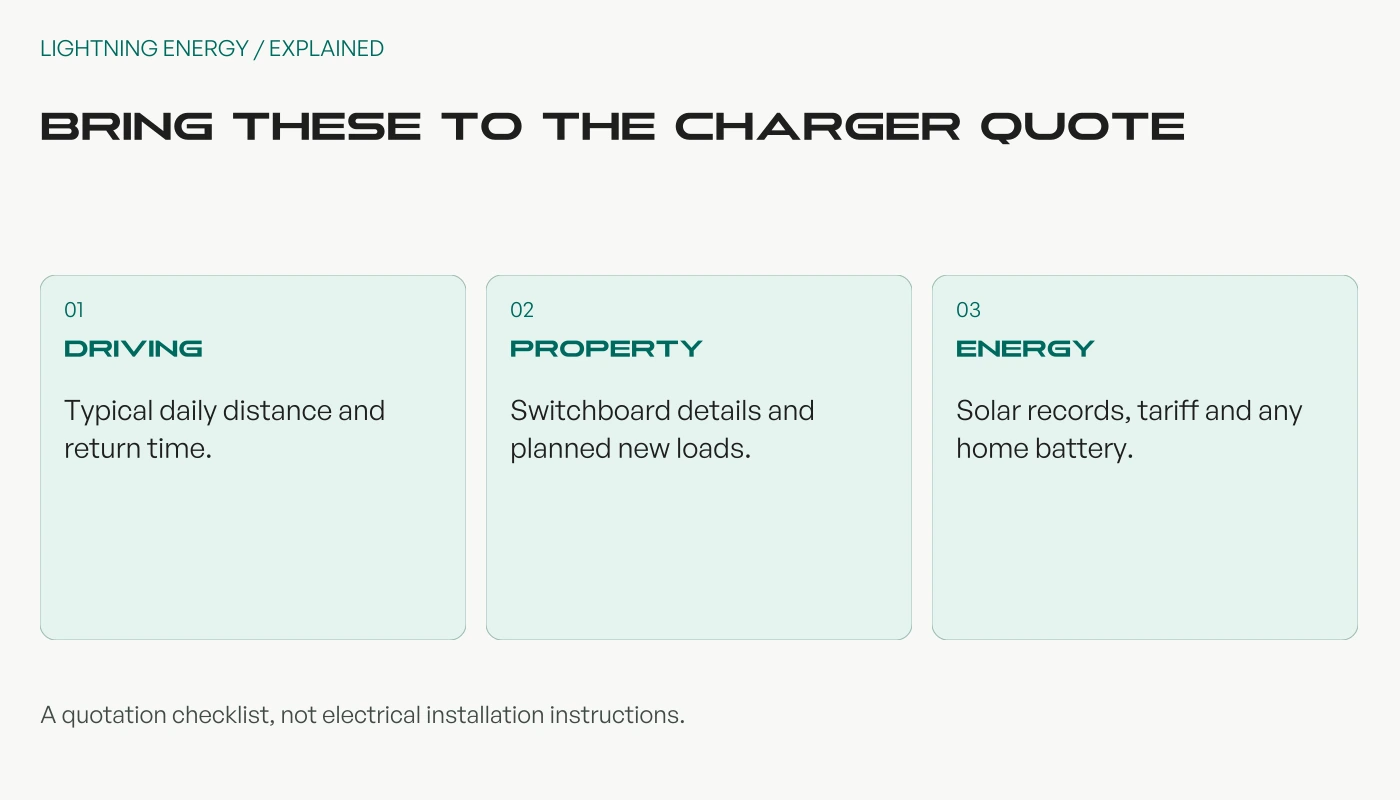
The quote should identify the charger, cable route, electrical work, load management and commissioning. Ask the installer to demonstrate the intended schedule and explain how to override it for an unexpected trip.
Test the plan against a busy workday and a cloudy week, not just a sunny Sunday. Keep enough flexibility for changed job locations and late returns.
Talk to Lightning Energy with the exact ute variant and your electricity bill. The useful outcome is a home charging plan that fits your work, rather than a wall charger chosen in isolation.
Available times
Book a consultation and we'll map solar, storage, hot water, and the rebates around your bills and your goals.
Question 1 of 6
