
Is One Tesla Powerwall 3 Enough? An Overnight Energy Checklist
Work out whether one Powerwall 3 suits your overnight use. Compare stored energy, backup reserve, charging opportunities and household demand.
Work out whether one Powerwall 3 suits your overnight use. Compare stored energy, backup reserve, charging opportunities and household demand.

One Tesla Powerwall 3 may cover your overnight electricity use, but the answer comes from your household’s energy records.
Start with the energy you use after solar production falls, then allow for your chosen backup reserve and the opportunity to recharge.
Checked 24 November 2026. This is a desk-researched Australian planning guide, not a hands-on product test.
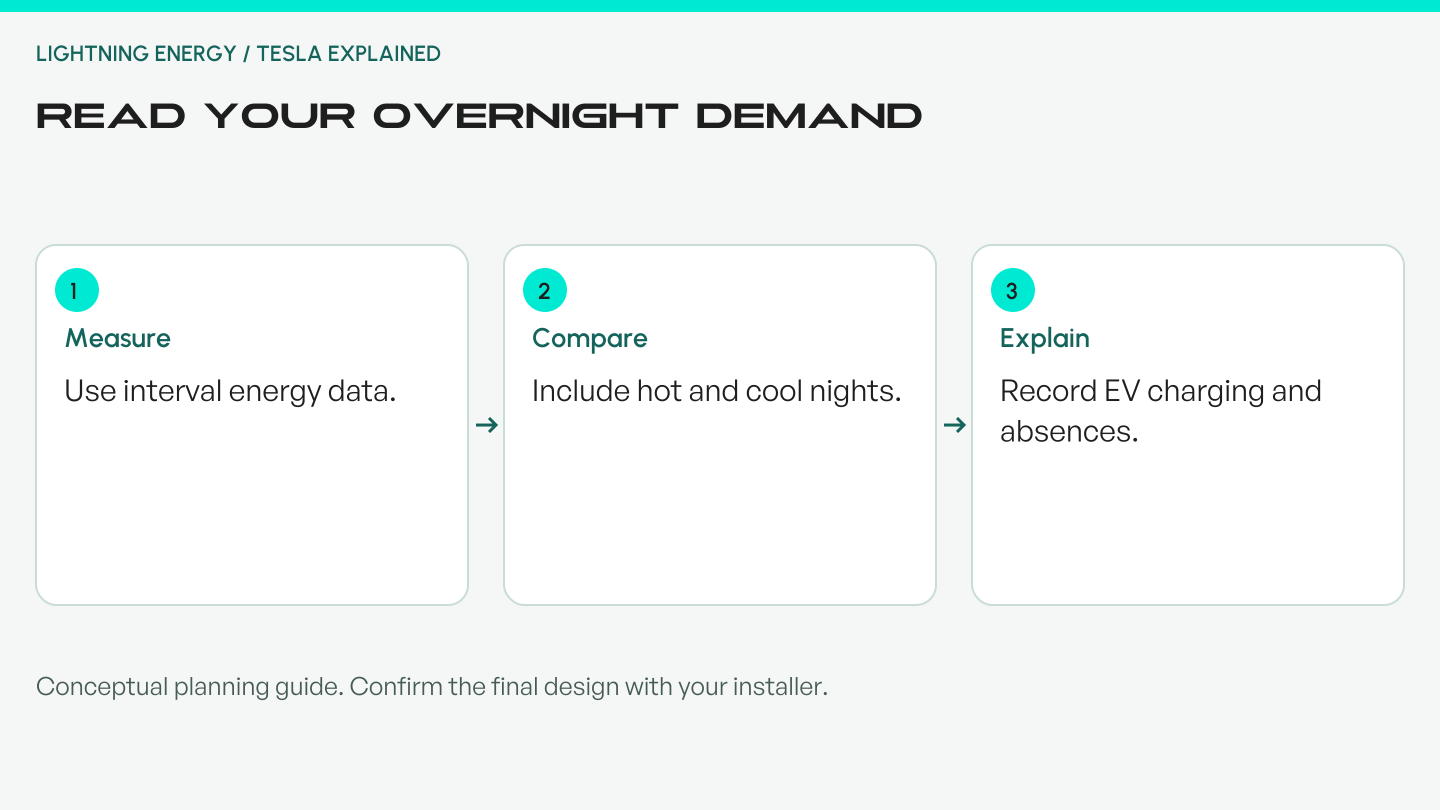
Collect several weeks of interval data from your retailer or monitoring system. Include an ordinary working day, a weekend and a hot night.
Mark the hours when solar no longer covers the house and add the grid imports over that period.
This is a starting point, not an exact battery model. Existing batteries, overnight EV charging and unusual absences can distort the result.
Write down those conditions so the installer can interpret the records instead of sizing from a single bill.
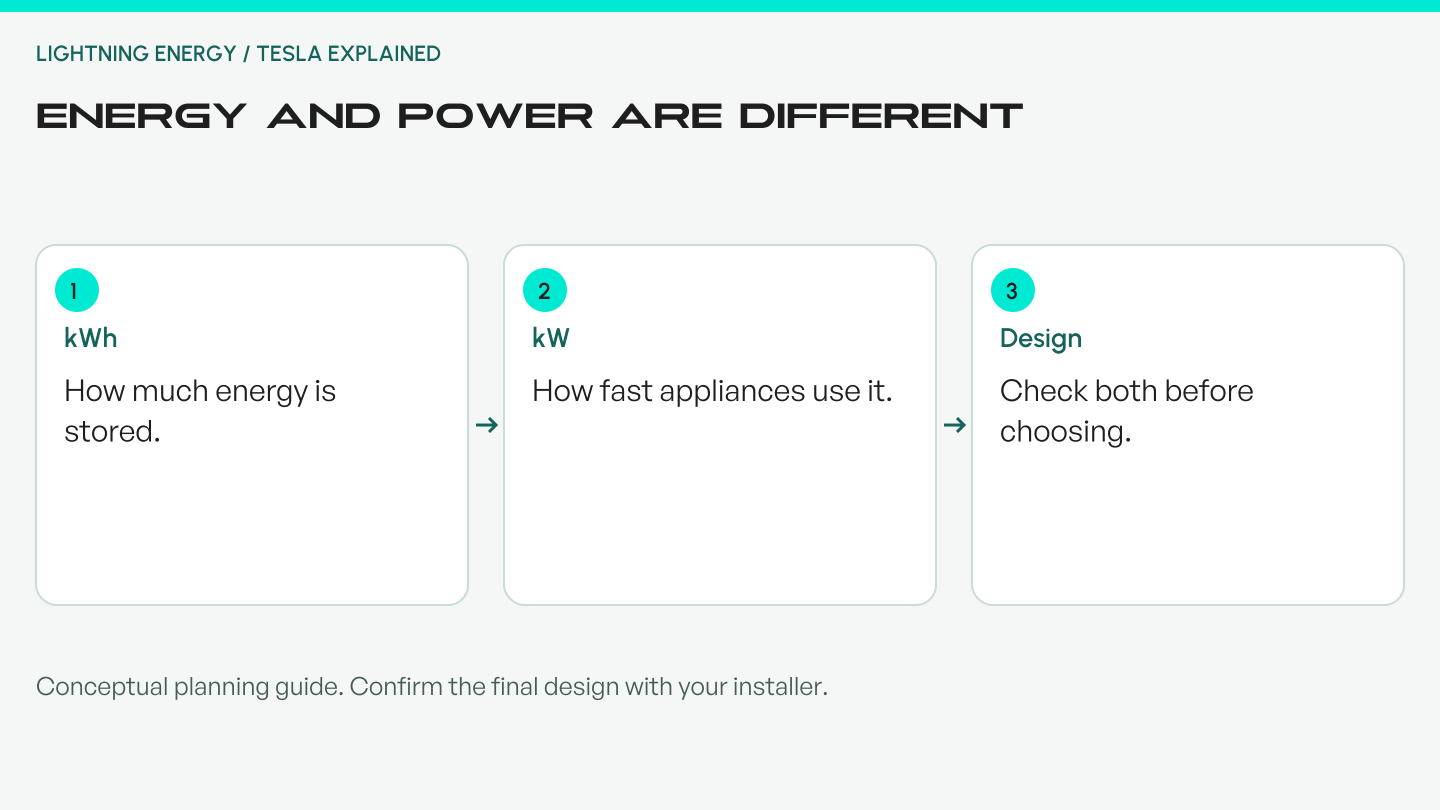
Tesla’s Australian Powerwall 3 datasheet lists 13.5 kWh of usable energy under its stated conditions.
That is stored energy. Kilowatts describe the rate at which equipment consumes or supplies it.
A house can have enough stored energy for the night and still demand too much power at one moment. Ask the designer to check simultaneous loads, particularly cooking, heating, cooling and vehicle charging.
More energy capacity alone does not settle that question.
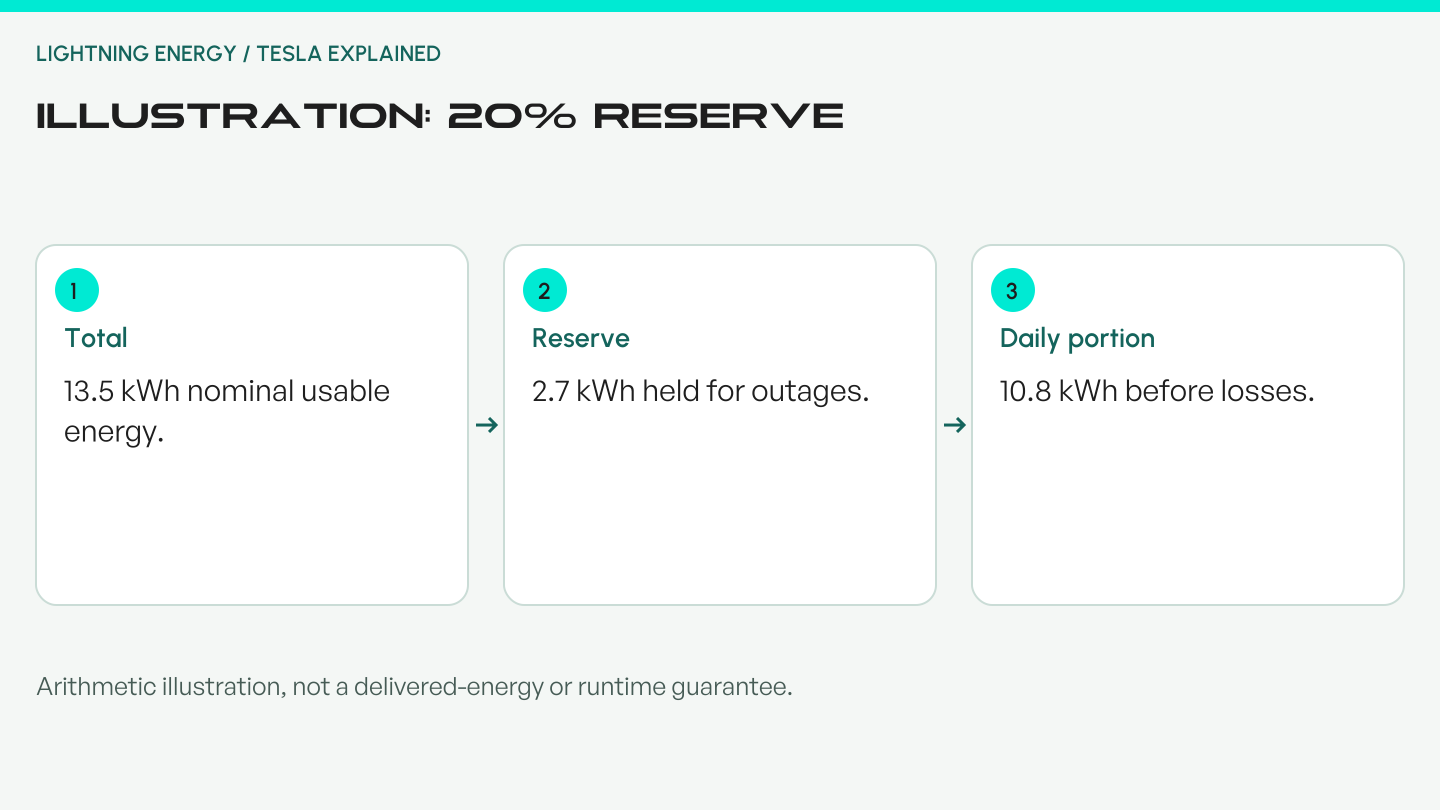
Tesla’s Backup Reserve guide explains how a selected portion is held for outages instead of ordinary daily use.
A higher reserve leaves less energy for routine evening consumption; that reserved energy can be used when an outage occurs.
For a simple illustration, 20% of 13.5 kWh is 2.7 kWh, leaving 10.8 kWh above the reserve threshold. This arithmetic is not a promise of energy delivered to appliances: losses, starting charge, temperature and battery age matter.
A larger battery is useful only when there is a suitable way to charge it. Compare spare daytime solar across seasons with the energy you expect to remove.
A summer surplus should not be assumed to repeat through a cloudy winter week.
If your plan includes grid charging, ask for the actual tariff, charging window and allowed operating settings in the proposal.
Judge the whole electricity plan, including supply charges, rather than treating one cheap period as guaranteed savings.
For an illustrative 10 kWh available-energy budget, a constant 1 kW load gives ten hours before losses and operating margins. A constant 2 kW load gives five hours.
Real household demand varies, so these examples explain the calculation rather than predict a test result.
During an outage, the Tesla outage guide recommends managing large loads.
List essential circuits separately from optional loads, and ask which circuits the proposed backup design actually supplies. Do not assume every outlet or appliance is included.
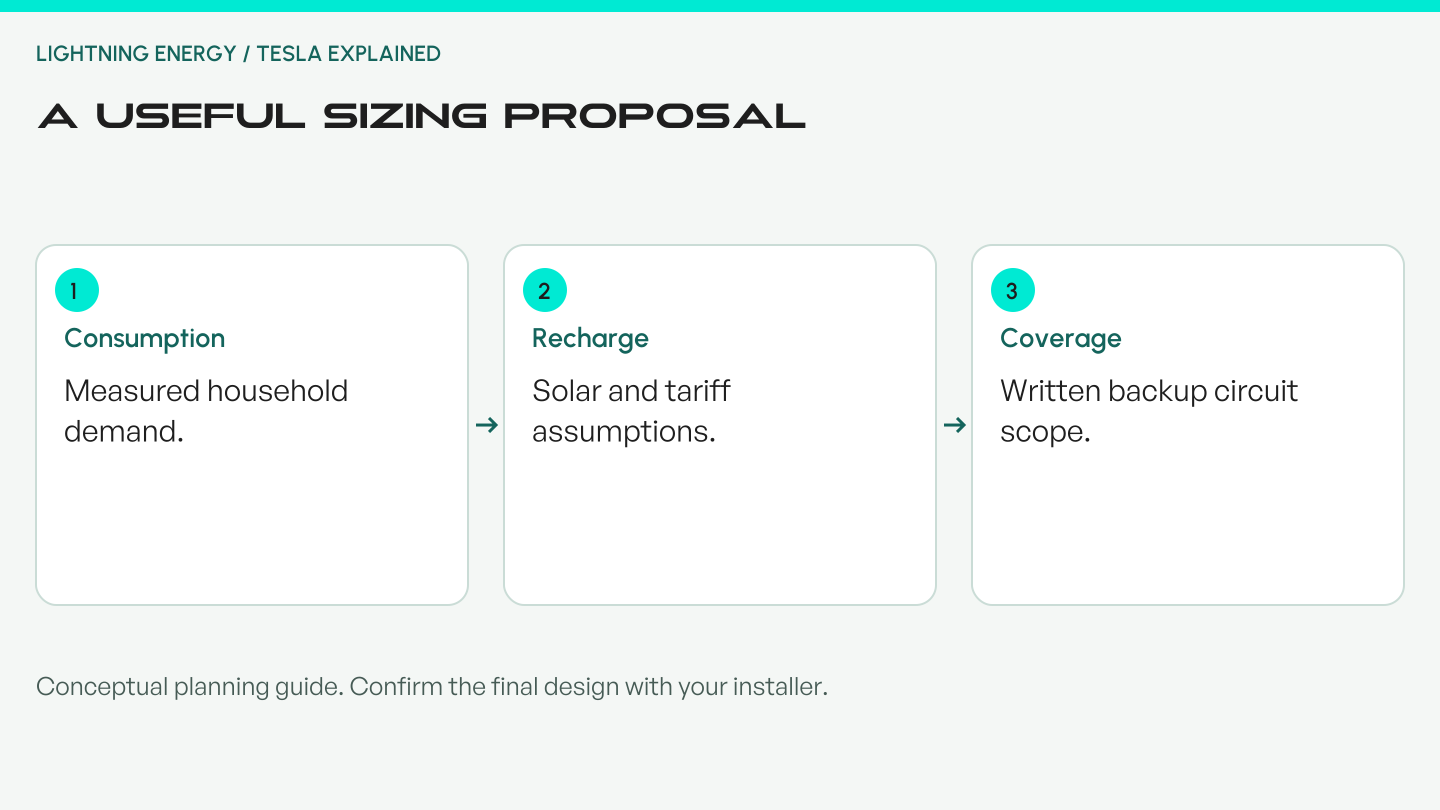
Request a single-unit option and an expanded-storage option using the same tariff, household data and reserve setting. Each should state the assumed solar contribution, backup coverage and any loads excluded from the design.
The useful result is a clear explanation of what extra storage changes in your home. If the larger option only helps on rare nights, compare that benefit with its complete installed cost.
If demand will change, identify the new appliance and likely operating hours.
Possibly. Compare the measured overnight energy demand with the available battery energy, reserve settings and losses. A household average cannot establish your result.
Not automatically. First decide when the car charges and whether that charging should use home storage. Moving a flexible load may change the sizing decision.
No. It changes how the available energy is allocated between normal operation and outage preparation.
Tesla Powerwall 3 Australian product guide.
Powerwall expansion explained.
Backup is not automatically a UPS.
Cover photograph: Tesla manufacturer imagery, shown for product context. It is not a Lightning Energy installation or evidence of Australian availability. Original diagrams explain decisions, not wiring.
Available times
Book a consultation and we'll map solar, storage, hot water, and the rebates around your bills and your goals.
Question 1 of 6