Adding a Battery to Your NSW Solar? What the New Emergency Backstop Rules Mean for Your Setup
If you already have solar in NSW and want to add a battery, how it connects can change which emergency backstop rules apply, what export limit you get, and what needs to be in writing.
LLuke CoveLightning Energy27 November 2026 · 6 min read
You already have solar, and you want a battery on it.
In New South Wales, that upgrade now sits alongside a new emergency backstop rollout.
Source and editorial check: 27 November 2026. This guide uses published information; it is not a hands-on test or a report of a customer installation.
How the battery is connected can change which rules apply, what equipment is needed, and what export limit you end up on.
In rare periods of very high rooftop solar and very low demand. what the Australian Energy Market Operator calls a Minimum System Load event.
AEMO can direct NSW distributors to temporarily reduce solar exports to the grid, or pause generation.
The official NSW page is clear.
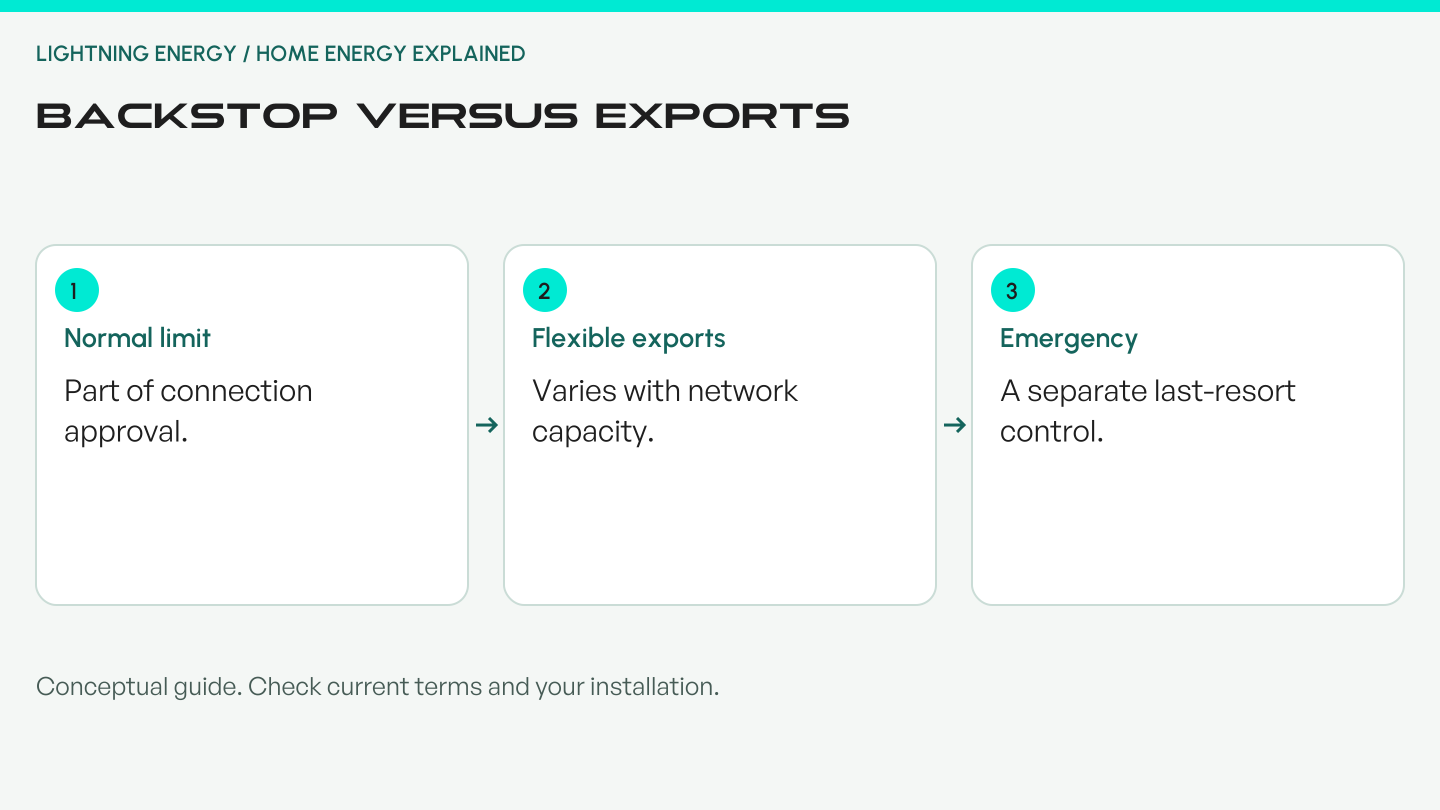
It is expected to be a rare event, and it is only actioned to keep the lights on if nothing else is working.
It is not an everyday export limit, and it is not a reason to treat the system you have as if it needs replacing.
Conceptual guide. Check current terms and your installation.
If you have rooftop solar and you are not making any changes to it, no action is required.
Existing systems are not affected.
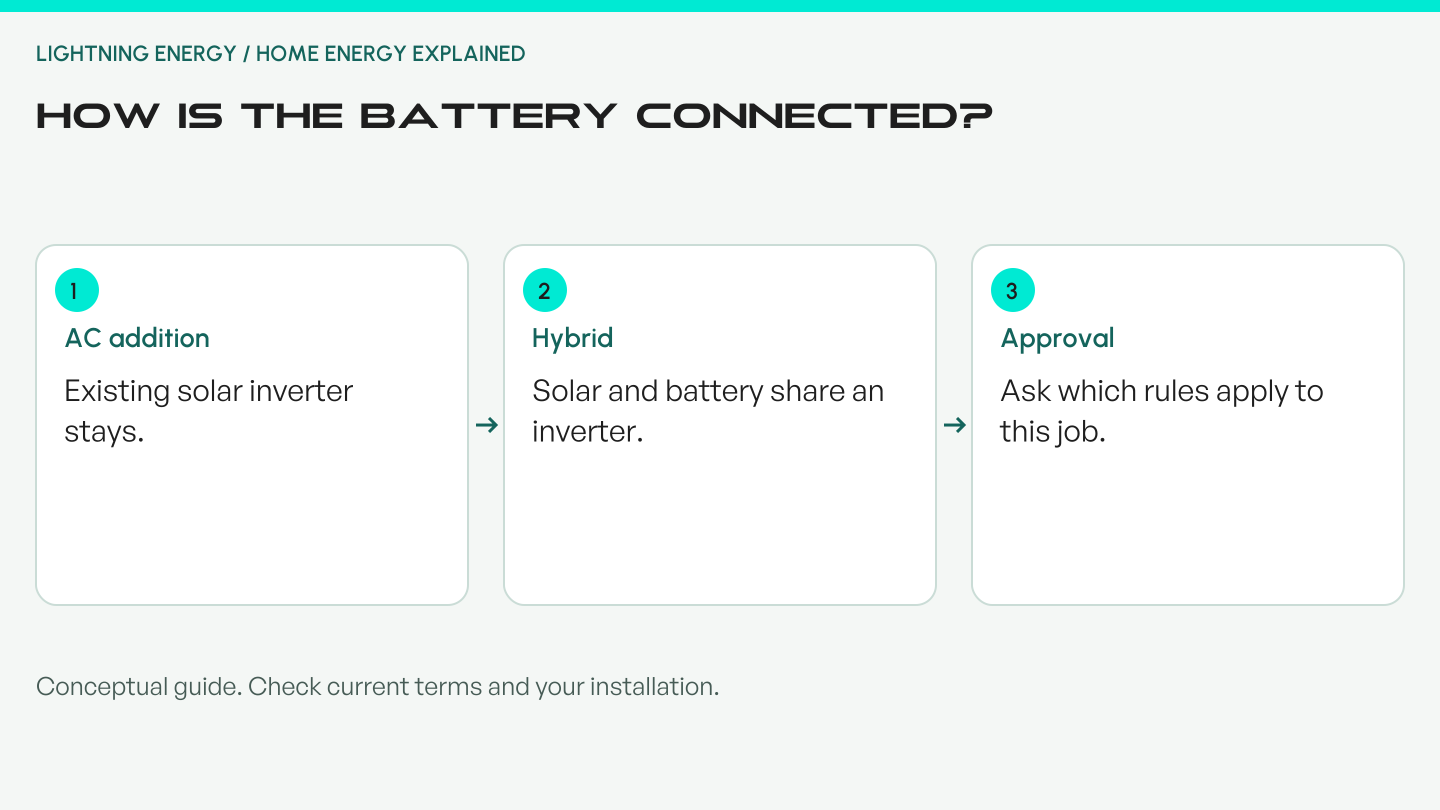
How you add the battery changes which rules apply
The official NSW FAQ draws a sharp line.
If you are only adding an AC-coupled battery. a battery with its own inverter, leaving your existing solar inverter in place. the emergency backstop requirements do not apply.
Endeavour Energy's installer page also lists AC-coupled batteries among the jobs those requirements do not apply to.
If the battery is a hybrid system connected to solar, the requirements do apply, once they are live in your postcode.
That includes a new hybrid solar-and-battery system.
It can also include replacing your existing solar inverter with a hybrid, so the battery shares that inverter.
One path is not automatically better than the other.
It depends on the inverter you already have, the battery you want, and the rest of the home.
A proper installer shows the connection method on the quote, and which of the new rules that method brings with it.
Conceptual guide. Check current terms and your installation.
Even when the backstop itself is not triggered, the battery work can still need network approval and registration.
Like-for-like inverter replacements, including some warranty replacements, and embedded-network sites, have exemptions on the distributor pages.
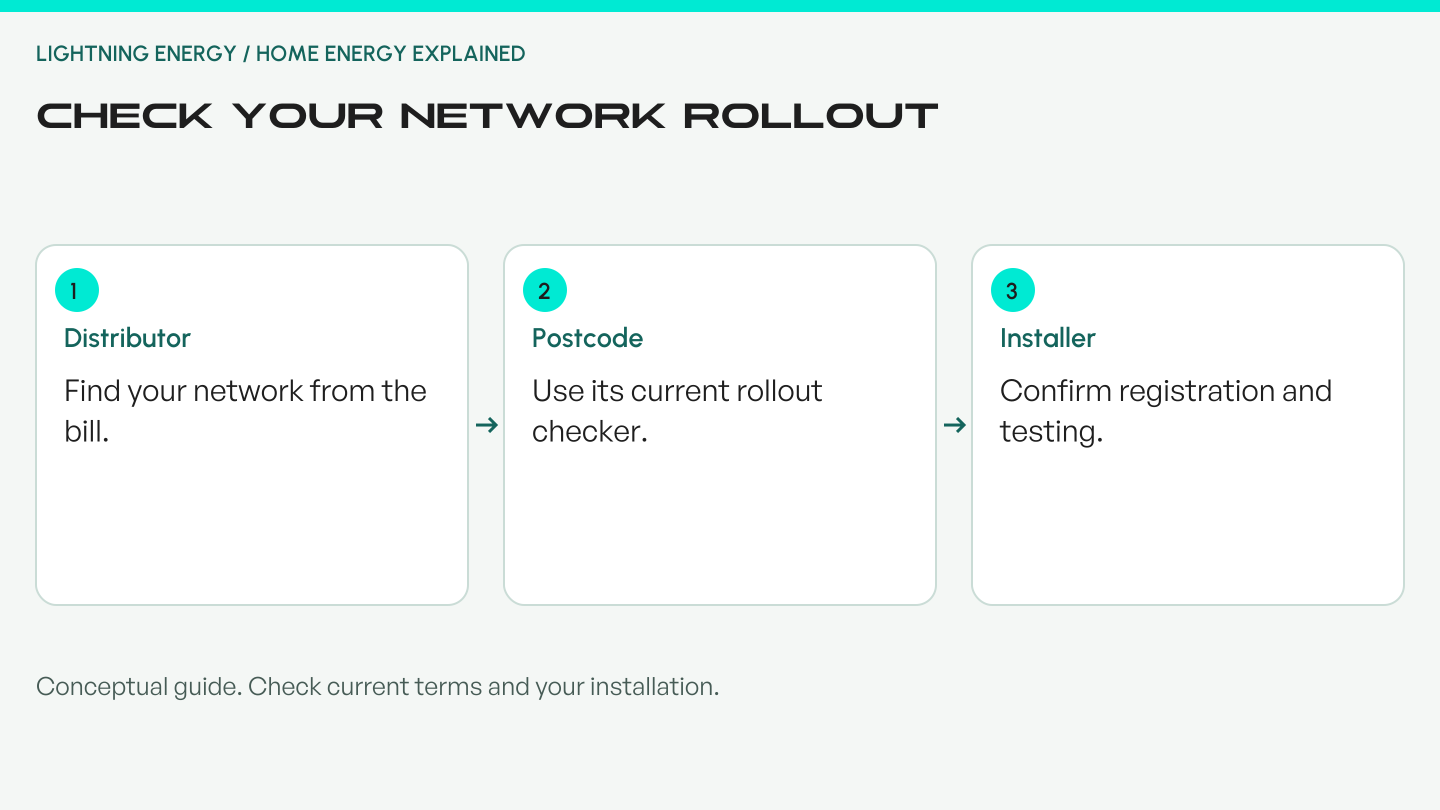
When the rules land in each network
The NSW CER Installer Portal is the new register-and-commission tool for new and upgraded systems up to 200 kW.
Requirements are being phased in by postcode, so the date that matters is the one on your network's checker.
Endeavour Energy: portal registration and postcode-phased capability testing from 2 November 2026, with all new and upgrading solar systems registered and backstop-enabled by 1 February 2027.
A system approved before 1 February 2027 that was not part of the new process has to be installed by 30 April 2027, or it has to be re-applied for.
Essential Energy: the portal is mandatory from 23 November 2026, and backstop requirements roll out by postcode from the same date.
Essential Energy's page describes that rollout as covering all of NSW by early February 2027.
Ausgrid: portal registration from 23 November 2026, capability testing phased in by postcode from 30 November 2026, and all new and upgrading solar systems registered and backstop-enabled by 22 February 2027.
A system approved before 23 November 2026 that has not been commissioned by 22 May 2027 needs a new application under the new rules.
Compatible equipment, internet, and the 1.5 kW export cap
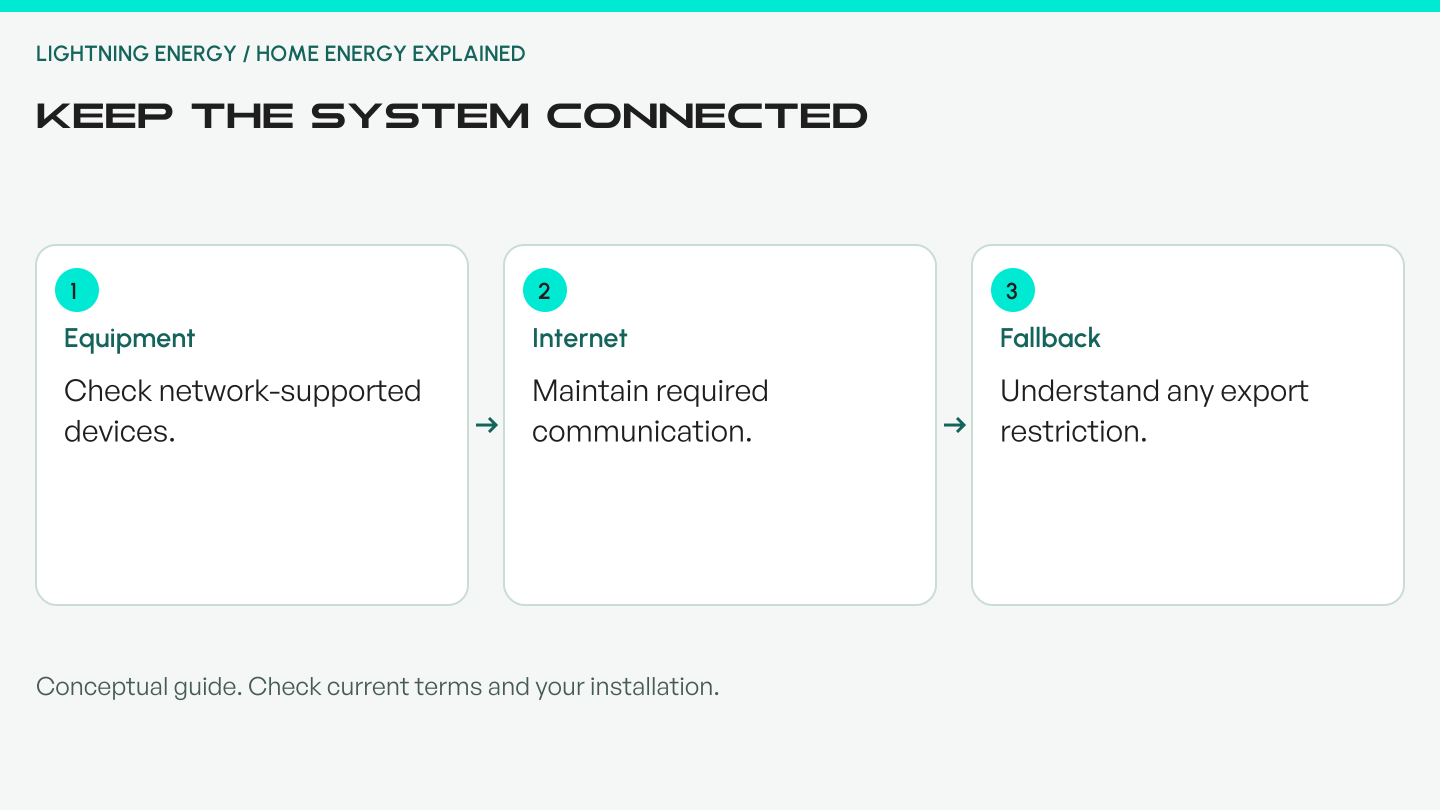
Where backstop rules apply, the proposed equipment and communications must meet the network’s CSIP-AUS requirements. The installer completes a capability test through the CER Installer Portal.
Conceptual guide. Check current terms and your installation.
Meeting the standard is not the same as being supported by your particular network.
Essential Energy says unsupported devices. equipment that has not been onboarded to its utility server. receive a fixed 1.5 kW export limit until that onboarding is in place.
A proper quote names the inverter and communications arrangement, and confirms they are supported on your network. not just advertised as CSIP-AUS, and not by assuming a brand is onboarded.
The same official fact sheet says it does not stop the system generating solar for use in the home or business, and that normal export operation can return once the connection is restored.
Essential Energy states the same 1.5 kW fallback if a flexible-export system goes offline.
Flexible exports, and what a proper quote shows
The same communications set-up can also support flexible exports, where the allowed export changes with available network capacity instead of sitting on a single fixed cap.
That is not a guarantee of higher exports at every hour.
Essential Energy lets the connection application choose a flexible range of 1.5 kW to 5 kW, or 1.5 kW to 10 kW, per phase.
The system has to be backstop-enabled and stay connected to the internet.
Conceptual guide. Check current terms and your installation.
On Endeavour Energy's network, flexible exports become the default for eligible new and upgraded solar systems from November 2026, rolled out in stages.
Eligible customers can export up to 10 kW per phase most of the time, or choose a fixed export plan that Endeavour Energy sets at a maximum of 1.5 kW.
In a backstop event, those plans may receive a lower limit than the one listed.
Ask the quote to identify the connection method, applicable backstop rules, supported equipment and internet arrangement. It should state the export limit and any fallback restriction.
Start with your network's official page and postcode checker, and with the NSW Government backstop page.
The written quote should then match those rules for the system you already own, and for the battery you are adding to it.
Book a consultation and we'll map solar, storage, hot water, and the rebates around your bills and your goals.
Loading consultations…
Lightning EnergyPlan your next energy upgrade.
⚡
Hi, I’m Lightning Energy’s project guide. I’ll ask a few practical questions, explain what usually matters for your project, and help you decide on a useful next step — no guesswork or sales pressure.
First, what kind of property are we planning for?