
Planning Battery Capacity Before Adding Electric Heating or an EV
Plan a battery around future electric heating, hot water or an EV, with realistic demand estimates, flexible schedules and clear checks for later expansion.
Plan a battery around future electric heating, hot water or an EV, with realistic demand estimates, flexible schedules and clear checks for later expansion.

Allow for planned electric appliances when choosing a battery, but do not buy extra storage simply because more electricity use is coming. The timing of that use determines whether the battery has extra work to do.
A car charged mainly on sunny weekends creates a different demand pattern from heating used every winter evening. Start by describing the future routine, not by adding every appliance's headline rating together.
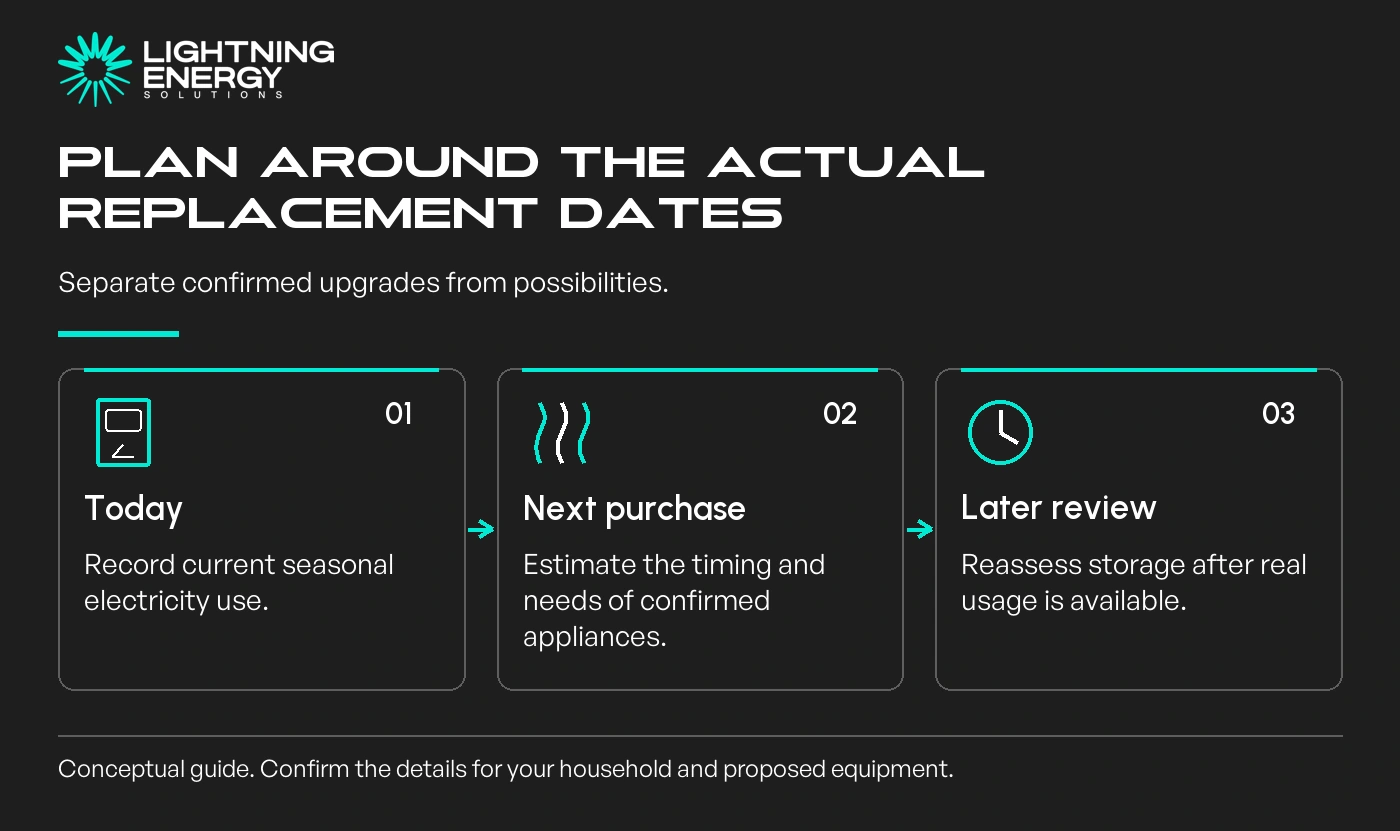
List the appliances likely to change, their expected replacement dates and the hours they will operate. Separate confirmed purchases from possibilities. A plan to buy an EV eventually is not the same as a delivery next month.
Use our home electrification guide to organise those stages. The battery assessment can then compare today's household with a specific future case.
Solar Victoria recommends considering future electricity use, including electric vehicles and replacing gas appliances, when assessing battery size.
Solar Victoria battery planning guidance.
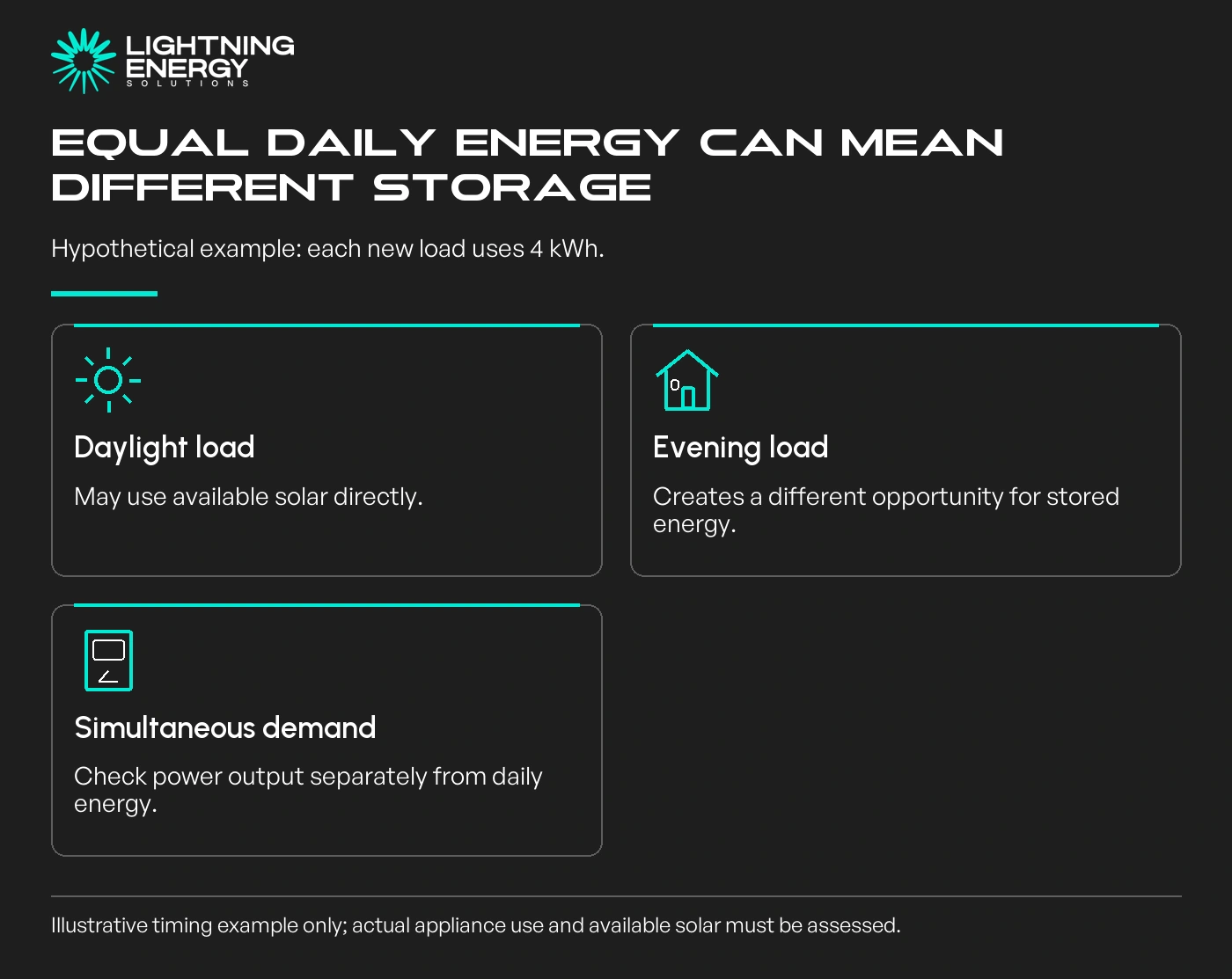
Daily energy in kWh describes the amount needed over time. Power in kW describes demand at a particular moment. A battery may have enough stored energy for an evening yet face a separate limit on simultaneous loads.
In a hypothetical plan, a new appliance adds 4 kWh during daylight and another adds 4 kWh after sunset. Their daily totals match, but they create different storage opportunities. Neither number alone selects the battery.
Keep the estimate honest about routine. For an EV, use expected driving and charging availability. For heating, compare seasons. Avoid treating a maximum appliance input as if it runs continuously every day.
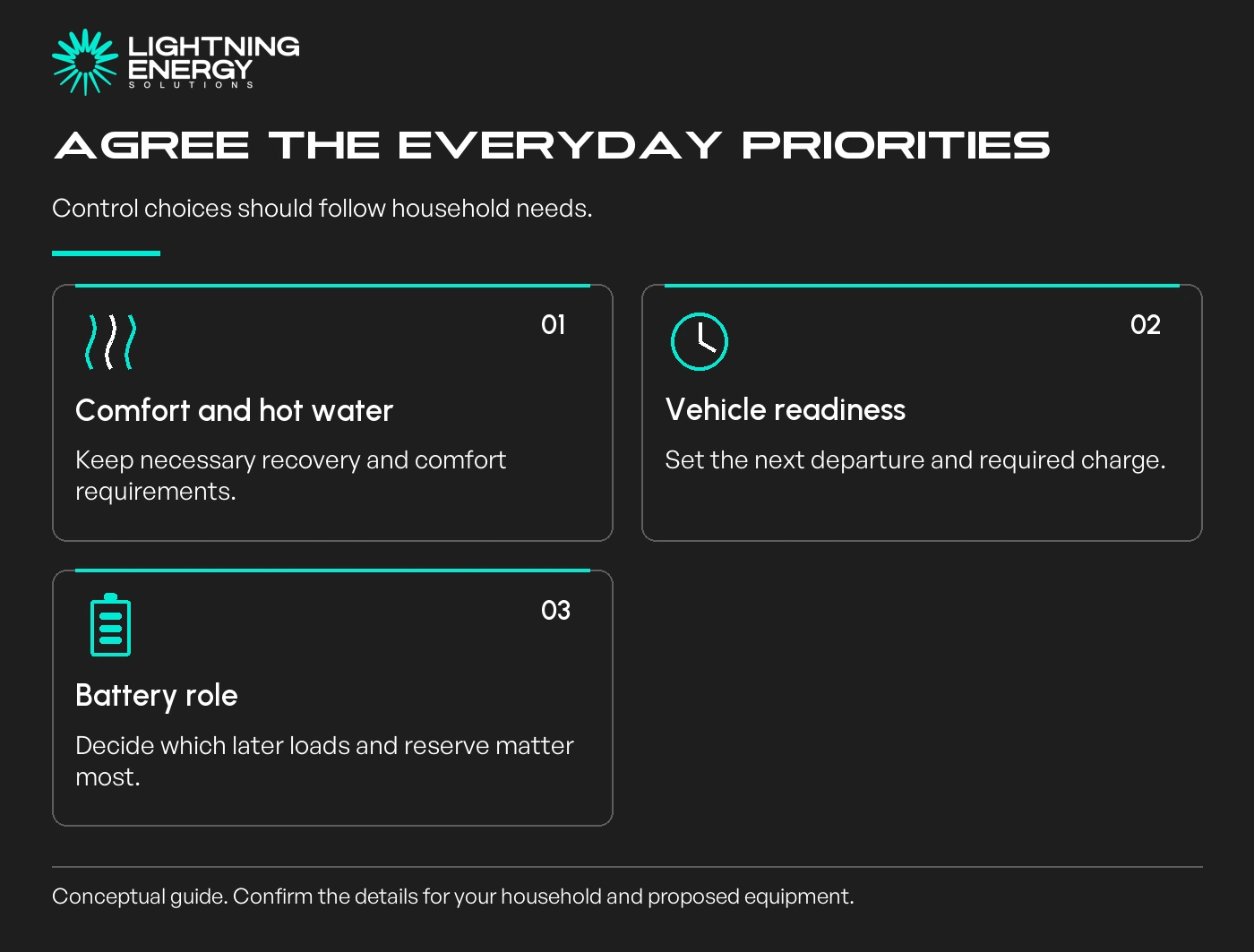
Where practical, direct solar use may reduce the energy that needs to pass through storage. That does not mean every household can move every load. Comfort, hot-water recovery and the car's departure time still matter.
The solar, EV and battery guide explains why charging schedules need coordination. A cheap overnight EV window does not by itself determine which source supplies the car.
Write down the priority order for an ordinary day and for a low-solar day. Ask the installer which parts can be controlled with the proposed equipment, and which depend on your own schedule.
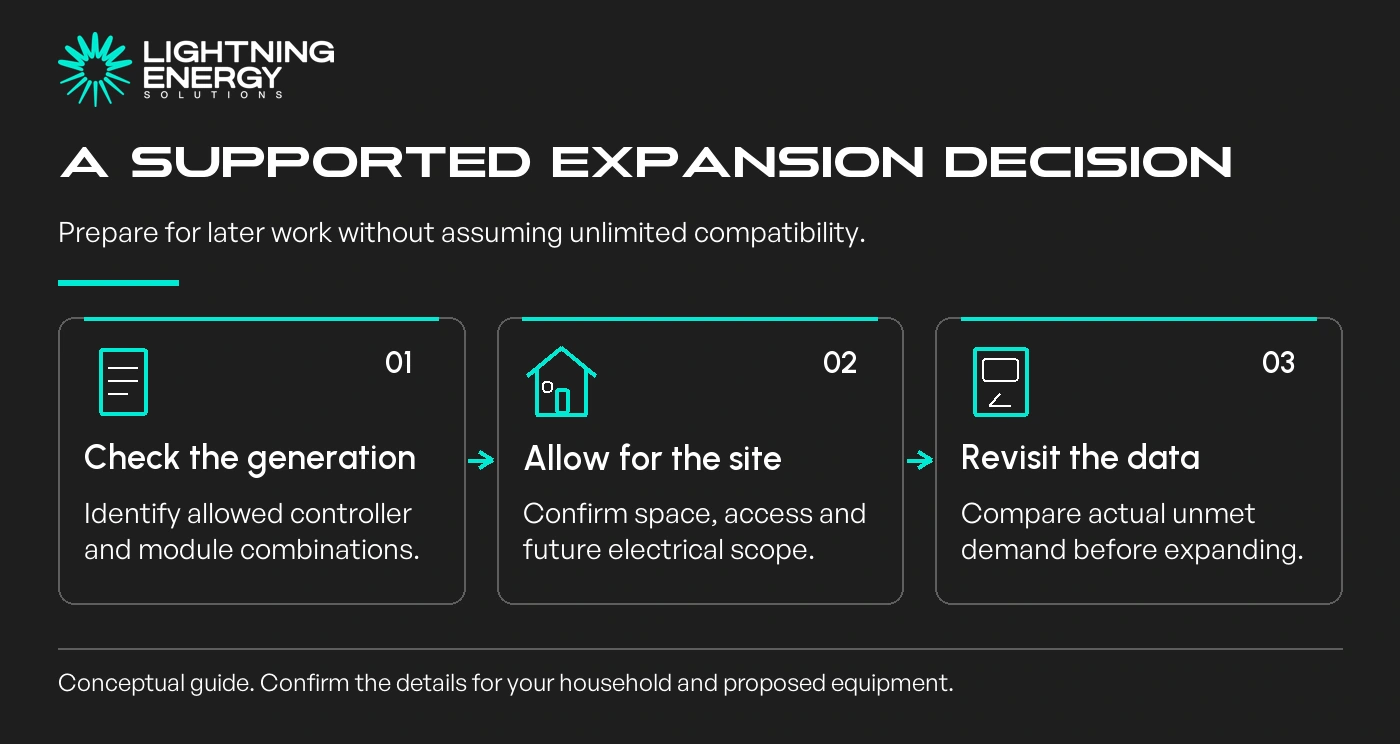
If the future demand is uncertain, compare a suitable initial battery with a documented expansion pathway. Check compatible generations, module limits, available space and the work that would be required later.
Expansion is product-specific. Tesla's Australian Powerwall 3 Expansion documentation, for example, lists storage configurations separately from configured output.
More stored energy should not be assumed to increase power by the same proportion.
Tesla Australian expansion specifications.
Our Powerwall expansion guide explores that distinction. For another brand, obtain that manufacturer's current rules rather than applying the Tesla arrangement to it.
Once actual usage is available, compare it with the estimates. Check whether scheduling or reserve settings explain any evening imports before assuming the first battery is too small.
Buying extra capacity now can make sense when the demand is reasonably certain, the configuration is suitable and the extra benefit is supported by the model. It is harder to defend when the future load remains speculative.
Ask for two written options: a system sized for today's repeatable needs and a larger or expandable arrangement for the confirmed next stage. Compare complete cost, practical provisions and the assumptions that separate them.
Plan your battery upgradeBring Lightning Energy your current bills and appliance replacement plan to compare storage now with a supported path for later changes.Available times
Book a consultation and we'll map solar, storage, hot water, and the rebates around your bills and your goals.
Question 1 of 6