
Powerwall 3 Expansion or a Second Powerwall? Compare the Right Bottleneck
Compare Powerwall 3 Expansion with another complete unit. Understand storage capacity, inverter output, charging limits and what a quote should show.
Compare Powerwall 3 Expansion with another complete unit. Understand storage capacity, inverter output, charging limits and what a quote should show.

A Powerwall 3 Expansion and another complete Powerwall 3 solve different design problems. An Expansion adds battery storage to a compatible system.
A complete unit also contains inverter hardware, but the benefit depends on the approved system design.
Checked 24 November 2026. This is a desk-researched Australian planning guide, not a hands-on product test.
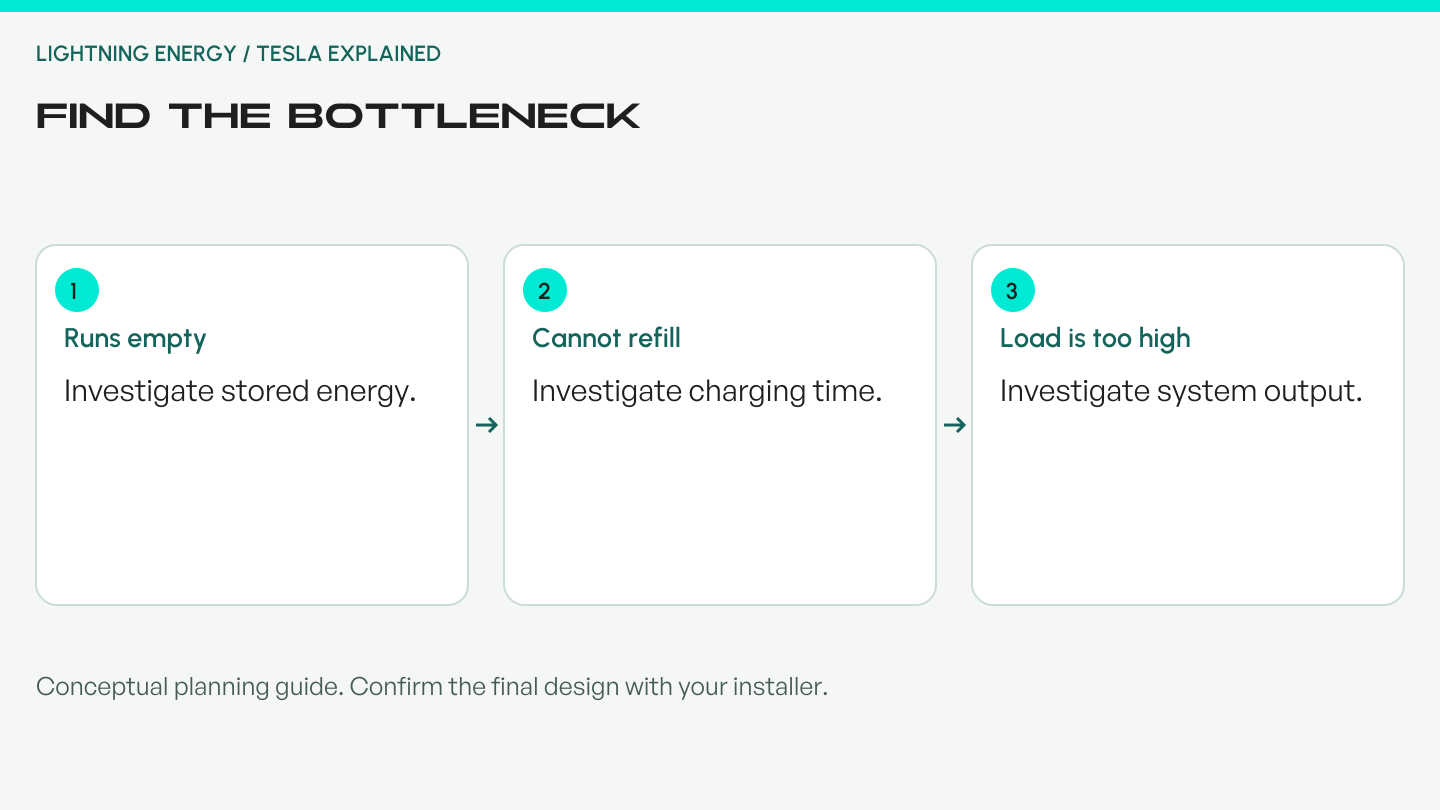
Begin with the symptom. Does the battery empty before morning, does a short charging window leave it partly filled, or does a simultaneous appliance load exceed the system’s permitted output?
Each problem calls for a different investigation.
Keep a few examples from the app alongside the household’s operating schedule. A graph showing an empty battery is more useful when it also records whether the day was cloudy, the reserve was high or the car charged overnight.
Tesla’s Expansion specifications show 13.5 kWh increments.
One Powerwall 3 with one, two or three Expansion units totals 27, 40.5 or 54 kWh. The Expansion does not add another independent solar inverter.
This makes energy capacity the central comparison.
If the existing inverter arrangement already meets the agreed load and solar requirements, an installer can assess whether extra storage addresses the shortfall without another complete unit.
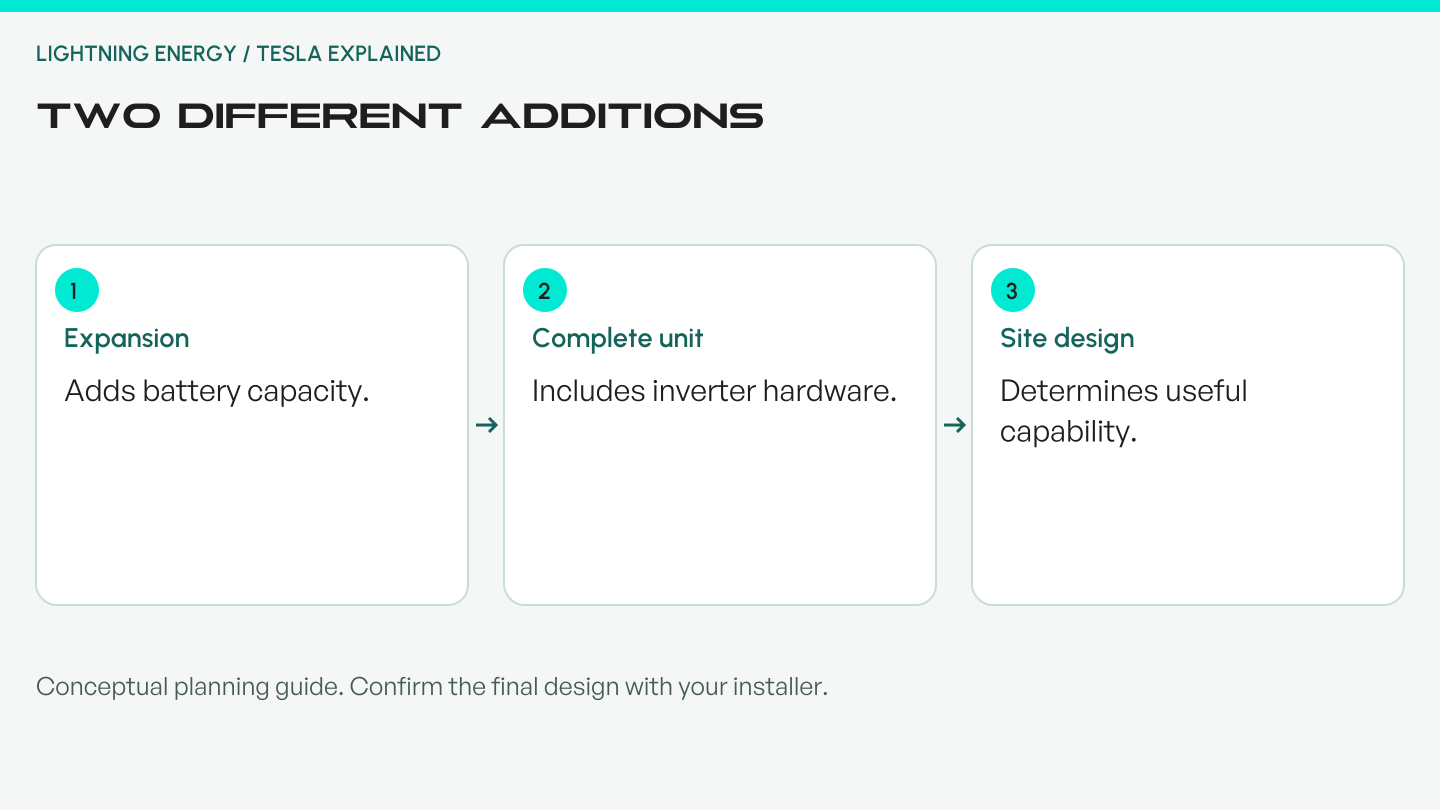
Ask about another complete Powerwall when the design needs additional supported inverter capacity or another solar-input arrangement, rather than simply more storage.
The designer must explain the exact benefit and any connection limits.
Do not multiply a brochure output by the number of cabinets and call that the house’s guaranteed supply. The approved configuration, grid connection and backup design can limit what the installation delivers.
Get both on-grid and outage operation documented.
The Australian Powerwall 3 datasheet lists 5 kW continuous charging for the base system.
Its higher 8 kW figure with Expansion carries a future-firmware qualification. Do not count that future figure as an enabled feature without written confirmation.
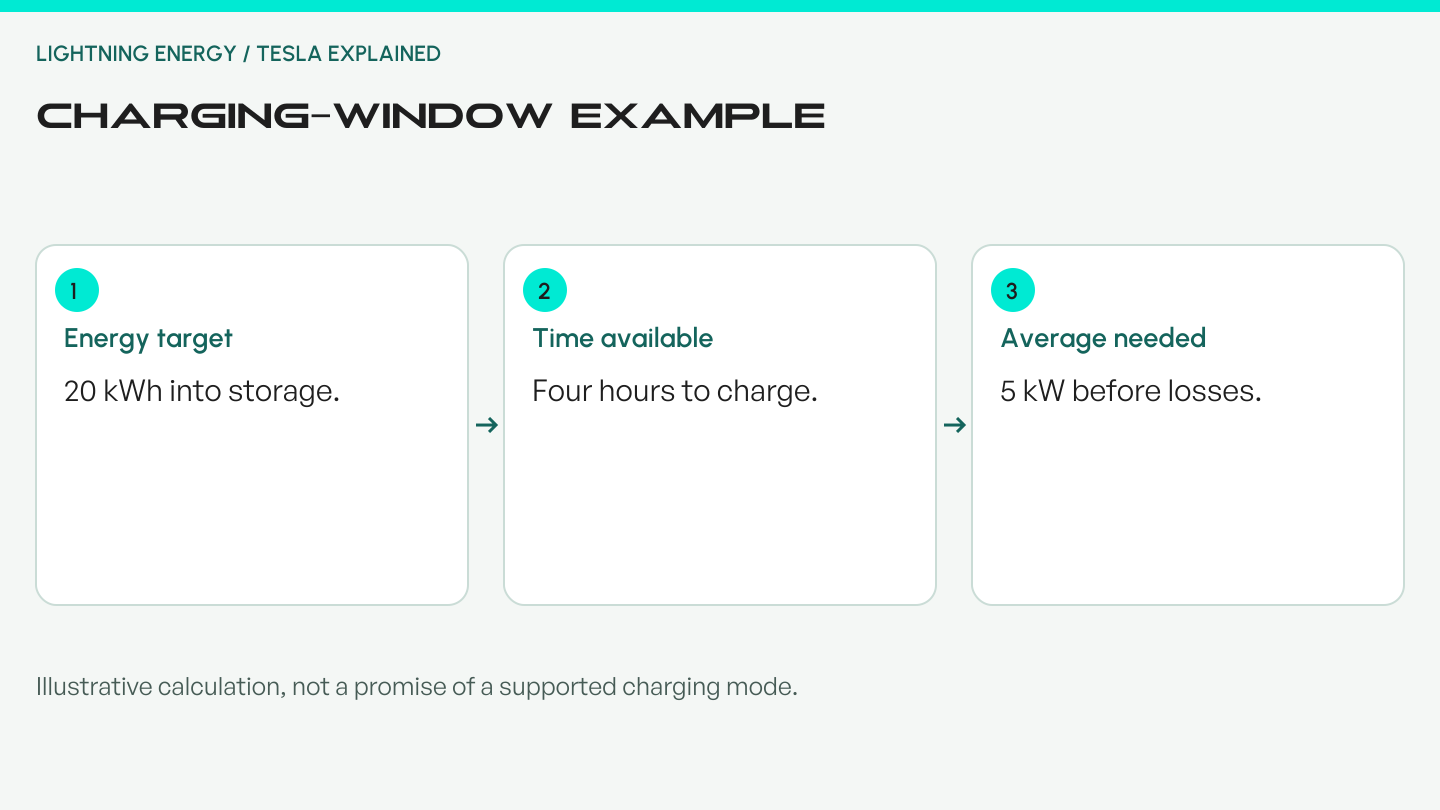
As an illustration, adding 20 kWh during a four-hour window requires an average 5 kW into storage before accounting for losses or household demand.
That calculation explains why the charging opportunity belongs in the sizing discussion.
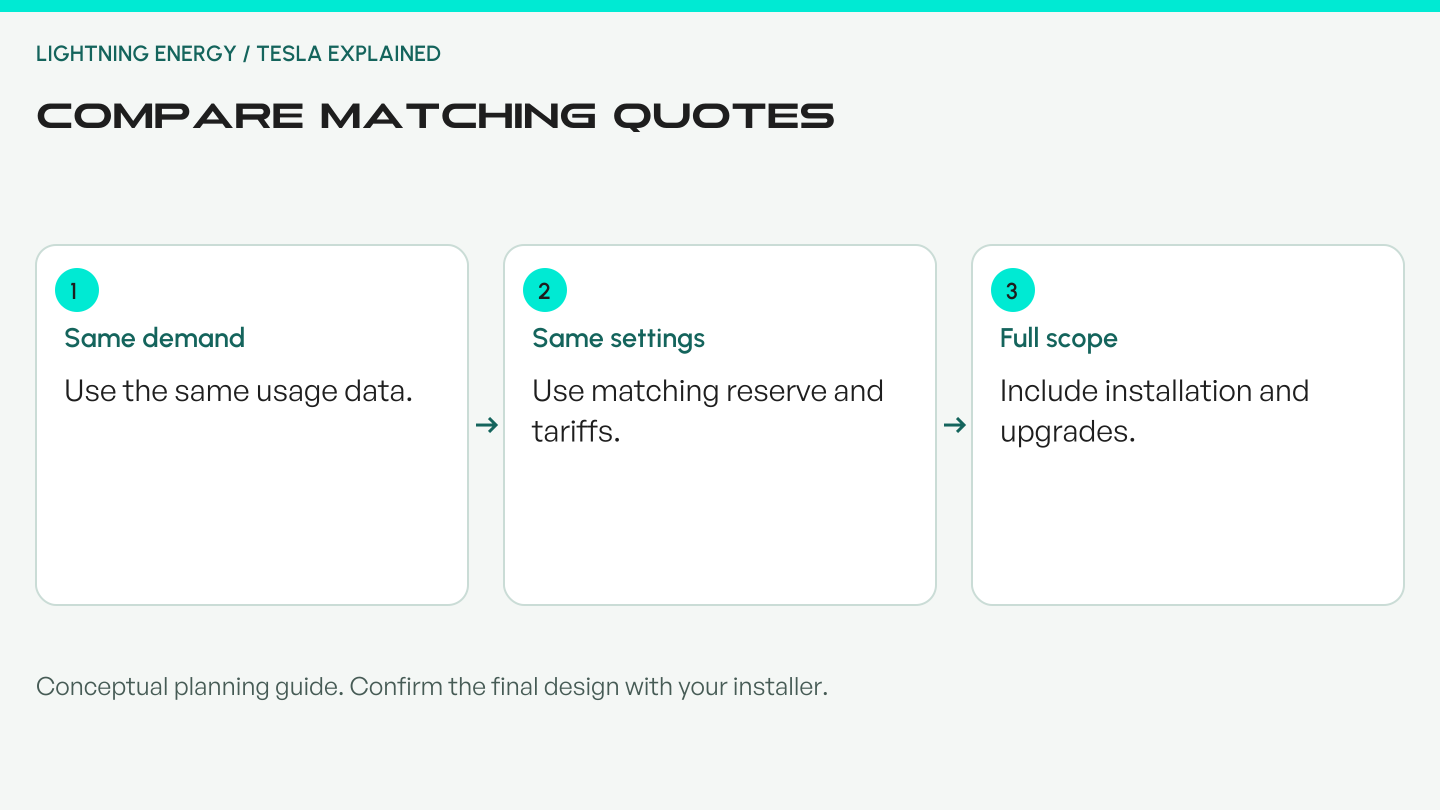
Ask for separate line items for storage, complete Powerwall units, Gateway work, electrical alterations and commissioning. A cabinet-only price is not a comparison of finished systems.
Include any changes needed to existing equipment.
Use the same operating assumptions for both quotes. An option modelled with a low reserve and generous solar surplus should not be compared against one using a high reserve and winter production.
Ask which assumptions produce the claimed advantage.
For a household whose battery empties overnight while power delivery remains adequate, more storage is a sensible option to assess.
For a household with load or charging constraints, simply adding kilowatt-hours may leave the original limitation.
Before committing, request the proposed configuration in plain language: total usable capacity, supported charge and discharge behaviour, backed-up loads and any functions awaiting software.
Keep that schedule with the quotation and handover documents.
No. Added storage is not another complete inverter. Ask the installer to specify output for the whole configured system.
Do not treat it as a standalone Powerwall 2 add-on. Ask about a supported mixed system including Powerwall 3 and the required equipment.
No. Its usefulness depends on how often it can charge and discharge for a purpose you value. Compare realistic operation and the complete cost.
Tesla Powerwall 3 Australian product guide.
Expansion pack specifications and context.
Powerwall 2 and 3 compatibility.
Powerwall 3 Australian datasheet.
Cover photograph: Tesla manufacturer imagery, shown for product context. It is not a Lightning Energy installation or evidence of Australian availability. Original diagrams explain decisions, not wiring.
Available times
Book a consultation and we'll map solar, storage, hot water, and the rebates around your bills and your goals.
Question 1 of 6