
Powerwall and Wall Connector: Solar Charging for Non-Tesla EVs
Tesla’s Australian Smart Charging guidance supports compatible non-Tesla EVs. Check firmware, charging targets, operating modes and when grid power may still be used.
Tesla’s Australian Smart Charging guidance supports compatible non-Tesla EVs. Check firmware, charging targets, operating modes and when grid power may still be used.

A compatible non-Tesla EV can use Smart Charging with a supported Powerwall and paired Wall Connector. The important qualification is the complete setup, not simply owning a Tesla-branded charger.
Tesla’s Australian support page confirms this functionality. We checked it on 3 November 2026; this article explains the published requirements rather than reporting a hands-on charging test.
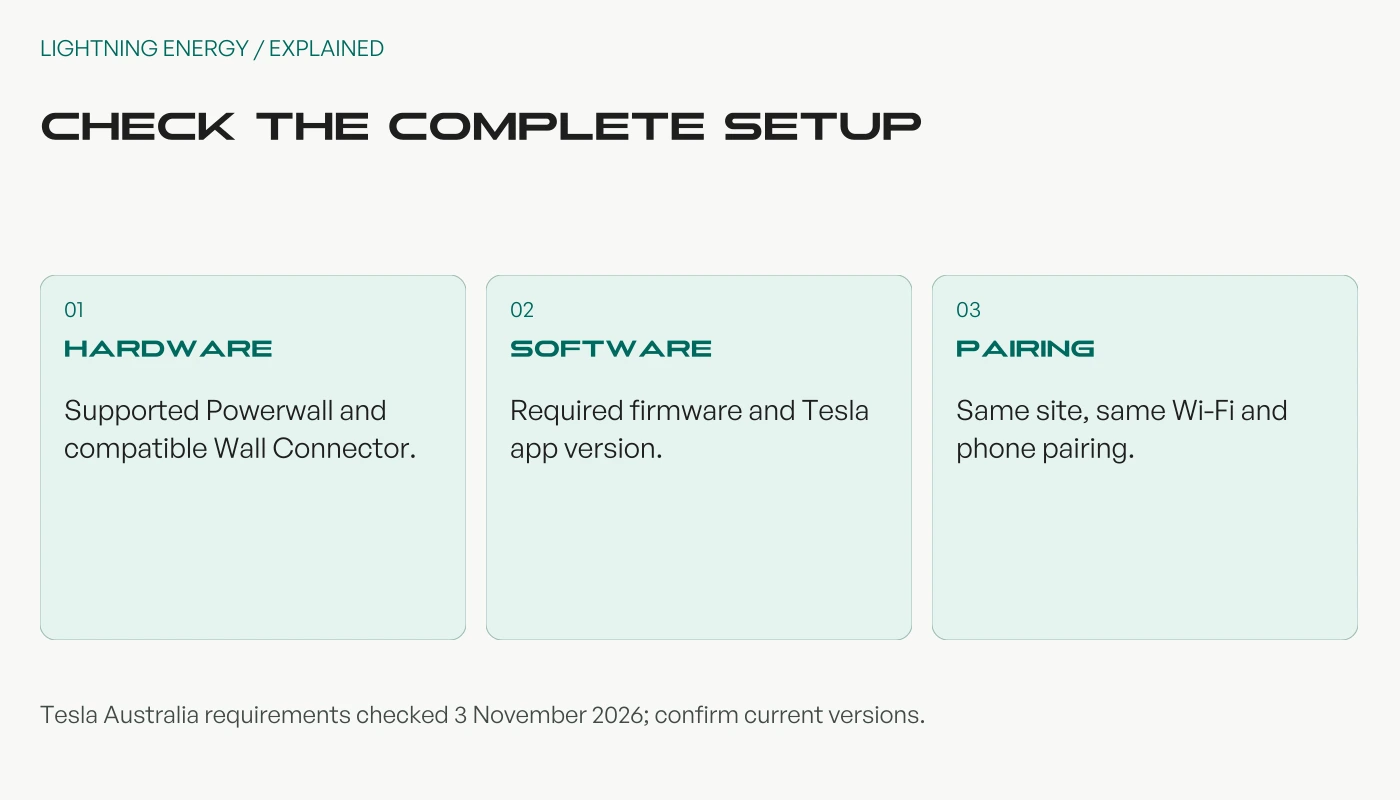
Tesla lists Powerwall 2 or Powerwall 3 and Wall Connector 3 or Universal Wall Connector, with firmware 26.34 or later. The listed minimum Tesla app version is 4.57.5.
The devices must be paired, registered to the same site and connected to the same Wi-Fi network. Phone pairing is also required. Only one Wall Connector per site can use Smart Charging.
Source: Tesla Australia’s Smart Charging guide.
Check the exact Australian charger and your vehicle’s compatibility before buying anything. A reference to Universal Wall Connector in a support article does not by itself establish local retail availability.
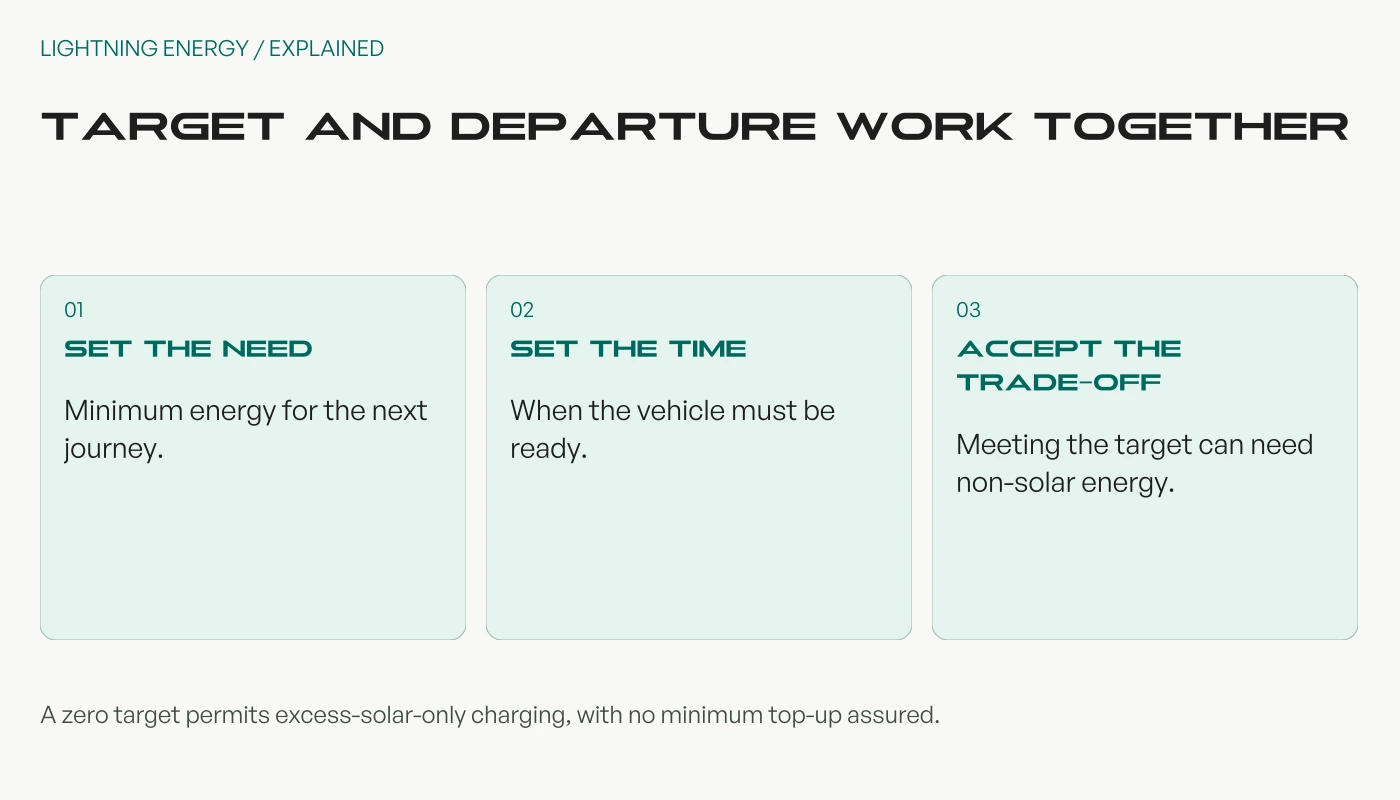
A charging target represents the minimum energy to deliver by departure. In Charge on Solar mode, the system can use grid or Powerwall energy if predicted solar is insufficient to meet that target.
Tesla says a target of 0 kWh is the setting for charging only from excess solar. That also means accepting that the vehicle may gain little or no energy before your next trip.
Think about the consequence before choosing it. A sunny forecast is not a transport plan for a time-critical journey. Decide what energy you need and what flexibility you actually have.
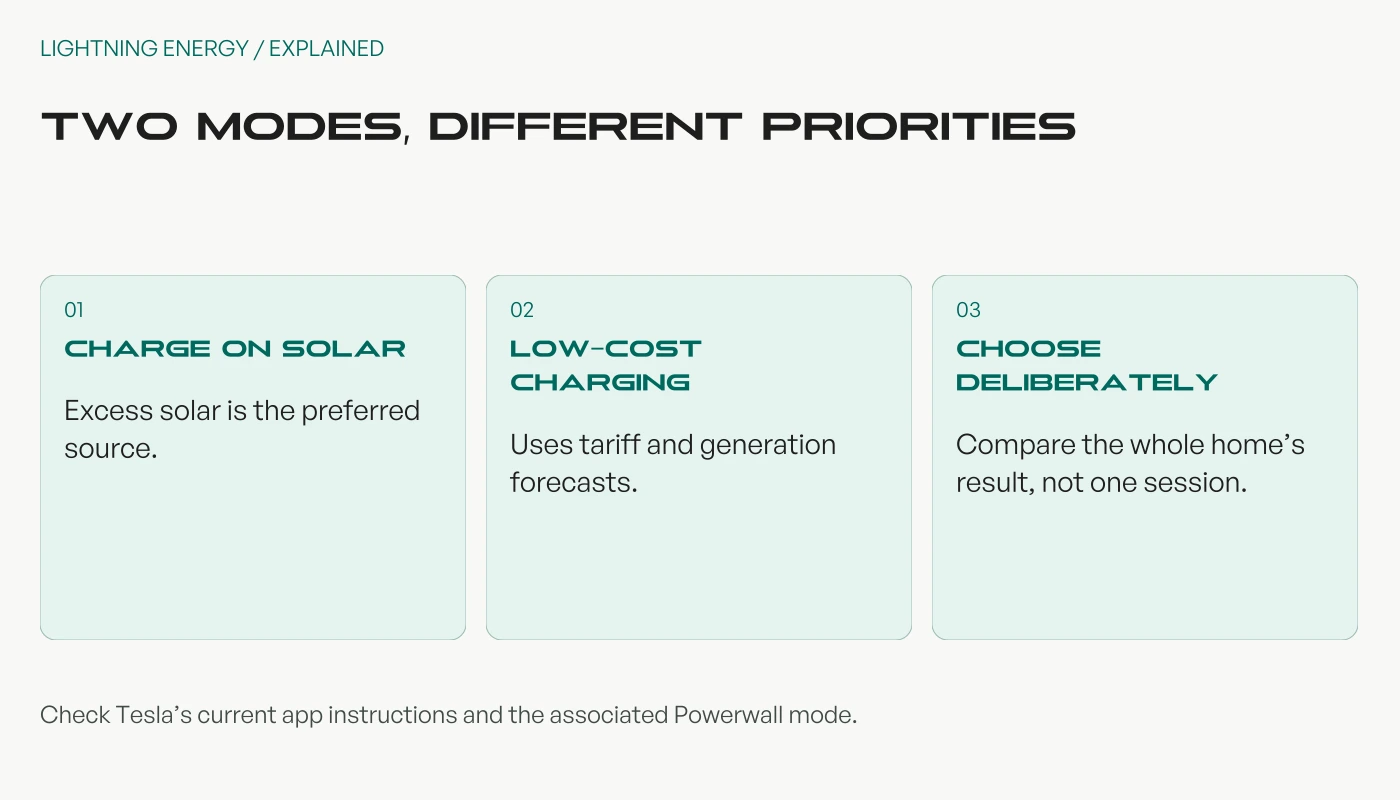
Tesla pairs Charge on Solar with Self-Powered mode and Low-Cost Charging with Savings mode. The two charging modes cannot operate together.
That is a household decision. If a tariff has a cheap overnight period, chasing maximum solar charging may produce a different bill from buying lower-priced energy at night.
Compare the vehicle’s availability, the export value of spare solar and household evening demand. Our solar, EV and battery priorities guide explains the competing uses.
Read the Powerwall product guide for the broader system context. A charging feature should not decide battery size or justify buying storage on its own.
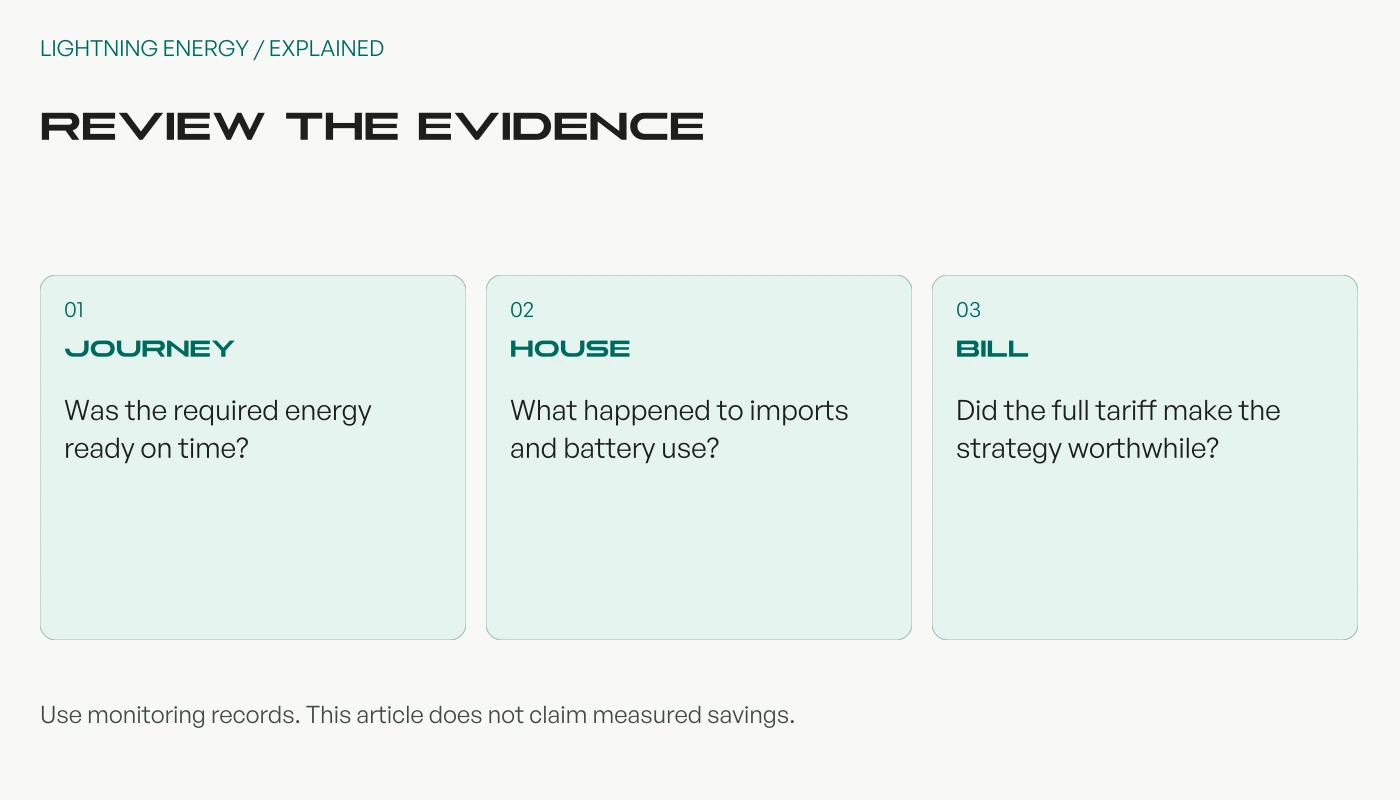
Record the vehicle’s arrival time, energy requested and departure time. Compare the charging history with solar production and household imports. One sunny afternoon can hide a difficult working week.
If the app shows grid energy, first check whether the minimum target required it. Do not assume the charger has ignored solar or that a hardware fault is the only explanation.
Look for overlapping vehicle and charger schedules before troubleshooting. Follow Tesla’s setup instructions, and ask the installer or support team if the controls do not behave as documented.
Our electricity-plan comparison guide helps keep supply charges and other rates in the comparison.
Check the app and firmware versions, exact charger generation and pairing first. Avoid replacing a working charger before confirming why the feature is absent or unavailable on your setup.
For a new installation, request the supported configuration and intended operating mode in writing. Include what happens when the car returns late or needs an urgent top-up.
Talk to Lightning Energy with the vehicle model, charger model and Powerwall details. Those specifics are more useful than a general request to make every charging session free.
Available times
Book a consultation and we'll map solar, storage, hot water, and the rebates around your bills and your goals.
Question 1 of 6
