
Pylontech Force NEX Australia: What the All-in-One Launch Confirms
Pylontech has introduced Force NEX in Australia. Here is what the launch confirms, how its energy controls are presented and what buyers still need in writing.
Pylontech has introduced Force NEX in Australia. Here is what the launch confirms, how its energy controls are presented and what buyers still need in writing.

Pylontech's new Australian all-in-one announcement centres on Force NEX. It combines modular storage and inverter hardware with a stronger emphasis on household energy management.
It is an interesting addition to the battery shortlist. However, a launch presentation is not the same thing as a complete Australian installation offer.
This guide was researched on 3 November 2026. It covers the announcement and the buying questions it creates; it is not a hands-on performance review.
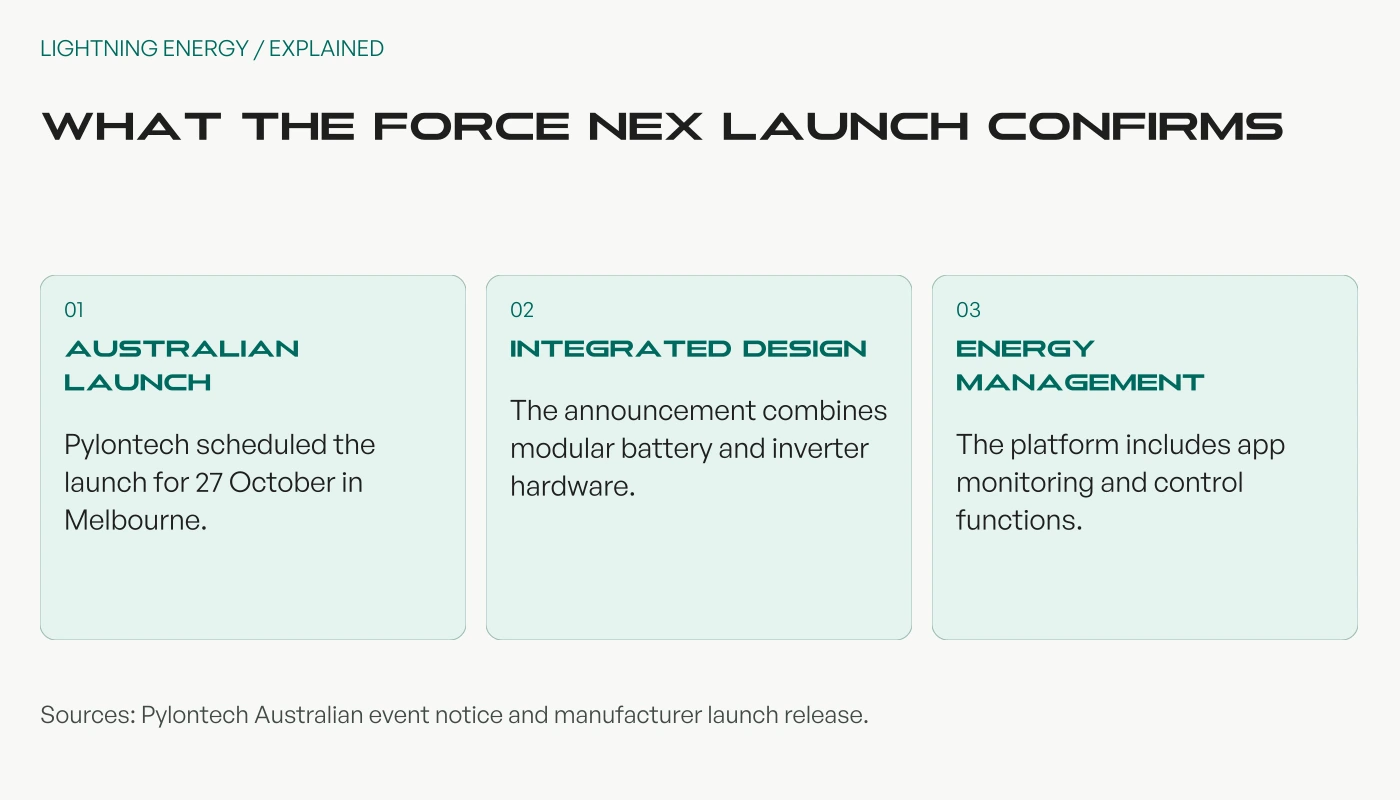
Pylontech's Australian event notice scheduled the Force NEX launch for 27 October 2026 at Arts Centre Melbourne, ahead of the All Energy Australia exhibition.
The manufacturer's subsequent launch release describes an integrated modular battery and inverter platform, alongside app-based monitoring and energy control functions.
Keep that launch context separate from delivery timing. A product can be publicly introduced before every configuration, accessory and installer supply arrangement is available.
We have not verified a universal Australian installed price or a delivery date covering all Force NEX configurations. Obtain those details in the specific offer you are considering.
An integrated system can reduce the number of separate product decisions a homeowner faces. The more important question is whether its components and controls fit the existing house.
A neat enclosure does not reveal the available power, usable storage or supported backup circuits. Those need to be documented as part of the proposed configuration.
Use our home battery quote checklist to turn an appealing product presentation into an itemised comparison.
Pylontech describes controls that consider weather, solar, loads, electricity pricing, battery state and reserve needs. Its iPylontech app presents energy flows, while Pylontech Agent provides analysis and guidance.
These are manufacturer descriptions. We have not independently verified their Australian tariff coverage, savings performance or behaviour across different household conditions.
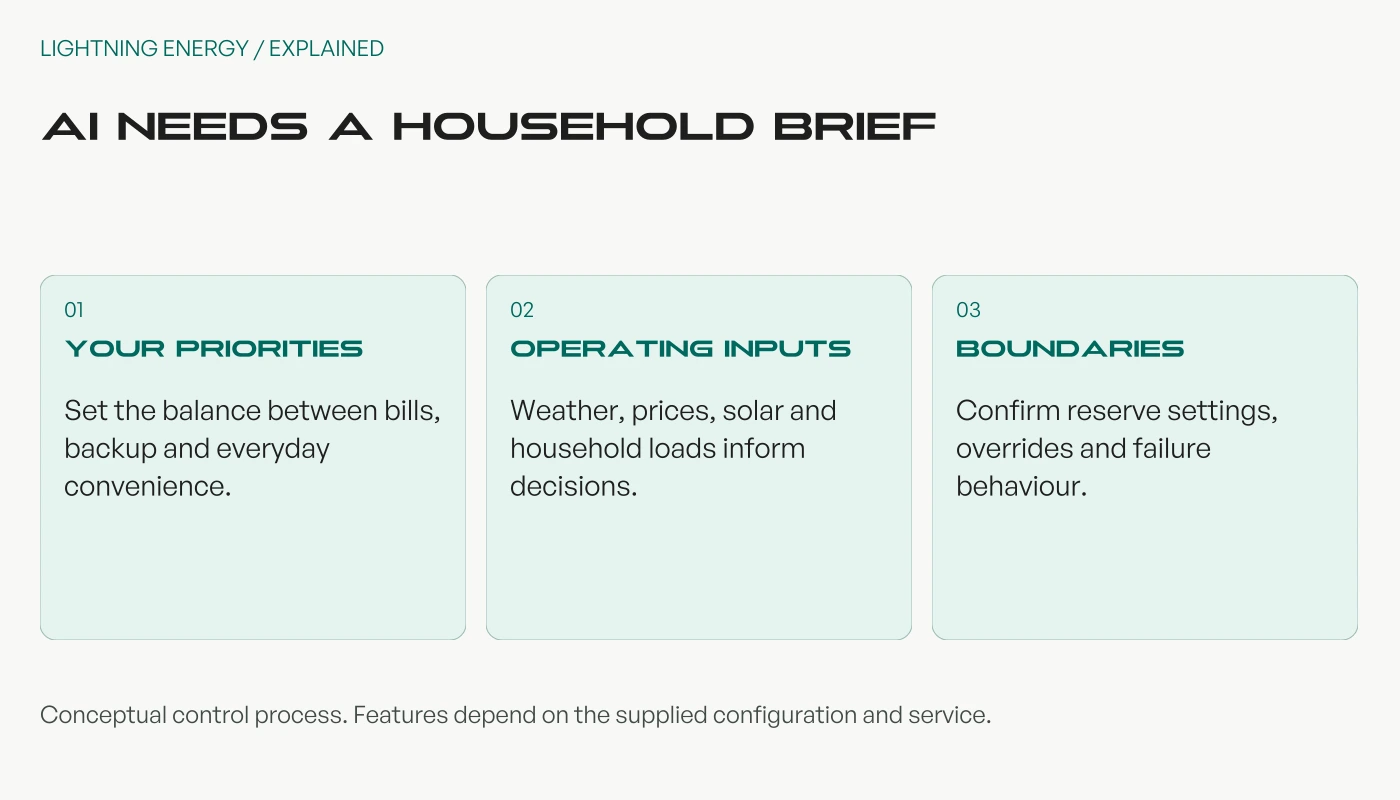
Ask what the system does when the electricity price changes unexpectedly. Also ask what happens when communications are unavailable, whether you can override a decision and how the backup reserve is protected.
A homeowner who prioritises outage resilience may want different settings from one prioritising electricity trading. A useful controller should make those priorities understandable.
Our VPP guide explains why control permissions and exit terms deserve attention alongside any advertised rewards.
We have not verified a complete Australian model-specific Force NEX datasheet and warranty package for this article. We therefore do not assign it an inverter rating, usable capacity range or warranty term from another family.
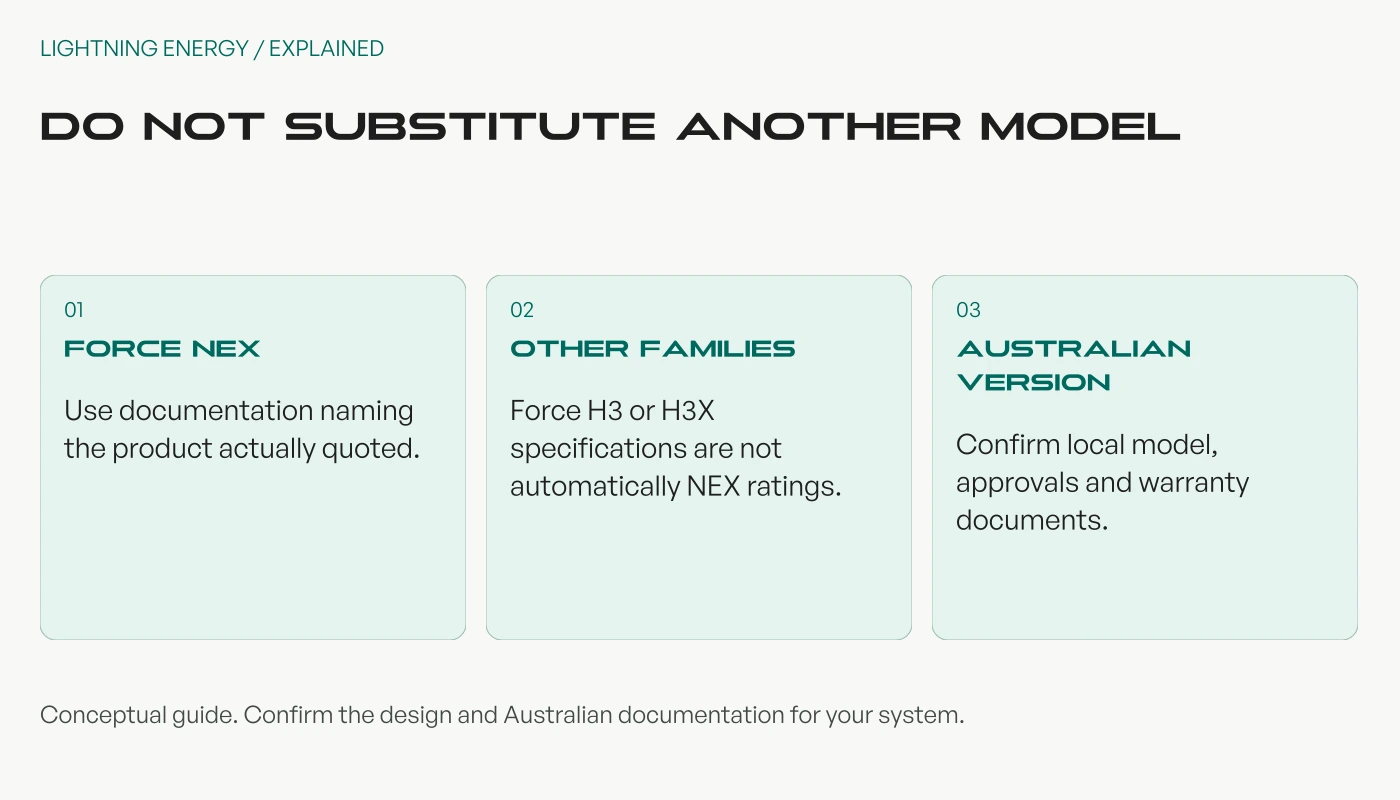
Pylontech has other products with similar naming. A Force H3 or H3X document does not automatically establish what a Force NEX installation can do.
Ask for the full model identifier on the quote and matching documentation. Check phase configuration, usable energy, continuous output, permitted expansion and the backup architecture.
The distinction between battery kW and kWh matters here: a large storage number cannot answer how many demanding appliances can run together.
Start by recording the current inverter model and solar arrangement. Ask whether the proposed Force NEX installation retains that equipment, replaces it or uses an approved separate integration pathway.
Then have the installer explain any extra metering, communications, switchboard work or network application. These can materially change the installed scope even when the cabinet price looks attractive.
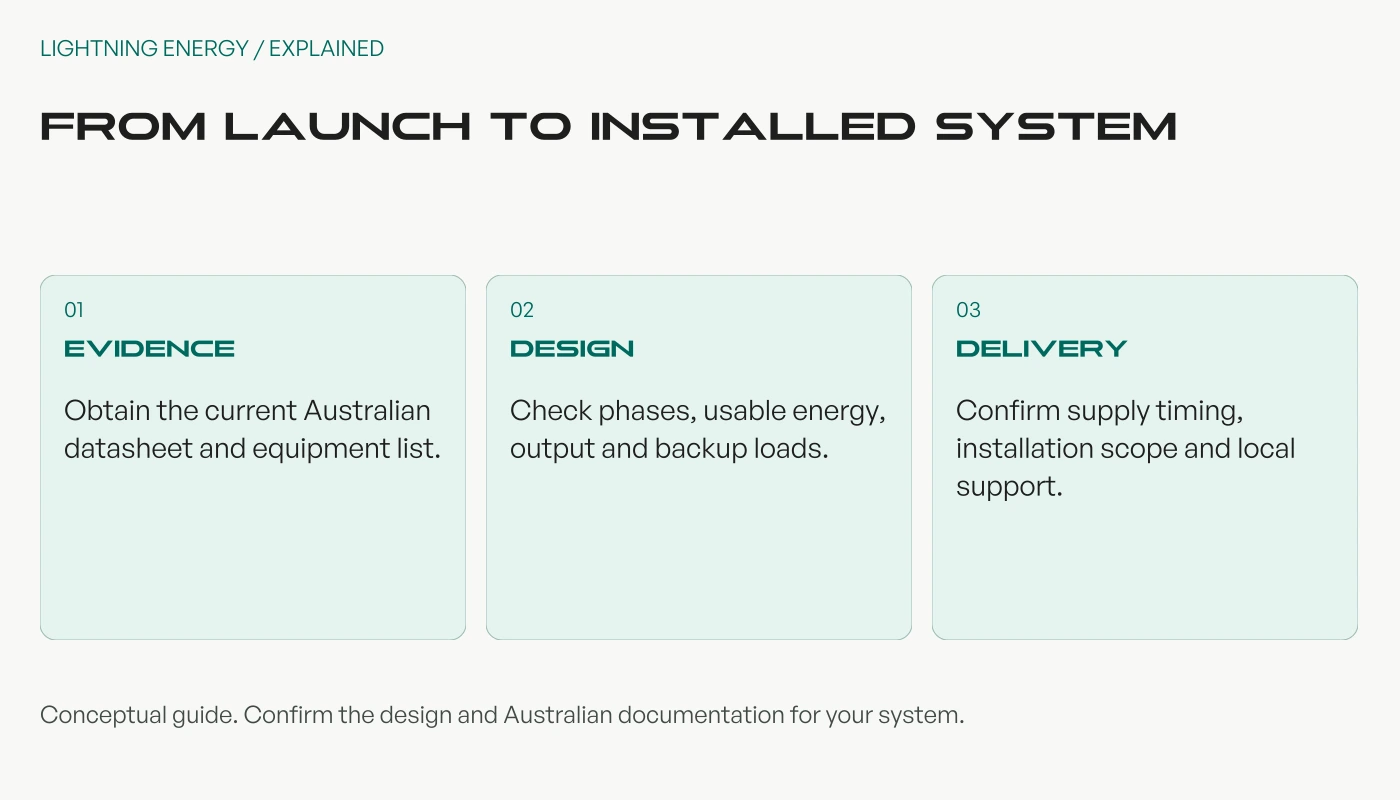
If expansion is part of the plan, request the supported pathway now. Our battery module expansion guide explains why space and future compatibility both matter.
Ask which Australian business handles a warranty claim, who diagnoses the fault and what the agreement says about labour and associated costs. Keep the full warranty with the installation records.
Do not infer a local warranty simply from an overseas brochure or a presentation slide. The applicable terms need to identify the product and market you are buying in.
The same discipline applies to backup claims. Have the designer identify the circuits and loads supported by the actual configuration, then arrange a commissioning demonstration.
Force NEX is worth watching for buyers interested in integrated storage and coordinated energy control. The strongest next step is a documented Australian proposal, not a decision based on the AI label alone.
Until the exact ratings, warranty and delivery scope are supplied, treat this as a launch preview. We will distinguish those verified details from the announcement when assessing a specific installed offer.
Available times
Book a consultation and we'll map solar, storage, hot water, and the rebates around your bills and your goals.
Question 1 of 6
