
Split vs Integrated Heat-Pump Hot Water: Noise and Neighbour Planning
Compare heat-pump hot-water layouts, placement and operating schedules. Check Victorian noise restrictions and ask for comparable acoustic data before installation.
Compare heat-pump hot-water layouts, placement and operating schedules. Check Victorian noise restrictions and ask for comparable acoustic data before installation.

A heat-pump hot-water system can be efficient and still be badly placed. The useful noise comparison includes the exact model, its location and the times it needs to operate.
A split layout separates the heat-pump unit from the water tank. An integrated unit combines those components in one assembly. Neither description, by itself, establishes which installation will be quieter.
This guide was checked on 4 November 2026. Victorian noise guidance is identified specifically; ask the relevant authority about rules in other states.
Ask each supplier what the quoted acoustic figure measures and under which test conditions. Sound power and sound pressure are different quantities; a number without its measurement basis is not a fair comparison.
Distance, operating mode and the surroundings can affect the sound heard at a bedroom or neighbouring property. Ask for the exact model’s documentation and a site-specific placement assessment.
A split system may give the designer more placement options for the outdoor unit. That flexibility is useful only where the manufacturer permits the proposed arrangement and the site can accommodate it.
Our small-property heat-pump layout guide covers the space question separately.
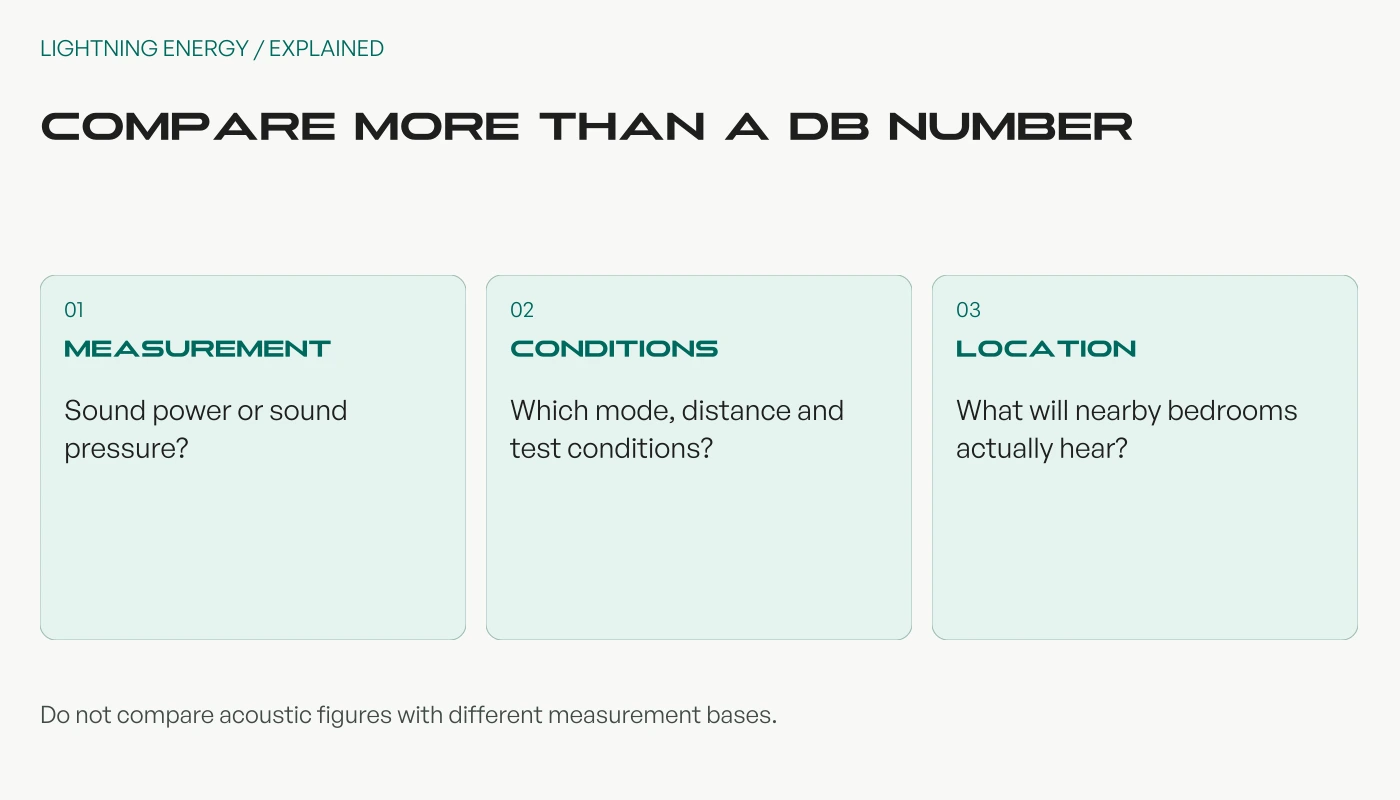
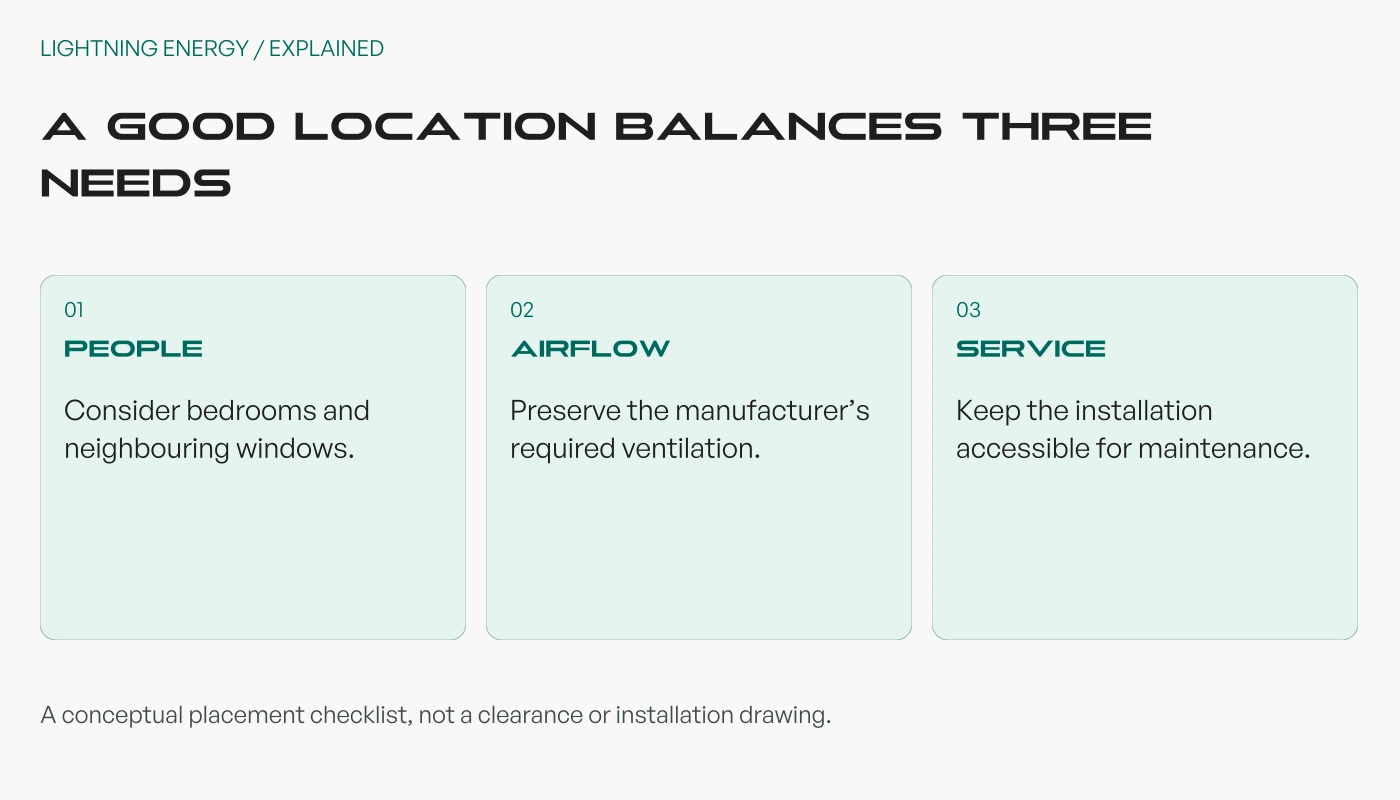
The Solar Victoria planning guide recommends considering noise and positioning away from bedrooms.
Assess neighbouring windows as well as your own. A narrow passage or reflective wall arrangement deserves specific discussion; a convenient plumbing location is not automatically the best acoustic location.
Keep required ventilation, service access and manufacturer clearances. Do not build an improvised soundproof box around the unit.
The Building and Plumbing Commission’s installation guidance stresses suitable ventilation and manufacturer requirements.
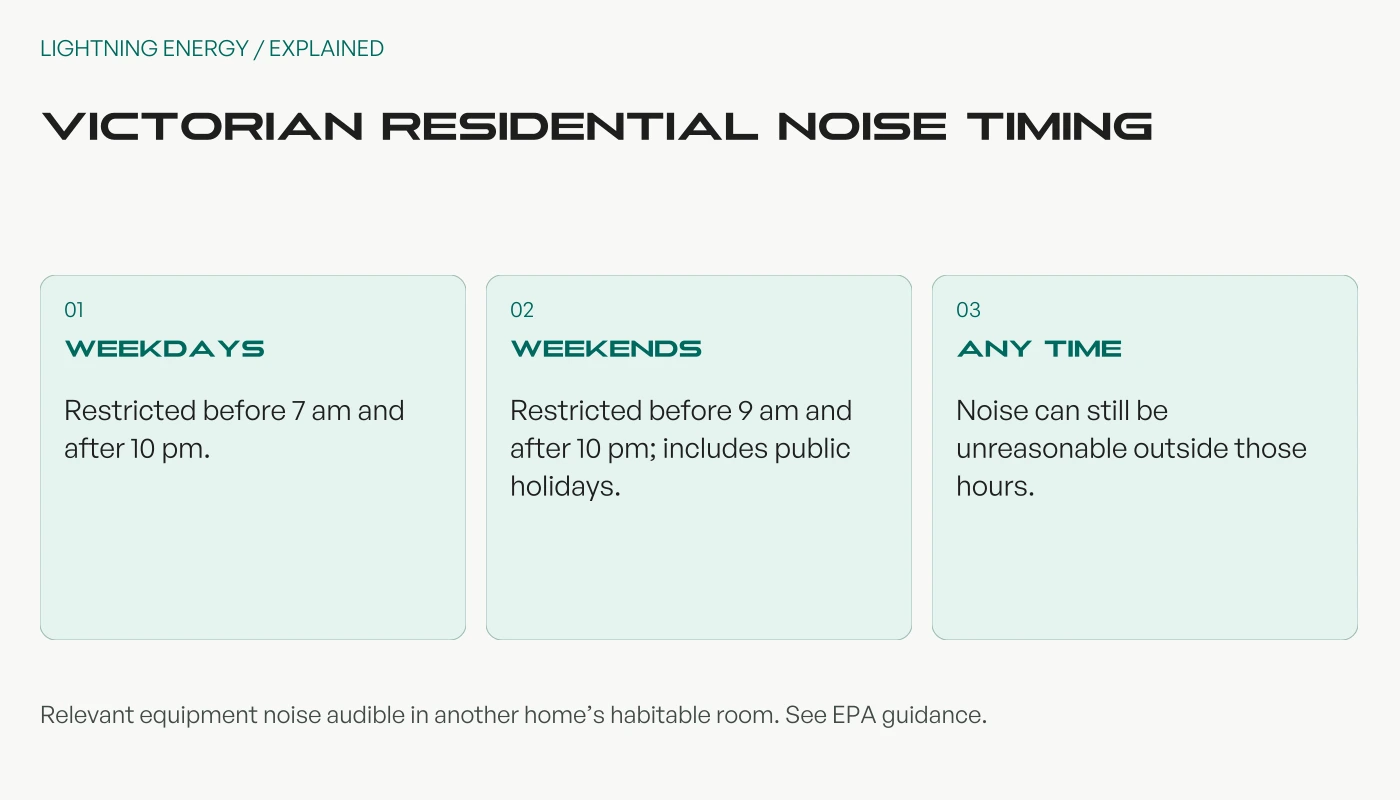
EPA Victoria includes heat pumps and hot-water systems in its residential noise guidance. For the relevant equipment group, prohibited times are before 7 am and after 10 pm on weekdays.
On weekends and public holidays, the prohibited period is before 9 am and after 10 pm. The restrictions concern noise audible in a habitable room of another residence.
Noise can also be unreasonable outside those times. Do not treat a daytime schedule as automatic compliance or assume the rule is simply a universal decibel threshold.
Check EPA Victoria’s residential noise guidance and speak with the local council if you need a site-specific interpretation.
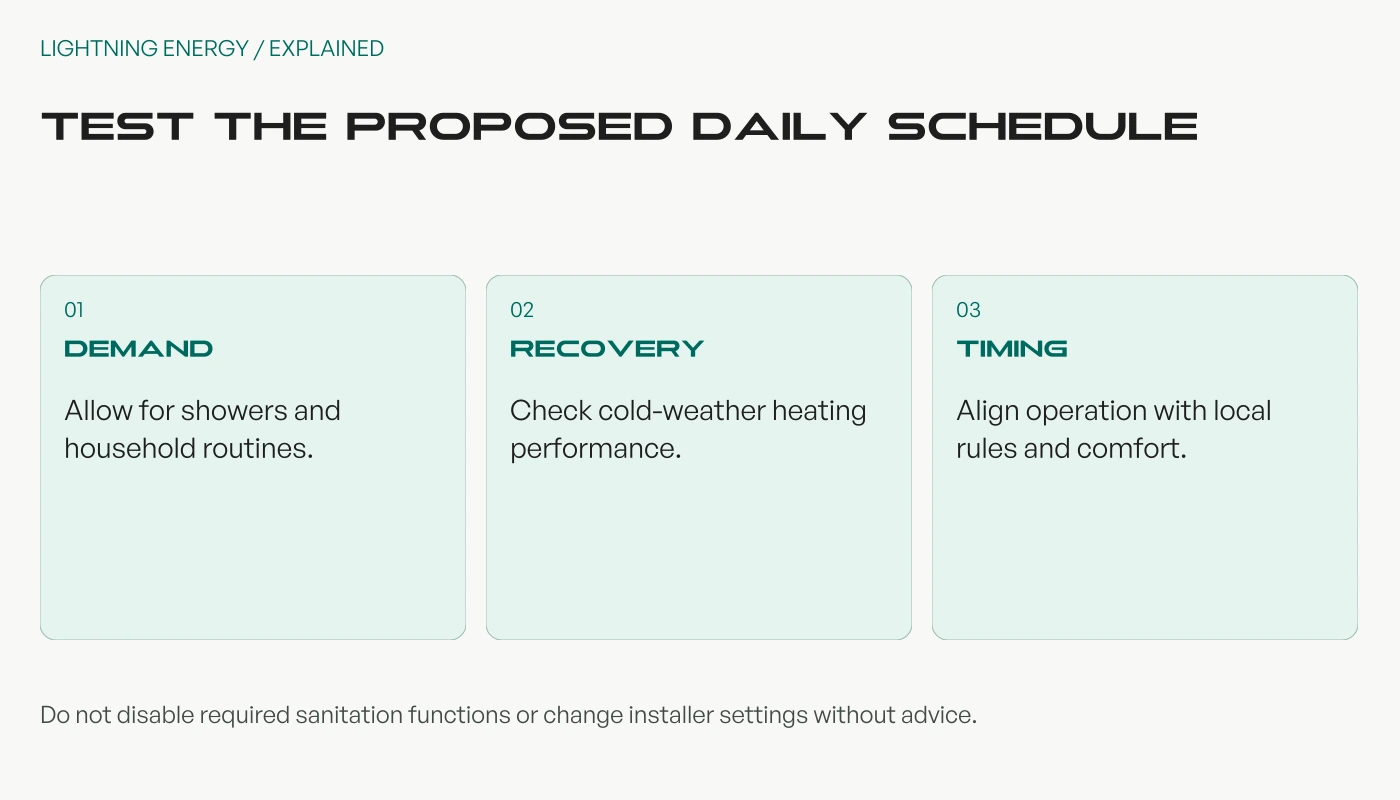
A daytime heating window may align with solar generation and reduce night-time disturbance. It still needs to provide enough hot water for the household, including colder weather and extra guests.
The Victorian hot-water buyer’s guide discusses timers, location and storage capacity.
Ask how recovery performance and boost settings interact with the schedule. A tank that repeatedly runs out of hot water may push the household towards unplanned operation at inconvenient times.
Our winter heating-window guide explains why a summer schedule may need review.
Ask for the model, location, included work and intended settings in writing. Have the installer demonstrate normal operation and explain who to contact if noise becomes a concern.
Use our heat-pump handover checklist before the job is signed off.
Contact Lightning Energy with your property layout and household hot-water needs. Compare suitable designs, rather than assuming split or integrated is always the quieter answer.
Available times
Book a consultation and we'll map solar, storage, hot water, and the rebates around your bills and your goals.
Question 1 of 6
