
Sungrow PowerHarbour Australia: The New All-in-One Battery Explained
Sungrow has launched PowerHarbour in Australia. Explore modular capacity, retrofit pathways, backup questions and the limits behind its EV charging roadmap.
Sungrow has launched PowerHarbour in Australia. Explore modular capacity, retrofit pathways, backup questions and the limits behind its EV charging roadmap.

Sungrow's new Australian all-in-one home energy system is called PowerHarbour. It brings the inverter, modular battery storage and energy management into a coordinated product family.
The attraction is straightforward: a more integrated installation and room to configure storage around the household. The purchasing decision still rests on the exact model and complete installed scope.
This launch guide was checked on 3 November 2026 using manufacturer announcements. It is desk research, not a hands-on review or confirmation of stock at a particular installer.
Sungrow's Australian launch announcement describes an integrated modular system with battery optimisers, monitoring and control functions. An all-in-one label does not mean every accessory is included in every quote.
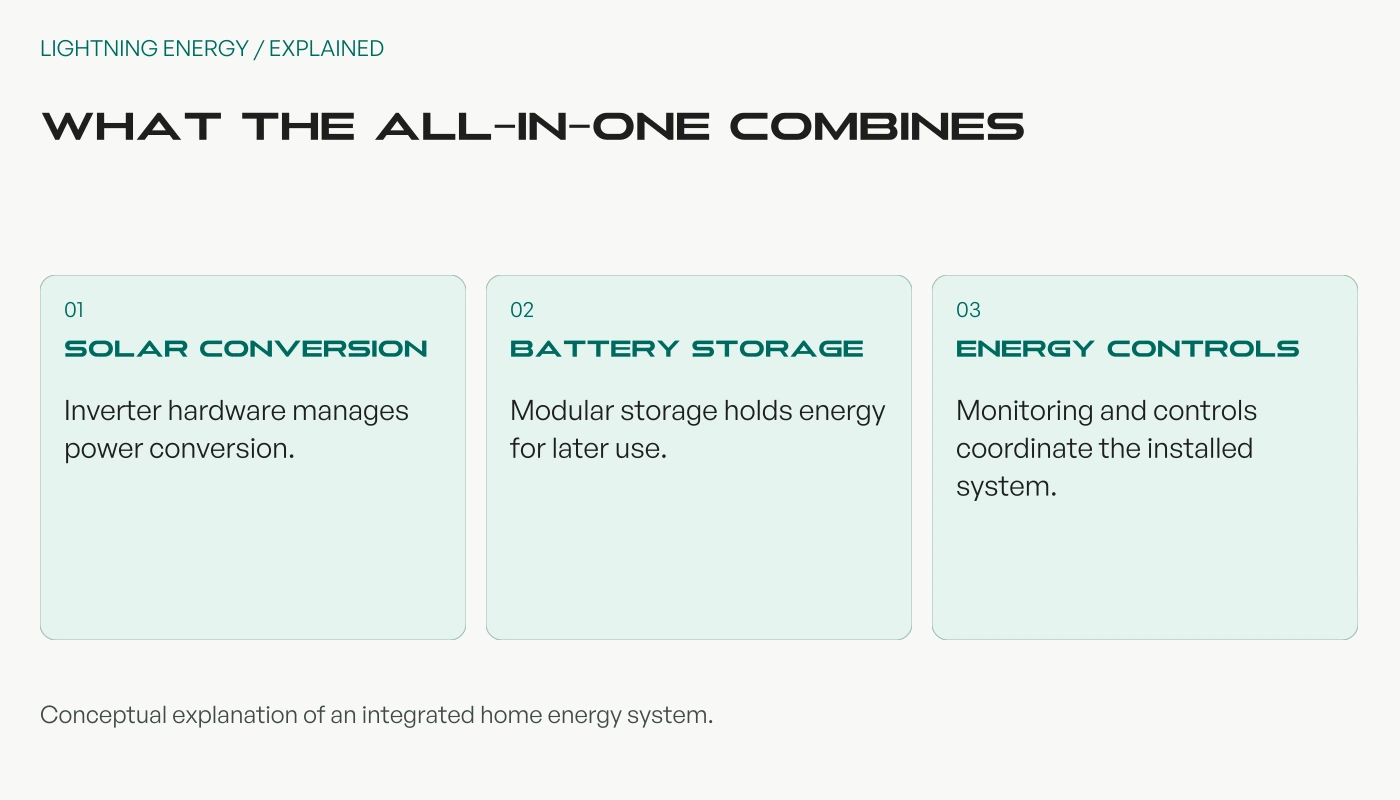
Ask the supplier to identify the inverter, modules, controller, metering and backup equipment separately. A tidy enclosure can simplify the appearance without making the electrical design universal.
Readers comparing it with established Sungrow storage should also see our Sungrow SBR and GoodWe ESA comparison.
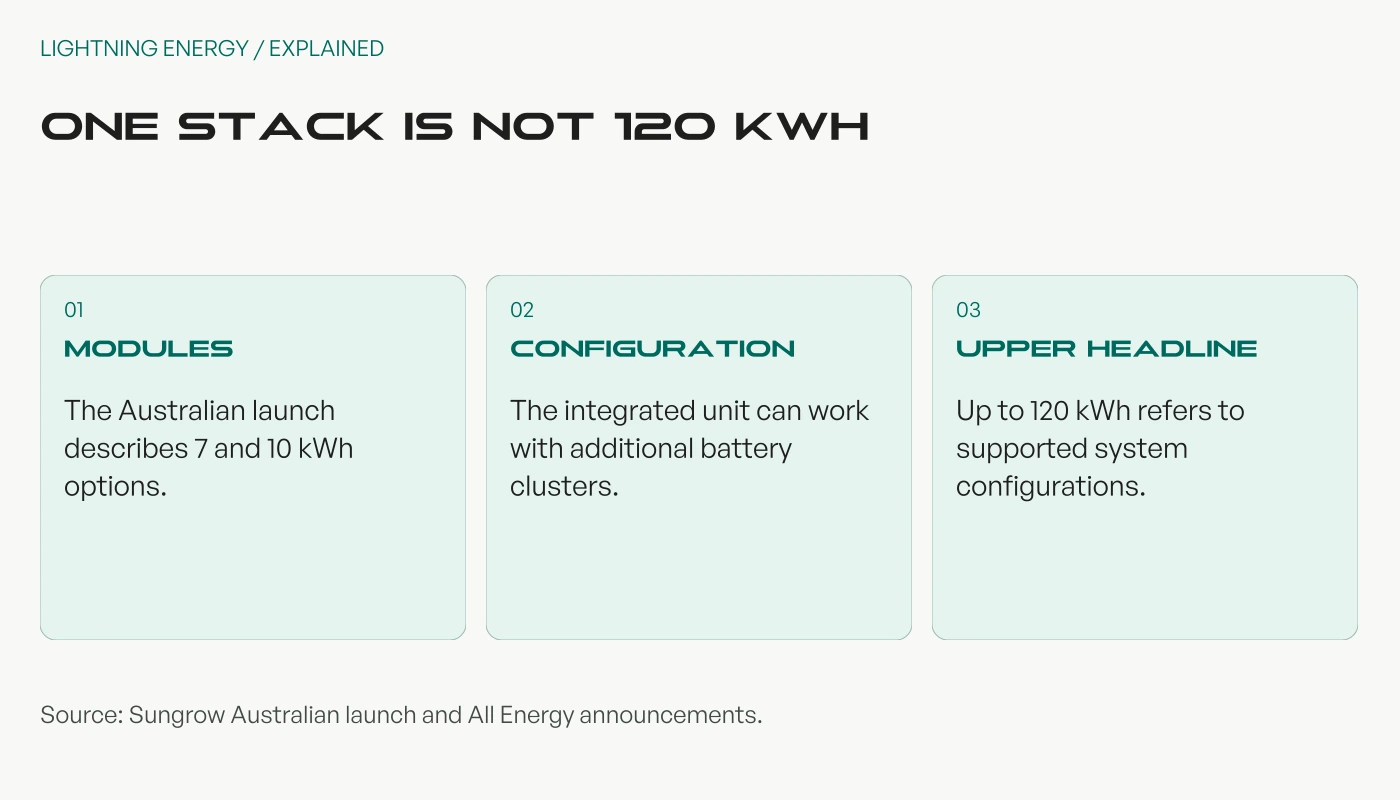
The Australian event announcement identifies 7 and 10 kWh battery module options. The headline maximum of 120 kWh involves supported combinations of the integrated unit and additional clusters.
It should not be read as the capacity of one ordinary domestic stack. The usable capacity and permitted arrangement need to come from the final model-specific Australian documentation.
For a homeowner, the more useful question is how much storage the house can use and refill. Start with evening and overnight meter data, including seasonal changes.
Consider tomorrow's loads too, but put dates around them. An EV purchase next month is different from a possible home extension several years away.
Leave practical space for any intended expansion. Discuss compatible module generations, timing, extra labour and how later additions affect the warranty before buying the first stage.
Sungrow describes retrofit pathways for selected SHT and SHRS systems using its specified integration equipment. That is not a blanket promise for every existing Sungrow inverter or another manufacturer's system.
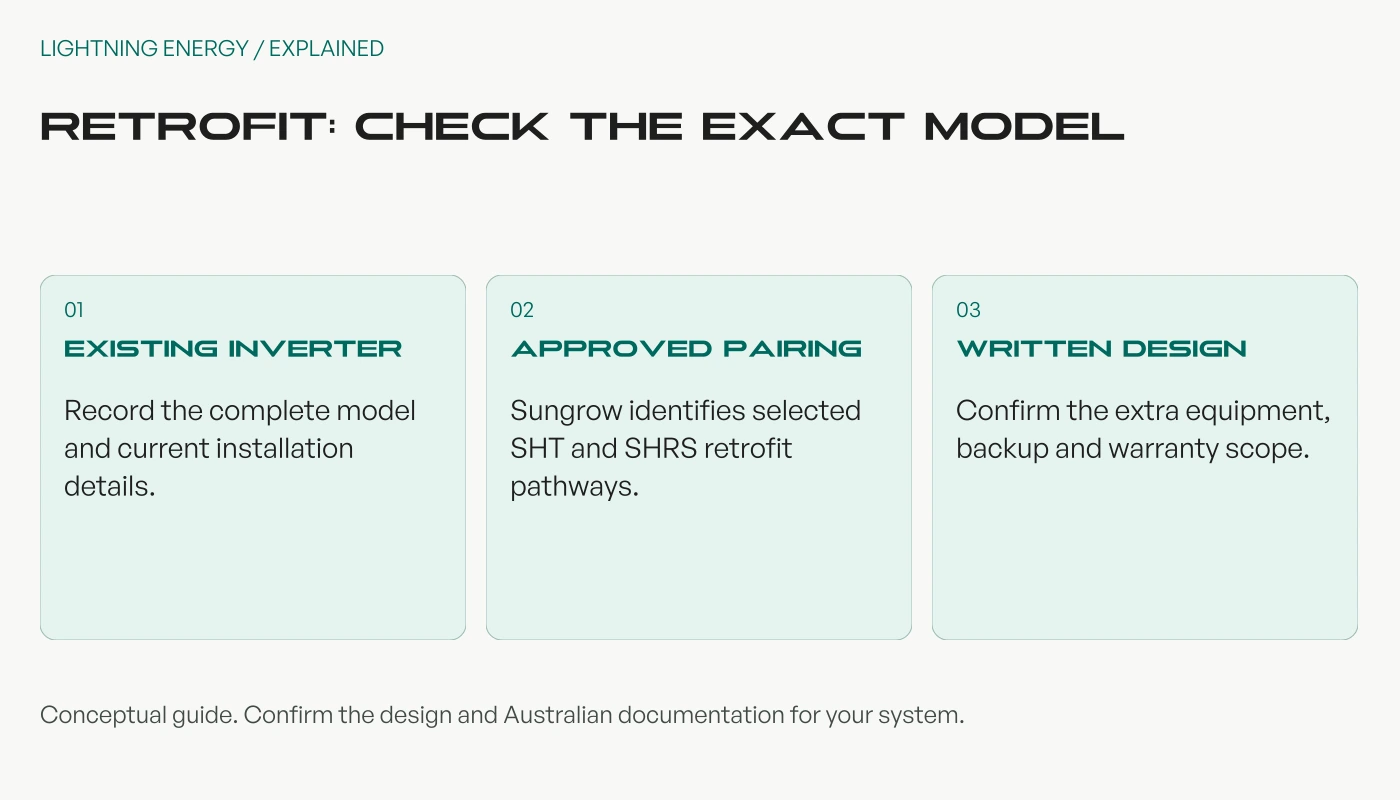
Give your installer the full model number rather than a photograph of the logo alone. Include the original installation paperwork, solar capacity and any recent changes to the house.
A retrofit quote should explain what remains, what is replaced and what is added. Ask whether the proposal changes your existing backup arrangement or requires a new connection approval.
Our battery expansion checklist outlines the questions that help avoid an assumed upgrade path becoming an expensive redesign.
Sungrow describes EnergyBridge backup integration for applicable configurations. Get the backed-up circuits, phase arrangement and permitted appliance loads specified in the installation proposal.
PowerHarbour Pro introduces EV charging integration in selected configurations. Sungrow also labels SHSA-Pro as coming soon and discusses V2X capability as part of its roadmap.
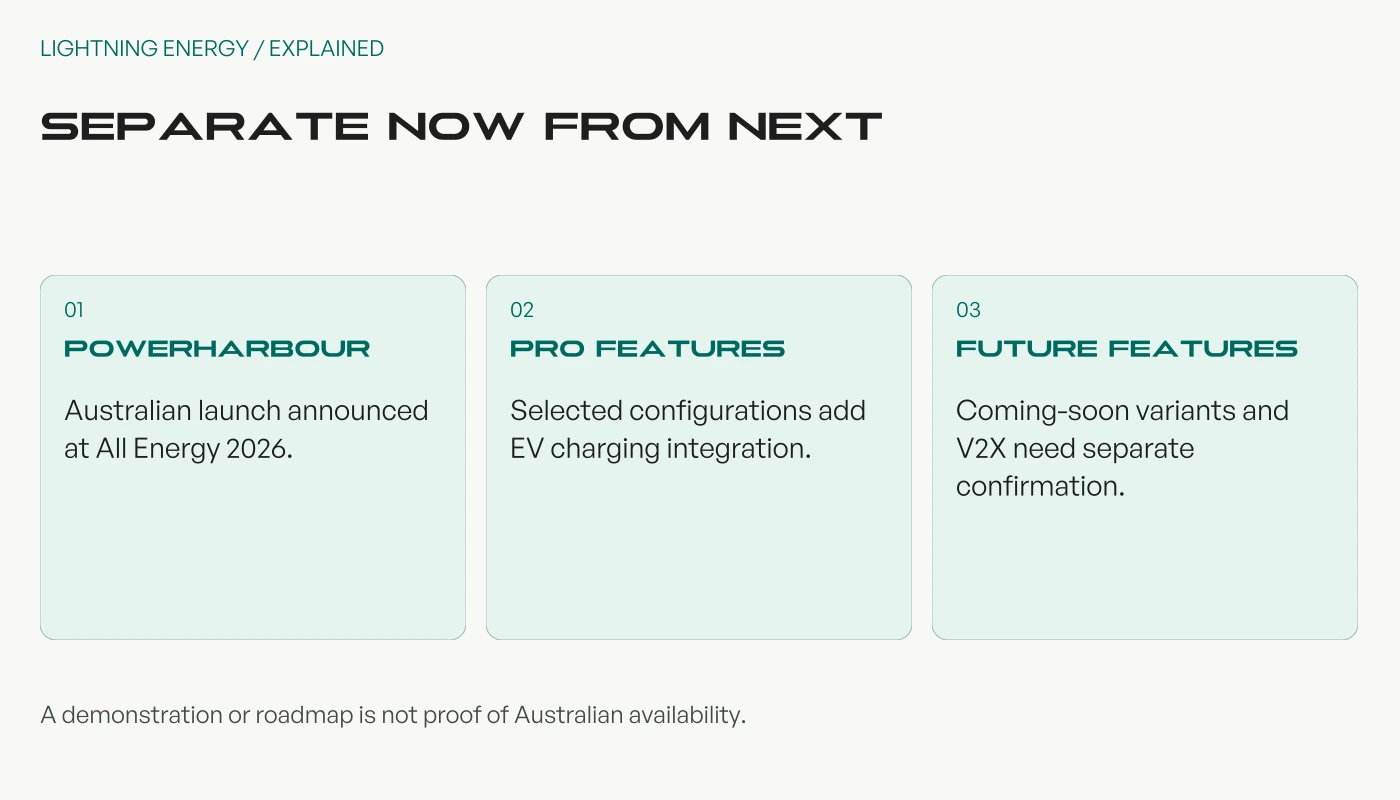
Do not buy on the assumption that a future vehicle-to-home function will work with your existing EV. Vehicle compatibility, Australian approvals, hardware and software availability all need their own evidence.
Treat a future feature as a potential benefit rather than the reason an otherwise unsuitable system becomes acceptable. The system should justify its purchase using the functions actually supplied.
No. A controller can only work within the household's loads, available solar, tariff and operating limits. A low daytime rate does not establish the total value of a plan.
Compare supply charges, import and export rates, automation fees and any VPP conditions. Check how much backup reserve remains under the proposed control strategy.
The VPP comparison guide helps separate an attractive reward from the whole electricity contract.
Request the precise inverter variant, battery module count, usable energy, charge and discharge limits, backup equipment, installation work and commissioning scope.
Also request the current Australian datasheet and full warranty, plus written delivery timing. We have not verified a universal Australian installed price or a stock date that applies to every configuration.
Use our home battery quote checklist to compare like-for-like offers. Leave optional future equipment clearly separated from the equipment being installed now.
PowerHarbour deserves a place on the shortlist for households considering an integrated solar and storage upgrade, particularly where the proposed configuration suits existing equipment or planned loads.
Our assessment remains conditional on the final Australian model documentation and installed offer. The right comparison is the complete working system, including support and commissioning, rather than the biggest capacity headline.
Available times
Book a consultation and we'll map solar, storage, hot water, and the rebates around your bills and your goals.
Question 1 of 6
